AI in China’s pharmaceutical sector fuels new deal flow

AI in China’s pharmaceutical sector: why dealmakers care
AI in China’s pharmaceutical sector is changing how drugmakers pitch assets and how partners run diligence on early pipelines. Chinese teams are retooling R and D toward algorithm-guided discovery, aiming to shorten hit finding and lead optimisation while improving target selection discipline. The immediate commercial goal is not more programmes, but more auditable programmes, with traceable datasets, reproducible workflows and decision logs that hold up in licensing discussions. As indicated by available reports from the South China Morning Post, there is a shift toward AI-powered candidates serving as a potential foundation for the next wave of partnering. In practice, teams are tightening feedback loops between chemistry, translational biology and clinical design so models can be retrained as new assay and patient signals arrive.
How AI is reshaping discovery and licensing talks
Recent deal conversations increasingly centre on whether computational work produced a candidate with clear biological rationale and auditable training data, not just a compelling slide deck. In the SCMP report on China’s deal pivot, bankers and industry participants reportedly link interest to machine-learning methods being used to prioritise targets and design molecules that can move into IND enabling studies. For broader policy context, demand for productivity tools also tracks China’s economic rebalancing, as described in China five-year plan shifts to consumption-led growth, and in that context, this shift is being judged by downstream proof, including whether preclinical packages can surface safety liabilities earlier. Buyers still ask for wet-lab validation, but they increasingly expect model outputs to be testable, documented and repeatable across labs and CRO partners.
Data, regulation and trust hurdles to adoption
Adoption is being shaped by practical constraints such as data rights, model transparency and regulatory expectations for how algorithms influence decisions. The AI safety benchmark work described by the South China Morning Post underlines that regulators want clearer risk controls for frontier models, and pharma groups must adapt those ideas to sensitive biomedical datasets. Within R and D, teams are investing in data harmonisation across CROs and hospital partners so inputs remain comparable across sites and time. This use of AI across China’s drug industry also raises diligence questions for partners, including how training data were licensed and how bias was handled in patient stratification, with related coverage including China sets AI safety benchmark for frontier models and China works on AI safety benchmark as regulators target large model risks. Teams still need to show how these controls translate into partner-ready governance during due diligence.
Global partnering impact and competitive dynamics
The shift is already changing how cross-border partners screen Chinese assets and how valuation is discussed in term sheets. Instead of treating AI as a branding layer, counterparties are mapping which steps in drug development were materially improved, such as hit to lead speed, ADMET prediction accuracy or trial protocol refinement. A parallel competitive factor is compute access and domestic hardware road maps, which matter for training and inference costs in chemistry and imaging models, according to an SCMP report on chip road maps, and for that angle, see Chinese start-up reveals aggressive AI chip road map. The market impact is that China-origin candidates may reach partnering readiness earlier, prompting multinational firms to accelerate diligence and align governance requirements.
What comes next for AI-driven China biotech pipelines
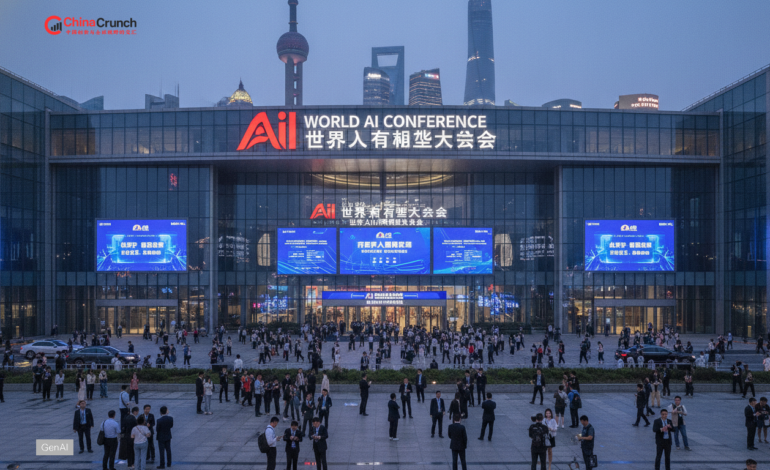
Near-term progress will hinge on whether companies can make AI outputs consistent across programmes and sites, which is increasingly a commercial requirement during licensing talks. Attention is moving toward interoperable standards for model cards, dataset documentation and audit trails so results can be reproduced in a partner’s environment. For China biotech advancements, the next edge is likely to come from integrated platforms that connect target discovery, structure generation and clinical translation, while keeping strict controls on data provenance. The strongest teams will pair automation with rigorous experimental validation, because algorithmic novelty alone does not carry a programme through toxicology and clinical endpoints. Industry focus on national tech showcases also matters for capital and visibility, covered in World AI Conference: Xi Jinping to Attend in Shanghai and China’s drug industry pivots to AI-powered candidates to drive next wave of deals, as AI in China’s pharmaceutical sector continues to influence how pipelines are presented to global partners.