Chinese superconductors dispute raises US tech stakes
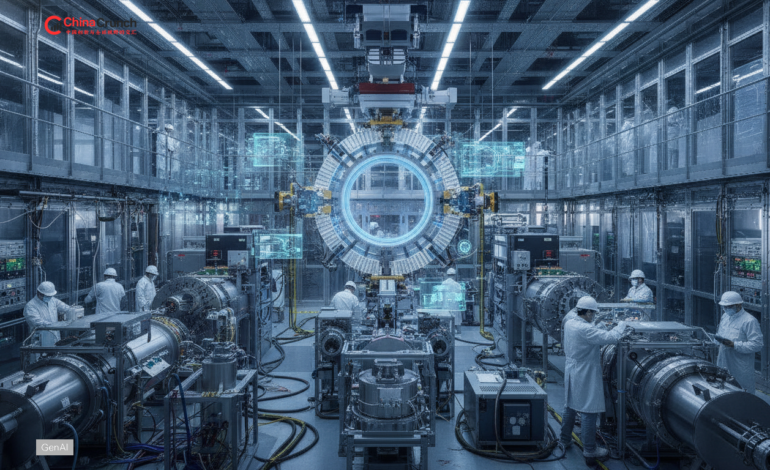
Chinese superconductors: China’s superconducting magnet advances
Chinese superconductors are garnering renewed attention after Chinese officials indicated that US entities attempted to obtain a high performance superconducting magnet via indirect channels. According to available reports from Chinese state media, the Chinese Academy of Sciences describes a domestically built platform that claims to deliver about 40% higher performance than previous models. This positions the hardware as strategically important for research and industry. Engineers involved reported that improvements came from materials selection, tighter manufacturing controls, and enhanced stability at extreme field strengths. The results hold significance beyond laboratory demonstrations, as Chinese superconductors and superconducting magnets are instrumental in fusion research tools, accelerator systems, and high-resolution scientific instruments, according to Chinese state media. Beijing’s messaging frames the technology as an essential national capability.
How high-field magnets work and why they matter
High field superconducting magnets are intricate assemblies, where conductor quality, winding precision, and cryogenic reliability determine usable performance. In sectors related to Chinese superconductors, a typical system necessitates consistent cooling, careful quench protection to prevent damage, and strict quality control to maintain field strength stability during long experiments. Small process errors can diminish yield and increase costs, making supply chains sensitive, even without geopolitical tension. Research-grade magnets can take months to build and validate before delivery, highlighting a dynamic explored in Cybersecurity in Hong Kong universities after BU breach as institutions strengthen controls around valuable assets. Risk management for sensitive equipment is increasingly shaped by compliance, intermediaries, and documentation practices.
China’s claim the US sought a super magnet via intermediaries
China suggests that US-linked buyers attempted to purchase a high performance unit through third party channels. This allegation highlights the contested nature of advanced components. As indicated by Chinese state media, the Chinese Academy of Sciences presented the approach as an effort to acquire restricted hardware without direct collaboration. Policy sensitivity is increasing because similar technical expertise can support both civil science and defense programs, based on analysts and officials quoted by Chinese outlets. As rules evolve, this factor interacts with broader licensing debates addressed in US China export licenses: Faster Reviews, Clearer Rules. Export controls and licensing decisions now influence what can be traded and who can broker transactions. Even unverified procurement attempts can initiate investigations and stricter broker screenings, as compliance specialists often emphasize.
Trade controls and compliance risks for Chinese superconductors
The dispute arises amid ongoing friction in US China tech trade, where both sides have intensified screening of sensitive transfers, according to public policy statements. By publicizing the alleged approach, Beijing signals scrutiny of procurement pathways and third party intermediaries, not only formal end users. Recently, US agencies have expanded controls on selected advanced technologies, while Chinese authorities focus on protecting critical capabilities and enforcing against illicit acquisition, as reported by government releases and state media. For a deeper look into strategic competition narratives in frontier technologies, see https://www.scmp.com/tech/big-tech/article/3363638/meta-challenge-chinas-open-weight-ai-dominance-amid-us-regulatory-fears?utm_source=rss_feed. Industry counsel cited by Chinese media indicated rising compliance expectations for brokers and resellers of high-end research equipment. Chinese superconductors remain a central focus as regulators emphasize enforcement against unlawful acquisition.
Market outlook: procurement, substitutes, and timelines
Without confirmed transaction details, the dispute may affect procurement decisions by raising perceived compliance risks related to Chinese superconductors and related magnet supply chains. Buyers of cryogenic systems, power supplies, and magnet assemblies might face increased due diligence requests from banks, insurers, and logistics providers when dealing with advanced specifications. Suppliers outside China could experience more inquiries for substitutes, while Chinese companies may accelerate domestic substitution for key subcomponents to reduce chokepoints. A similar theme of tightening governance and enforcement has been observed in China drone regulations tighten, leading to drone show disruptions, illustrating broader compliance pressure within tech sectors. Analysts often highlight that superconducting magnets are cost-intensive due to yield and verification cycles determining reliability, and additional trade friction can lengthen lead times.