China military AI trails rivals in attack chain models
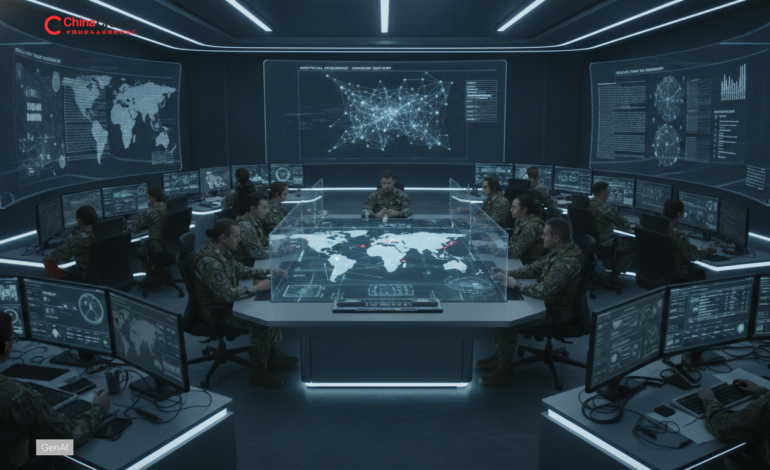
China military AI capabilities in today’s attack chain
China military AI is advancing, but researchers cited by the South China Morning Post (SCMP) suggest that the PLA may struggle to turn model demonstrations into reliable end to end attack chain performance. According to the SCMP-cited researchers, prototypes may look strong in controlled environments, while field deployment depends on hardened data pipelines, secure networks, and repeatable evaluation. In an SCMP report published in 2026, the gap is described as less about any single algorithm and more about the workflow linking sensing, analysis, command decisions, and weapons control under operational stress. In that framing, progress could be constrained by operational integration and verification discipline rather than by headline research activity alone.
How China’s systems compare with foreign military AI models
Researchers cited by SCMP argue that leading foreign programs are assessed by whether they shorten decision cycles while preserving safety checks and human control. For additional context on security constraints shaping these comparisons, see CPEC 2.0: Plan to deepen China-Pakistan ties, where institutional alignment is treated as essential for executing complex programs. They also say the most mature efforts, as described in the report, connect model outputs to multi domain sensor fusion, mission planning, and communications intended to function in degraded conditions. As presented by SCMP, these yardsticks shift comparisons beyond raw model scores toward doctrine, testing rigor, and interoperability across units.
Integration challenges that slow the PLA attack chain
As described by SCMP-cited researchers, turning lab performance into usable military capability depends on how data, networks, and command authorities interact under stress. Another issue they raise is validating models against adversarial deception while meeting reliability thresholds that commanders will accept in exercises and contingency planning. They point to frictions such as inconsistent data labeling, limited access to realistic training environments, and security rules that reportedly restrict sharing across units and platforms, discussed alongside broader cyber concerns including a separate SCMP item on Starlink terminal hacking claims. These bottlenecks are discussed as highlighting how contested connectivity can become a potential point of failure.
Practical improvements researchers say could raise performance
Researchers cited by SCMP say progress is more likely if the PLA standardizes how systems are tested, monitored, and updated across the full attack chain. Another high leverage area described by the researchers is building secure, traceable data pipelines so outputs can be tied back to inputs, which they say reduces the risk of brittle automation being trusted too quickly, and for related coverage of security posture and operational constraints, see China cybersecurity focus after claimed Starlink hack. That includes defining measurable thresholds for timing, accuracy, resilience, and auditability, then enforcing them through procurement gates and training exercises, according to the report. In the SCMP account, tighter feedback loops between developers and operational units are also presented as a way to improve realism and reduce deployment surprises for China military AI deployments.
Future prospects and what would signal real progress
Near term trajectories for China military AI will be shaped, according to the 2026 SCMP report, by whether China can convert research momentum into repeatable deployment processes that hold up in contested environments. The report frames the central challenge as closing the loop from sensors to analytics to decision support and strike execution without creating unsafe automation or new failure modes for China military AI. Because international comparisons are presented as anchored in operational outcomes, progress would likely be judged by demonstrated integration in exercises and the ability to run continuous testing cycles rather than one off pilots, as characterized by SCMP. A decisive shift, on this view, would be moving from isolated prototypes to standardized systems that can be upgraded without undermining operator trust, supported by disciplined governance for data access, model auditing, and command responsibility.