Advances in Solid-State Batteries

Solid-state batteries (SSBs) represent a transformative technology for electric vehicles (EVs), energy storage systems, and portable electronics. Unlike conventional lithium-ion batteries, solid-state batteries replace liquid electrolytes with solid materials, offering enhanced safety, higher energy density, and longer lifecycle performance. By 2025, China has emerged as a global leader in developing and scaling solid-state battery technologies, driven by government policy, research investment, and industrial collaboration. This blog explores recent advances in solid-state battery technology, manufacturing innovations, applications in EVs and energy storage, and future prospects for commercialization.
Fundamental Advantages of Solid-State Batteries
Solid-state batteries offer multiple advantages over traditional lithium-ion chemistries. Solid electrolytes eliminate flammable liquid components, reducing the risk of thermal runaway and fire. They allow higher voltage operation, supporting greater energy density and extended driving range for EVs. SSBs also exhibit improved cycle life and faster charge-discharge capabilities. These characteristics make them highly suitable for high-performance EVs, renewable energy storage systems, and aerospace or military applications where reliability and safety are paramount.
Materials and Electrolyte Innovations
Advances in materials science are central to solid-state battery development. Key innovations include ceramic electrolytes, sulfide-based solid electrolytes, and polymer composites. Chinese researchers and manufacturers have optimized ionic conductivity, mechanical stability, and interfacial compatibility between electrodes and solid electrolytes. Nanostructured electrodes, thin-film electrolytes, and protective coatings enhance performance and mitigate degradation over repeated charge cycles. These innovations are crucial to overcoming historical challenges such as low ionic conductivity and interface resistance in solid-state systems.
Manufacturing and Scalability Challenges
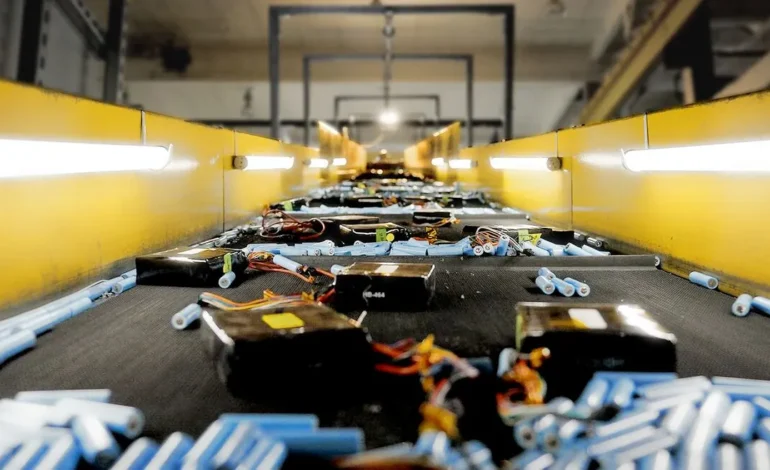
Scaling solid-state battery production remains a technical and economic challenge. High-precision fabrication, uniform electrolyte deposition, and interface engineering require advanced manufacturing techniques. Chinese companies are investing in roll-to-roll processing, thin-film deposition, and automated assembly lines to improve yield, reduce costs, and enable mass production. Pilot lines in 2025 focus on achieving uniformity across large-format cells, optimizing mechanical integrity, and integrating advanced monitoring systems for quality control. Scalable manufacturing is critical for EV adoption and grid-scale energy storage applications.
Energy Density and Performance Improvements
Solid-state batteries enable higher energy density than conventional lithium-ion systems, supporting longer driving ranges and reduced battery weight. Chinese research has achieved energy density improvements of 20–30% over commercial Li-ion cells, enabling EVs to reach ranges exceeding 600 kilometers per charge. Performance improvements include faster charging rates, high-temperature stability, and low self-discharge, enhancing reliability for both automotive and stationary applications. Incremental innovations in electrode architecture, electrolyte composition, and cell design are driving these performance gains.
Applications in Electric Vehicles
EV adoption is a primary driver for solid-state battery development. SSBs provide longer range, faster charging, and improved safety, addressing key consumer concerns such as range anxiety and thermal stability. Chinese EV manufacturers are integrating SSB prototypes into premium electric sedans, SUVs, and commercial fleet vehicles. By combining high-energy-density cells with AI-driven battery management systems, EVs can optimize charging, monitor state-of-health, and extend lifecycle performance. Solid-state technology also supports lightweight designs, contributing to vehicle efficiency and performance.
Grid-Scale Energy Storage and Renewable Integration
Beyond EVs, solid-state batteries are increasingly explored for grid-scale energy storage. Their high energy density, long cycle life, and safety features make them suitable for renewable energy integration. Solar farms, wind energy installations, and industrial microgrids can leverage SSBs to store intermittent energy and provide stable power supply. Chinese research institutions and energy companies are developing modular SSB systems for industrial deployment, enabling flexible energy storage solutions that reduce reliance on conventional fossil fuel-based peaker plants.
Environmental and Sustainability Considerations
Solid-state batteries contribute to environmental sustainability by improving energy efficiency and reducing the risk of hazardous spills. Many SSB designs aim to reduce the use of cobalt and other scarce metals, minimizing environmental impact and supply chain dependency. Advanced recycling methods and second-life applications are being developed to ensure that SSBs contribute to a circular economy. Sustainable production practices, combined with longer battery lifecycles, enhance the overall ecological footprint compared to conventional lithium-ion batteries.
Government Policy and Industrial Support
China’s government provides substantial support for solid-state battery research and commercialization. Policies include R&D grants, tax incentives, and strategic investments in industrial clusters. Collaborative initiatives between universities, research institutes, and private companies accelerate innovation in materials science, manufacturing techniques, and cell design. Pilot programs in EV integration, grid storage, and industrial applications allow real-world testing and refinement, ensuring that solid-state batteries meet performance, safety, and regulatory standards before large-scale deployment.
Challenges to Commercialization
Despite advances, challenges remain in commercializing solid-state batteries. Manufacturing costs are high, material supply chains are still developing, and long-term reliability under varied operating conditions requires further validation. Interface resistance between electrodes and solid electrolytes can limit performance if not optimized. Researchers are also addressing scaling issues, cell packaging, and integration with existing battery management systems. Pilot production and gradual integration into EVs and storage systems are essential to address these challenges while achieving commercial viability.
Global Competitiveness and Market Potential
China’s investment in solid-state battery technology positions it as a global leader in next-generation energy storage solutions. Export opportunities include high-performance EVs, industrial storage systems, and advanced portable electronics. By combining research excellence, manufacturing capacity, and supportive policies, China is creating a competitive advantage in the international battery market. Solid-state batteries offer a strategic technology that supports sustainable mobility, renewable energy integration, and industrial modernization.
Future Outlook
By 2025, solid-state batteries are transitioning from research to early commercialization. Focus areas for the future include increasing cell size, further improving ionic conductivity, reducing production costs, and integrating SSBs into commercial EV fleets and energy storage projects. As manufacturing techniques mature and pilot projects expand, solid-state batteries are expected to complement and eventually replace conventional lithium-ion systems in high-performance applications. Continued government support, R&D investment, and industrial scaling will enable China to maintain leadership in solid-state battery technology.
Conclusion
Advances in solid-state batteries represent a critical step in the evolution of EV and energy storage technologies. With superior safety, higher energy density, and longer lifecycle performance, SSBs address key limitations of conventional lithium-ion batteries. China’s strategic investments, industrial development, and government support ensure that solid-state technology progresses toward large-scale commercialization. By 2025, solid-state batteries are poised to enhance EV performance, support renewable energy integration, and provide environmentally sustainable energy storage solutions, cementing China’s role as a global leader in next-generation battery technology.