Innovation in AI-Specific Chips
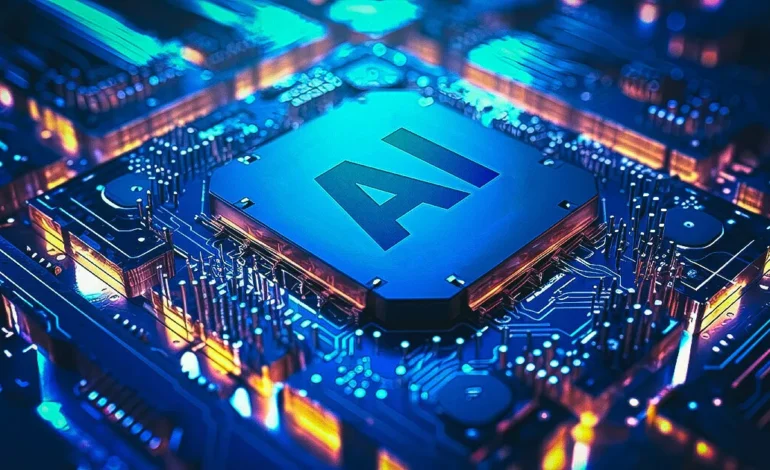
Artificial intelligence (AI) is driving transformative changes across industries, including healthcare, autonomous vehicles, robotics, and data analytics. Central to these innovations are AI-specific chips designed to optimize machine learning, deep learning, and inference tasks. By 2025, China has emerged as a leader in AI chip innovation, investing in high-performance accelerators, neural network processors, and AI-optimized logic chips. This blog explores the technological advances, manufacturing strategies, applications, and future prospects of AI-specific chips in China’s domestic and global markets.
Strategic Importance of AI Chips
AI-specific chips are critical for computing efficiency, performance, and energy management. General-purpose processors such as CPUs are often insufficient for AI workloads due to their computational architecture. AI chips, including GPUs, TPUs, and neural processing units (NPUs), are designed to accelerate matrix operations, optimize parallel computation, and improve energy efficiency. China’s investment in AI chips supports strategic initiatives in smart cities, autonomous mobility, industrial automation, and cloud computing, enhancing technological self-reliance and competitiveness.
Design Innovation and Architecture
AI chip design in China emphasizes efficiency, scalability, and specialization. Advanced neural network accelerators integrate high-bandwidth memory, matrix multipliers, and AI-specific instruction sets. Customizable AI cores enable optimization for inference, training, or edge computing. Modular chiplet architectures support flexibility in scaling compute power across data centers and industrial applications. Innovative designs also incorporate power-efficient operation, thermal management, and hardware-software co-optimization to meet the unique requirements of AI workloads.
Manufacturing Advances and Foundry Collaboration
China’s domestic foundries play a critical role in bringing AI-specific chip designs to production. Collaborations between chip designers and manufacturers optimize fabrication for high-speed nodes, energy efficiency, and reliability. Companies such as SMIC and Hua Hong Semiconductor support AI chip production at 14nm, 7nm, and emerging advanced nodes. Manufacturing innovations include precise lithography, yield optimization, and quality control systems tailored for AI workloads, ensuring that chips perform reliably under high computational demand.
Memory and Bandwidth Optimization
AI workloads require high memory bandwidth for processing large datasets. China’s AI chips incorporate embedded high-bandwidth memory (HBM), efficient cache hierarchies, and optimized memory interfaces to accelerate data transfer. These designs reduce latency, improve inference speed, and increase overall chip throughput. Memory optimization is particularly important for autonomous vehicles, industrial robots, and data center applications, where real-time decision-making is critical.
Edge AI and Embedded Applications
AI-specific chips are increasingly deployed in edge computing environments. Chinese innovations focus on low-power, high-performance chips for smart cameras, IoT devices, autonomous vehicles, and industrial automation. Edge AI chips perform local inference, reducing reliance on cloud processing, minimizing latency, and improving privacy. Integration with sensors, actuators, and communication modules allows real-time data analysis and responsive control, making edge AI chips essential for autonomous mobility, predictive maintenance, and intelligent industrial systems.
Applications in Autonomous Vehicles
Autonomous vehicles rely heavily on AI chips for perception, navigation, and decision-making. AI accelerators process LiDAR, radar, and camera data in real time, enabling vehicles to detect obstacles, interpret traffic signals, and optimize driving behavior. Chinese AI chip manufacturers design specialized processors for automotive-grade safety, thermal stability, and energy efficiency. These chips are essential for scaling autonomous fleets, enhancing vehicle performance, and ensuring compliance with safety standards.
Cloud AI and Data Center Integration
In addition to edge applications, AI-specific chips are critical for cloud-based machine learning and data analytics. High-performance AI accelerators power large-scale neural network training, data mining, and deep learning applications in enterprise and research environments. China’s domestic AI chip ecosystem supports cloud providers, data centers, and research institutions by delivering energy-efficient, scalable, and high-throughput processing capabilities. Integration with AI frameworks, software libraries, and hardware-accelerated algorithms maximizes efficiency and performance.
AI Chip Security and Trust
As AI chips are deployed across critical sectors, security becomes paramount. China emphasizes hardware-level security features, secure boot mechanisms, and encryption for sensitive AI workloads. AI chip designs incorporate protection against tampering, unauthorized access, and reverse engineering. These security measures ensure that AI systems in healthcare, transportation, and industrial automation operate reliably and safely, contributing to national technology security.
Collaboration and Ecosystem Development
China’s AI chip ecosystem thrives on collaboration between designers, manufacturers, research institutions, and industrial users. Joint R&D projects, innovation hubs, and technology consortia accelerate development, optimize fabrication processes, and ensure compatibility with software frameworks. Industrial partnerships facilitate real-world testing in autonomous vehicles, smart cities, and robotics, ensuring that AI-specific chips meet operational requirements and performance benchmarks.
Challenges in AI Chip Innovation
Despite rapid progress, challenges remain in AI chip development. Advanced fabrication equipment, such as EUV lithography, is still partially imported, limiting access to cutting-edge nodes. Achieving high yield, thermal management, and energy efficiency at scale requires continued R&D investment. AI chip performance must also be balanced with cost considerations, particularly for mass-market applications. China addresses these challenges through domestic innovation, strategic policy support, and talent development.
Global Competitiveness and Market Outlook
China’s investment in AI-specific chips positions the country as a leader in global AI hardware markets. Domestic production reduces reliance on foreign suppliers, supports strategic industries, and enables exports to emerging AI markets. By 2025, AI chip innovation drives competitiveness in cloud computing, autonomous mobility, industrial automation, and smart city applications. Continued R&D, policy support, and manufacturing scaling ensure that China remains at the forefront of AI hardware innovation.
Future Outlook
Looking ahead, AI-specific chip development in China will focus on sub-5nm fabrication, heterogeneous computing architectures, neuromorphic processing, and enhanced energy efficiency. Edge AI applications, autonomous vehicles, and industrial robotics will drive demand for specialized chips. Policy initiatives, industrial collaboration, and talent cultivation will support ongoing innovation, ensuring that China maintains technological leadership in AI hardware while addressing strategic and commercial objectives.
Conclusion
Innovation in AI-specific chips is a cornerstone of China’s technological strategy, enabling high-performance computing, autonomous systems, and industrial intelligence. By combining advanced design, domestic manufacturing, memory optimization, edge and cloud integration, and security features, China is creating a robust AI chip ecosystem. Continued investment, industrial collaboration, and policy support ensure that AI-specific chips meet performance, reliability, and scalability requirements. By 2025, these innovations position China as a global leader in AI hardware, driving both domestic technological independence and international competitiveness.