China’s Robotics Startups to Watch in 2025

China’s robotics industry is experiencing rapid growth, driven by technological innovation, supportive government policies, and increasing industrial automation. Startups are at the forefront, developing intelligent solutions for manufacturing, healthcare, logistics, and service sectors. These emerging companies are transforming operational efficiency, customer experience, and industrial capabilities. This blog highlights notable robotics startups in China, their innovations, sector-specific applications, funding trends, and their potential impact on the robotics ecosystem.
Emergence of Robotics Startups
The Chinese robotics startup ecosystem has expanded significantly, fueled by government incentives, venture capital, and industrial demand. Startups focus on areas including industrial automation, AI-driven robotics, collaborative robots, and service robotics. Agile business models, rapid prototyping, and innovation-driven approaches allow these companies to respond quickly to market needs. Startups also foster domestic talent, accelerate technological adoption, and contribute to the global competitiveness of China’s robotics sector.
Industrial Automation Startups
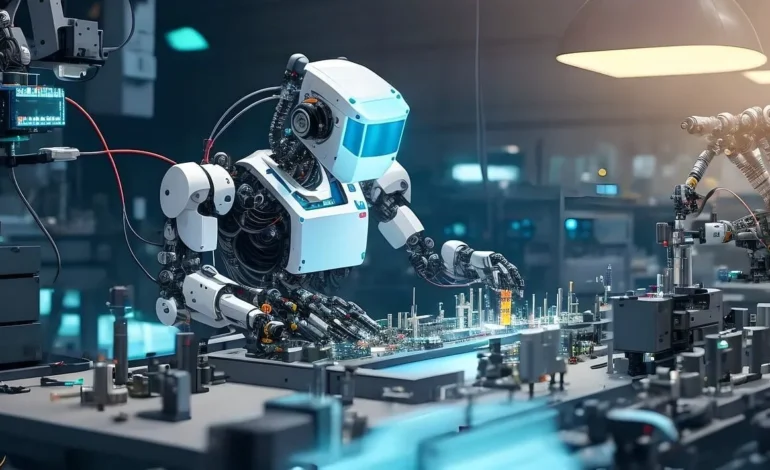
Startups developing industrial robots are optimizing manufacturing processes across automotive, electronics, and consumer goods sectors. These companies create robotic arms, automated assembly lines, and quality inspection solutions that increase productivity, precision, and efficiency. Advanced sensors, AI integration, and real-time monitoring enable robots to perform complex tasks and adapt to changing production requirements. Industrial automation startups support the transition to smart factories and drive competitiveness in global manufacturing.
Service Robotics Startups
Service robotics startups focus on healthcare, retail, hospitality, and logistics. They develop robots for patient assistance, cleaning, delivery, customer engagement, and inventory management. AI-driven capabilities such as computer vision, natural language processing, and autonomous navigation enable these robots to interact with humans safely and efficiently. Service robotics startups enhance operational efficiency, improve user experience, and reduce labor costs for enterprises across sectors.
Collaborative Robotics Startups
Collaborative robot (cobot) startups are enabling human-robot synergy in factories and workplaces. Cobots perform repetitive, precise, or hazardous tasks while working alongside human operators. Startups are developing lightweight, flexible, and easily programmable robots that can be rapidly deployed. These innovations allow enterprises to scale operations, improve safety, and enhance workforce productivity. Collaborative robotics startups play a critical role in the modernization of manufacturing and industrial practices.
AI-Driven Robotics Innovations
AI integration is a key differentiator among Chinese robotics startups. Machine learning, computer vision, and predictive analytics enable robots to learn from their environment, optimize workflows, and make autonomous decisions. AI-driven robots can adapt to new tasks, monitor performance, and predict maintenance needs, reducing downtime and operational costs. Startups leveraging AI create intelligent systems that are flexible, scalable, and capable of meeting diverse industry requirements.
Healthcare Robotics Startups
Startups in healthcare robotics develop surgical robots, telemedicine platforms, rehabilitation devices, and patient-assist systems. These innovations improve clinical outcomes, reduce human error, and optimize hospital workflows. AI-powered diagnostic tools, autonomous delivery robots, and robotic exoskeletons enhance patient care and support medical staff. Healthcare robotics startups contribute to a more efficient, accessible, and patient-centric healthcare system.
Logistics and Warehouse Robotics Startups
Logistics-focused startups create autonomous mobile robots, sorting systems, and inventory management solutions for warehouses and distribution centers. AI-enabled robots optimize routes, manage inventory flow, and ensure timely order fulfillment. Startups are also integrating robotics with IoT, cloud computing, and predictive analytics to enhance warehouse operations and supply chain efficiency. Logistics robotics startups support the e-commerce boom and modern distribution networks.
Funding Trends and Investment
Robotics startups in China are attracting significant investment from venture capital, corporate funding, and government initiatives. Funding supports R&D, prototyping, manufacturing, and market expansion. Government incentives and industrial grants encourage startups to innovate, reduce costs, and bring products to market faster. Investment trends reflect confidence in robotics as a transformative technology with broad industrial and societal impact.
Collaborations and Partnerships
Startups often collaborate with universities, research institutions, and established companies to access expertise, testing facilities, and technology platforms. Collaborative efforts accelerate innovation, improve product quality, and facilitate regulatory compliance. Partnerships with enterprise clients enable real-world deployment, feedback collection, and iterative improvement of robotic solutions. Collaborative networks strengthen the startup ecosystem and foster sustainable growth.
Talent and Workforce Development
Robotics startups attract engineers, AI specialists, and automation experts. Workforce development programs, university partnerships, and vocational training initiatives ensure that startups have access to skilled personnel. Talent development is essential for designing advanced robotics solutions, implementing AI algorithms, and maintaining high-quality standards. A well-trained workforce supports innovation, scalability, and competitive advantage in robotics.
Challenges and Opportunities
Startups face challenges including high R&D costs, technological complexity, market competition, and regulatory compliance. Developing scalable and reliable robotic systems requires substantial resources and iterative testing. However, the opportunities are significant: demand for automation, AI-enabled services, and smart manufacturing continues to grow. Startups that innovate, secure funding, and navigate regulatory landscapes can achieve substantial market impact.
Sector-Specific Impact
Robotics startups are influencing multiple sectors, including manufacturing, healthcare, logistics, retail, and service industries. Their innovations enhance efficiency, precision, and safety while reducing labor costs and operational errors. Startups contribute to the broader robotics ecosystem by providing specialized solutions, creating jobs, and fostering technological leadership in emerging markets.
Future Prospects
China’s robotics startups are expected to continue driving innovation, expanding into international markets, and enhancing industrial automation. Integration of AI, cloud computing, and IoT will enable smarter, more autonomous, and adaptive robotic solutions. Startups will continue to create value across industries, improve operational efficiency, and strengthen China’s position as a global leader in robotics technology.
Conclusion
China’s robotics startups are transforming industries through industrial automation, service robots, collaborative systems, and AI-driven innovations. Investment, government support, and talent development fuel their growth, while partnerships and collaborations accelerate technology adoption. Startups are enhancing efficiency, safety, and productivity across manufacturing, healthcare, logistics, and retail sectors. The continued success of these robotics startups will shape the future of automation, operational intelligence, and human-robot collaboration, positioning China as a global leader in the robotics ecosystem.