BYD and NIO Global Push: China’s EV Exports Outpace Japan’s
China’s electric vehicle (EV) industry has crossed a historic threshold. In 2025, China officially became the world’s largest exporter of automobiles, surpassing Japan. This shift was not accidental but the result of a decade-long national strategy combining innovation, policy, and industrial scale. Two companies stand at the forefront of this transformation: BYD and NIO. Their aggressive global expansion, backed by advanced battery technology and a sophisticated domestic supply chain, has made Chinese EVs competitive in markets once dominated by established players like Toyota, Volkswagen, and Tesla. Reports from Nikkei Asia, SCMP, and Reuters confirm that China exported over 6 million vehicles in 2024, half of which were electric or hybrid, signaling the arrival of a new global automotive leader.
The Evolution of China’s EV Industry
China’s rise as an EV powerhouse began with government intervention. Policies under the “Made in China 2025” strategy and the New Energy Vehicle (NEV) plan provided subsidies, tax breaks, and infrastructure investment that encouraged both consumers and manufacturers to shift toward electric mobility. Over time, subsidies were phased out, but technological innovation and scale replaced them as competitive drivers.
BYD, founded in 1995 as a battery producer, epitomizes this evolution. Its expertise in lithium iron phosphate (LFP) batteries provided a cost advantage over Western rivals. By 2025, BYD had vertically integrated its operations, producing everything from batteries to chips, allowing it to maintain stable prices amid global supply chain disruptions. The company’s “Blade Battery” design, which prioritizes safety and efficiency, became a benchmark for the global industry.
NIO, on the other hand, took a different path. It positioned itself as a premium EV brand, focusing on design, performance, and user experience. NIO’s battery-swapping technology allows drivers to replace a depleted battery in under five minutes, an innovation that addresses range anxiety and infrastructure limitations in international markets.
According to Caixin, these two companies represent China’s dual EV strategy BYD leading mass-market electrification and NIO driving brand prestige. Together, they have made Chinese EVs synonymous with both affordability and innovation.
Global Expansion Strategies and Market Penetration
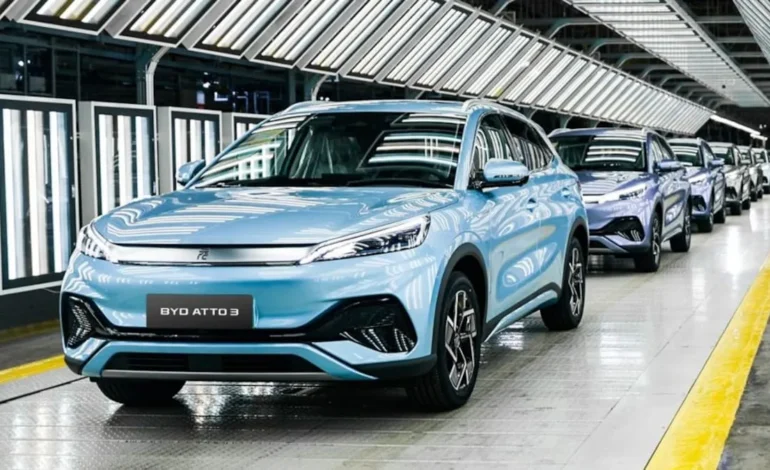
BYD’s export campaign has been swift and strategic. The company now sells vehicles in more than 70 countries, including key markets in Europe, Latin America, and the Middle East. Its models such as the Dolphin, Atto 3, and Seal are designed specifically for global consumers, meeting European safety standards while maintaining competitive pricing.
In 2025, BYD opened its first European manufacturing plant in Hungary, followed by an assembly line in Brazil. Reuters reports that the company is negotiating additional facilities in Indonesia and Mexico to support ASEAN and North American exports. This distributed production strategy allows BYD to avoid trade barriers while ensuring localized supply chain resilience.
NIO has focused on the high-end market, targeting Europe and the Gulf region. It operates “NIO Houses” in cities like Oslo, Munich, and Dubai, combining showrooms with lifestyle hubs to strengthen brand identity. The company’s subscription-based model offering cars on flexible leasing terms that include battery swaps, software updates, and customer service has proven popular among tech-savvy urban consumers.
NIO’s expansion is supported by a digital ecosystem that connects cars, charging stations, and service centers via the NIO App. According to SCMP, this ecosystem now operates in seven European countries, offering a seamless customer experience similar to Apple’s product ecosystem in consumer electronics.
Technology Leadership and Supply Chain Strength
China’s EV success rests on its control of the global battery supply chain. Chinese companies dominate over 70% of the world’s lithium refining, 60% of cobalt processing, and nearly 80% of battery production. CATL and BYD alone account for over half of global EV battery output. This vertical integration ensures cost stability and rapid scaling.
BYD’s Blade Battery has become a global reference point for safety and endurance. Using LFP chemistry, it offers longer life cycles, higher thermal stability, and lower costs compared to nickel-based batteries. The technology has attracted partnerships with Toyota and Tesla, both of which are exploring joint production ventures in China.
NIO, meanwhile, is investing heavily in solid-state battery technology. In 2025, it announced a 150 kWh prototype capable of delivering a range of up to 1,000 kilometers per charge. The company’s research is supported by the National Innovation Center for Electric Vehicles, part of China’s broader plan to achieve battery self-sufficiency by 2027.
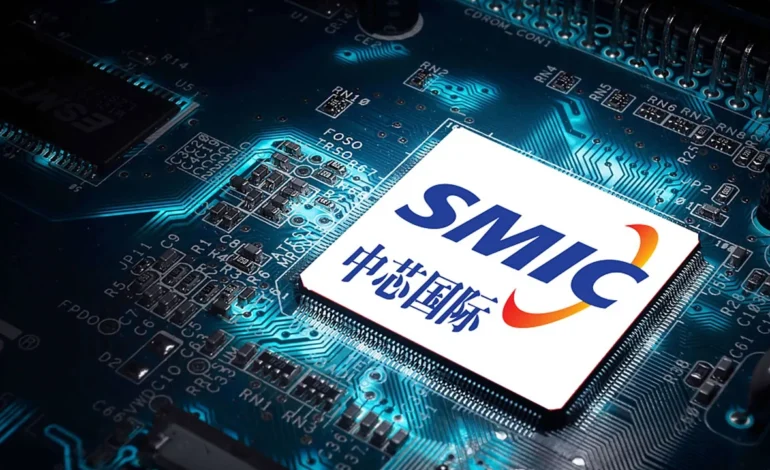
The domestic semiconductor industry also plays a key role. With SMIC’s recent 5 nm breakthrough, China can now produce automotive-grade chips for EVs locally, reducing dependence on foreign suppliers and mitigating risks from export controls.
Global Competition and Policy Reactions
The rapid rise of Chinese EV exports has triggered mixed reactions abroad. The European Union launched an anti-subsidy investigation in late 2024, claiming that Chinese automakers benefit from unfair state support. However, Nikkei Asia reports that even after adjusting for subsidies, Chinese EVs remain 20–25% cheaper than comparable European models due to scale efficiencies and supply chain integration.
In response, BYD and NIO are increasing localization efforts in Europe by hiring local workers, sourcing components from regional suppliers, and adhering to strict environmental standards. These measures aim to neutralize trade barriers and project a positive image of Chinese technology as globally collaborative rather than purely state-driven.
In emerging markets, the reception has been overwhelmingly positive. Southeast Asian countries such as Thailand, Vietnam, and Malaysia have welcomed Chinese EV investments as part of their industrial modernization plans. The Gulf region has also become a priority. In 2025, BYD signed an agreement with Saudi Arabia’s Public Investment Fund to co-develop EV assembly lines, while NIO launched premium SUV sales in the UAE.
Sustainability and Future Outlook
Sustainability is central to China’s EV expansion narrative. Both BYD and NIO are integrating circular economy principles into their operations. BYD’s battery recycling facilities recover lithium, cobalt, and nickel for reuse, while NIO’s second-life program repurposes used batteries for energy storage in power grids. These initiatives align with China’s carbon neutrality targets and help enhance brand perception abroad.
Looking ahead, analysts predict that China’s EV exports will exceed 8 million units by 2026. The combination of cost leadership, innovation, and global manufacturing presence gives Chinese automakers a unique advantage. Moreover, the next wave of competition will be defined not only by vehicles but by software autonomous driving systems, connected mobility platforms, and data-driven maintenance solutions.
Both BYD and NIO are investing in AI-driven vehicle operating systems. BYD’s DiLink and NIO’s Banyan OS collect real-time driving data to improve navigation, safety, and energy efficiency. These systems are evolving into mobility ecosystems capable of supporting autonomous driving and smart city integration.
Conclusion
China’s electric vehicle revolution has moved from the domestic stage to global dominance. BYD and NIO embody the dual character of this transformation industrial scale and technological sophistication. Their global expansion is redefining how the world perceives Chinese manufacturing, shifting the narrative from imitation to innovation.
As countries accelerate their green transitions, China’s EV industry stands as a model of how industrial policy, technology, and market strategy can converge to create global impact. BYD’s mass-market reach and NIO’s premium innovation form two halves of the same vision: making China the engine of the world’s electric mobility future.