China’s AI Retail Revolution: How Smart Robots Are Redefining the Shopping Experience
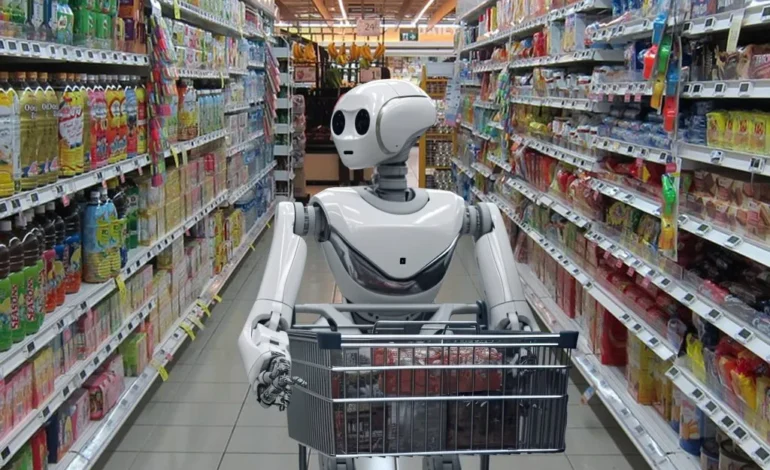
China’s retail industry is entering a new era of automation powered by artificial intelligence. Across malls, supermarkets, hotels, and airports, service robots have become central to the consumer experience. They deliver meals, guide shoppers, process payments, and even assist with product recommendations. What began as a response to labor shortages and pandemic-driven safety measures has evolved into a nationwide business model built on AI efficiency. According to SCMP and Nikkei Asia, more than 1.3 million service robots are now active in China, making it the largest retail automation market in the world. These robots symbolize not just convenience but also China’s broader ambition to integrate digital intelligence into daily economic life.
The Rise of AI Retail Ecosystems
Chinese retail giants have reimagined how consumers shop by embedding robotics into every layer of their operations. Alibaba’s Freshippo stores, JD.com’s autonomous supermarkets, and Meituan’s smart food courts are redefining physical retail with AI integration.
In Shanghai, Freshippo’s logistics system relies on hundreds of robots that collect, package, and deliver groceries within 30 minutes of purchase. Using AI-powered route optimization, the robots coordinate with warehouse drones to manage stock in real time. JD.com’s unmanned supermarkets operate with a similar model, using facial recognition to identify customers, analyze behavior patterns, and suggest personalized promotions.
Meituan’s “Smart Food Mall” project in Beijing uses autonomous delivery carts to bring meals directly to tables or offices. The company reports that automation has reduced operational costs by 35% and improved order accuracy to nearly 99%. According to TechNode, these systems operate on a unified cloud platform that connects payments, logistics, and inventory, creating a continuous feedback loop between digital and physical retail.
AI, Cloud, and Data Intelligence Behind Automation
The intelligence driving China’s retail automation lies in a powerful combination of cloud computing, AI algorithms, and real-time analytics. Companies are investing heavily in edge AI systems that allow robots to process data locally rather than depending on remote servers.
Baidu’s Apollo AI cloud provides vision recognition and navigation capabilities for in-store and delivery robots. Tencent’s Hunyuan model enables natural language understanding for customer interaction, allowing robots to answer questions and provide recommendations in a conversational tone. Huawei’s Atlas edge chips power the computing framework behind most commercial delivery robots, ensuring ultra-low latency and faster decision-making.
These platforms also connect to national digital payment systems. Robots in many retail outlets accept Alipay, WeChat Pay, or digital yuan directly, enabling fully contactless transactions. The integration between financial and operational AI reflects China’s strength in combining fintech with physical commerce.
Caixin reports that over 80% of newly registered retail automation firms in 2025 use a hybrid AI-cloud architecture, ensuring that every robot not only performs tasks but also collects and learns from customer behavior data. This information helps retailers refine pricing, stock management, and product placement dynamically.
Economic Motivation and Operational Impact
Rising labor costs and the need for operational precision have made automation a necessity rather than an option. Service robots cut long-term labor expenses by up to 40% while maintaining consistent quality. In hospitality and catering, robots can serve 200 customers per hour without fatigue, allowing businesses to focus human staff on higher-value tasks such as customer engagement.
The Ministry of Commerce reports that retail automation contributed 1.2 trillion yuan to the national economy in 2024, a figure expected to rise 25% annually. Small and medium enterprises are also entering the automation wave. Modular robots priced under 60,000 yuan per unit allow small retailers to deploy automated assistance without heavy investment. Government subsidies under the “AI in Business” initiative further encourage adoption, particularly in Tier-2 and Tier-3 cities.
The transition is not just about efficiency but also about brand experience. In Guangzhou, cosmetics chain Perfect Diary uses humanoid robots that provide beauty consultations using AI-driven skin analysis. In hotels, the Huazhu Group has installed delivery robots that bring toiletries, meals, or packages directly to rooms. These personalized interactions make automation part of the customer journey, not merely a back-end process.
Consumer Behavior and Social Acceptance
Chinese consumers have embraced AI-powered retail faster than any other market. With widespread familiarity with mobile payments and digital platforms, customers view robots as natural extensions of the service economy. Surveys by the China Internet Network Information Center show that 70% of consumers feel comfortable interacting with service robots, citing reliability, hygiene, and entertainment as key advantages.
For younger generations, automation has become part of the social experience of shopping. Interactive robots are now used for marketing campaigns, product launches, and festival promotions. In Shenzhen’s Nanshan Tech Mall, robots equipped with emotion-recognition cameras respond to facial cues, adjusting their tone or offers accordingly.
At the same time, companies are maintaining a balance between automation and human interaction. Luxury brands such as Hermès and Burberry use robots for logistical support but retain human staff for client-facing roles. This hybrid approach ensures that technology complements emotional connection rather than replacing it.
Innovation in AI Design and Functionality
China’s robotics research institutes and AI startups are driving the next generation of retail automation. Engineers are developing robots that can move seamlessly through crowded spaces, recognize repeat customers, and adjust their behavior to social context.
The Shenzhen AI Lab has introduced emotion-aware AI that interprets facial expressions and tone to gauge customer satisfaction. Combined with 5G connectivity, robots now communicate with each other in real time to coordinate deliveries and manage queues. Baidu Apollo’s new navigation module enables robots to map large areas like shopping centers with centimeter-level precision, even in multi-floor layouts.
Energy efficiency is another area of innovation. New solid-state batteries extend operation time to 15 hours, while regenerative braking systems allow robots to recover and reuse power. These upgrades lower maintenance costs and improve environmental sustainability.
As Nikkei Asia reports, Chinese developers are also exporting AI retail solutions abroad. Robotics firms from Shenzhen and Hangzhou are supplying automation systems to Southeast Asia and the Middle East, where demand for AI-driven retail is growing rapidly.
Conclusion
China’s retail automation boom demonstrates how deeply artificial intelligence can be integrated into everyday commerce. The combination of robotics, cloud computing, and real-time data analysis has turned the country’s retail sector into a model of digital transformation.
What distinguishes China’s approach is scale and adaptability. From small convenience stores to luxury malls, automation is enhancing efficiency, personalization, and customer experience simultaneously. The line between physical and digital retail is disappearing, replaced by an intelligent ecosystem where every interaction generates insight and value.
As AI continues to evolve, China’s retail sector will not only lead in automation but also redefine the global standard for how technology serves people efficiently, intuitively, and intelligently.