China’s Stock Market Outlook 2025: Can Policy Boost Investor Confidence
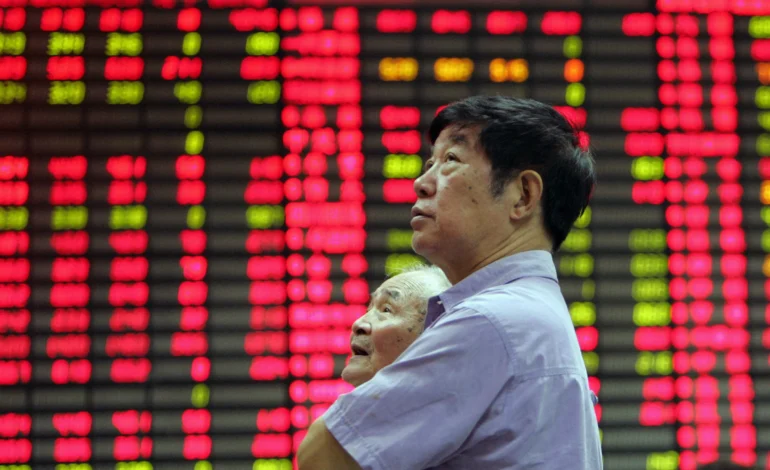
China’s financial markets are showing early signs of recovery after two turbulent years marked by slowing growth, property debt, and global economic uncertainty. The Shanghai Composite and Shenzhen Component indices have stabilized since the beginning of 2025, supported by targeted monetary easing and stronger regulatory guidance. According to Reuters and Caixin, foreign inflows into China’s A-shares reached 72 billion yuan in Q1 2025 a 45% increase from the previous quarter. Yet, despite policy optimism, investor confidence remains fragile as global capital markets weigh the sustainability of China’s rebound.
Policy Measures Driving Market Recovery
The Chinese government has introduced a multi-layered policy framework to strengthen investor sentiment and stimulate capital markets. The People’s Bank of China (PBoC) has cut the reserve requirement ratio twice since late 2024, freeing up more than 1.2 trillion yuan in liquidity. This move encourages banks to increase lending to private firms and SMEs.
In addition, the China Securities Regulatory Commission (CSRC) has launched reforms to improve corporate transparency and protect minority shareholders. These measures include faster IPO approvals, tighter auditing standards, and stricter penalties for financial misconduct. According to SCMP, 38 new listings in 2025 raised over 200 billion yuan, primarily in renewable energy, semiconductor, and healthcare sectors.
The government is also expanding its “Capital Market Revitalization Plan”, which allows state funds to purchase undervalued blue-chip stocks through the Central Huijin Investment Corporation. This intervention has provided short-term market stability and signaled state backing for strategic sectors.
Technology and Green Sectors Lead the Rally
Technology and clean energy stocks are emerging as major drivers of China’s market rebound. The country’s commitment to industrial upgrading and digital transformation is fueling renewed investor enthusiasm.
AI, semiconductor, and battery-related equities have led gains on both the Shanghai and Shenzhen exchanges. Companies such as CATL, SMIC, and Huawei Technologies continue to attract institutional investors seeking exposure to long-term innovation trends.
Green finance also remains a focus. Nikkei Asia reports that more than 60% of new bond issuances in 2025 qualify as ESG or sustainability-linked. The dual-carbon policy has boosted demand for clean tech firms involved in energy storage, smart grids, and hydrogen fuel. As a result, China’s CSI New Energy Index rose nearly 22% in the first half of 2025, outperforming traditional sectors such as construction and real estate.
Investor Confidence and Global Sentiment
Despite positive indicators, confidence in China’s stock market remains cautious. Foreign investors are still evaluating long-term risks, including property market instability and slower consumption recovery. According to Bloomberg, overseas funds withdrew $8 billion from China’s bond market in late 2024 but began returning gradually in early 2025 after improved policy communication.
Domestically, retail investors remain the backbone of trading activity. To stabilize sentiment, regulators are promoting more transparent financial reporting and expanding dividend incentives for listed companies. Analysts believe consistent dividend growth will be critical to restoring household trust in equity investments.
The strengthening of the yuan has also contributed to optimism. With inflation under control and exports rebounding, China’s currency has appreciated 3.1% against the dollar since January, reducing the risk of capital flight.
Global Integration and the Hong Kong Connection
Hong Kong continues to serve as China’s international financial bridge. The Stock Connect and Bond Connect programs linking mainland and Hong Kong markets saw record activity in Q2 2025. Daily cross-border trading volumes have exceeded 150 billion yuan, according to Caixin.
The Hong Kong Exchange (HKEX) is diversifying listings with new incentives for tech, green, and biotech companies from the mainland. Several Chinese AI and semiconductor startups that faced restrictions abroad are now choosing Hong Kong for IPOs, ensuring a steady pipeline of capital inflows.
Meanwhile, the Greater Bay Area (GBA) Finance Initiative is integrating digital currency settlements across Shenzhen, Hong Kong, and Macau. This development allows instant cross-border payments in digital yuan, improving efficiency for regional investors.
Challenges Ahead for 2025
China’s equity market still faces structural challenges. The property sector’s debt overhang continues to weigh on financial institutions, limiting liquidity for private companies. Moreover, weak consumer spending has slowed earnings growth for retail and service-oriented stocks.
Geopolitical tensions remain another risk. Trade restrictions on high-tech exports and tightening U.S.-China investment screening laws could dampen foreign inflows. However, domestic policy adjustments and continued fiscal support may offset some of these external pressures.
According to SCMP, the key to sustained market stability will lie in balancing government intervention with private sector vitality. Too much policy control can distort valuations, while too little may invite volatility.
Conclusion
China’s stock market outlook for 2025 is cautiously optimistic. Strategic policy easing, renewed capital inflows, and strong performance in technology and green sectors are providing a foundation for recovery. Yet, investor confidence will depend on consistent policy follow-through and corporate transparency.
If Beijing continues its current path supporting innovation, curbing excess leverage, and maintaining fiscal stability the country’s equity markets could regain their status as one of Asia’s most dynamic investment frontiers.