Digital Infrastructure Diplomacy: China’s New Belt and Road Tech Blueprint
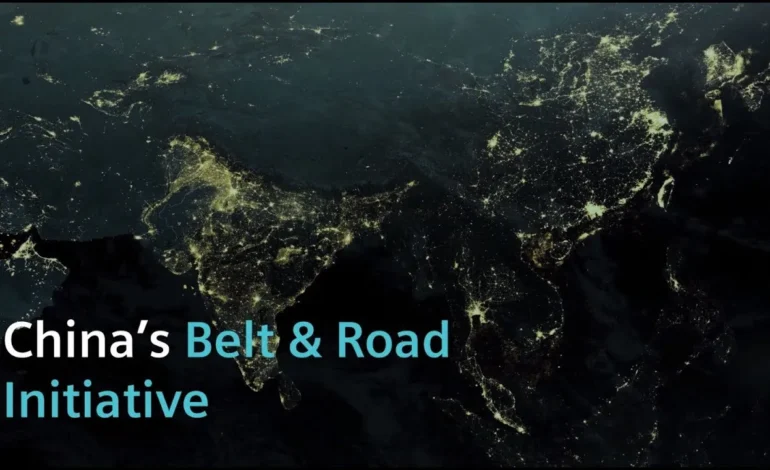
China’s Belt and Road Initiative is evolving beyond railways and ports into a digital-first strategy that fuses technology, trade, and finance. This new phase, often called the “Digital Silk Road”, emphasizes cloud computing, cross-border payments, AI-driven logistics, and data infrastructure. The transformation reflects Beijing’s ambition to lead global digital governance and strengthen economic interdependence across Asia, the Middle East, and Africa.
According to SCMP, Xinhua, and Reuters, China’s digital infrastructure projects under the BRI have expanded to 155 countries, attracting over $220 billion in cumulative investment. The focus in 2025 is clear: establish digital connectivity as the backbone of modern diplomacy, ensuring that data, rather than only goods, becomes the primary currency of global trade.
The Shift from Hard Infrastructure to Digital Connectivity
China’s original Belt and Road vision centered on physical infrastructure highways, pipelines, and power grids. But the pandemic, climate shifts, and supply chain disruptions revealed the need for a parallel digital network. Beijing responded by launching the BRI Digital Cooperation Framework (2024–2030), which aims to integrate smart technology into physical infrastructure.
Under this framework, digital projects now account for more than one-third of BRI investments. Countries such as Saudi Arabia, Egypt, and Thailand are receiving Chinese-built data centers, 5G networks, and satellite communication systems. Caixin reports that over 40 Chinese tech companies, including Huawei, ZTE, Alibaba Cloud, and China Mobile, are spearheading overseas digital infrastructure contracts. These projects are designed not only to enhance efficiency but also to establish China’s technical standards abroad, strengthening interoperability across partner nations.
One flagship project is the China-Pakistan Digital Corridor, connecting Gwadar Port with inland logistics hubs via 5G-enabled systems that track cargo and payments in real time. Similarly, the China–UAE Smart Port Alliance in Abu Dhabi integrates AI, blockchain, and IoT systems to manage shipping logistics, reducing clearance times by 35%.
Smart Ports and AI-Driven Trade Logistics
China’s AI integration in global logistics has become one of the BRI’s defining features. Major Chinese port technology firms like China Merchants Port Group and Huawei Marine Networks are installing autonomous cranes, AI scheduling systems, and digital customs management tools in Asia, Africa, and Europe.
In Malaysia’s Port Klang and Greece’s Piraeus Port, Chinese-developed “smart port” systems use predictive analytics to coordinate shipping schedules, weather data, and cargo flow. This has shortened turnaround times by up to 30% and reduced fuel consumption through route optimization.
Beyond logistics, digital infrastructure diplomacy is also fostering new forms of governance collaboration. The China-ASEAN Digital Economy Partnership enables member states to share customs and trade data through blockchain-secured platforms, enhancing transparency and efficiency. By embedding AI into these systems, China is positioning itself as the central hub of a transnational logistics intelligence network.
Fintech Corridors and Cross-Border Payments
Finance is another cornerstone of China’s digital diplomacy. The People’s Bank of China (PBoC) is expanding the use of the digital yuan (e-CNY) through BRI fintech corridors that connect banks and merchants across Asia, Africa, and the Middle East.
The mBridge Project a multi-central bank digital currency platform co-developed by China, Thailand, the UAE, and Hong Kong has successfully completed pilot transactions worth more than $25 billion, according to Reuters. This platform allows cross-border payments to settle within seconds rather than days, bypassing SWIFT and reducing transaction costs by 96%.
In Kenya and Egypt, Chinese fintech firms are working with local banks to establish digital yuan-compatible payment apps, simplifying remittances and trade settlements for small businesses. These projects align with China’s long-term goal of building a “digitally interconnected trade ecosystem” where the e-CNY acts as a bridge currency.
Alibaba’s Ant Group and Tencent’s WeBank are also helping developing economies modernize their payment infrastructure through AI-driven credit scoring and blockchain verification systems. The result is a financial ecosystem where trade flows are seamlessly tied to digital finance — a powerful extension of China’s soft power.
Cloud Infrastructure and Data Diplomacy
The cloud computing boom has become the silent backbone of China’s digital Belt and Road. Alibaba Cloud and Huawei Cloud now operate over 25 data centers across Southeast Asia, the Middle East, and Africa. These centers store everything from government records to corporate data, ensuring digital continuity for partner countries.
The Digital Silk Road Cloud Initiative launched in 2024 encourages member nations to adopt cloud architectures based on China’s cybersecurity framework. This initiative strengthens digital sovereignty while ensuring data compatibility across regions that adopt Chinese infrastructure.
In Saudi Arabia and Indonesia, joint cloud ventures between Huawei Cloud and local telecom providers manage AI training datasets for logistics and healthcare. Meanwhile, TechNode reports that Ethiopia’s first national data center, built by Chinese engineers, is processing digital IDs and e-government transactions for over 50 million citizens.
China’s control over this digital architecture not only enhances its commercial reach but also establishes a form of “data diplomacy,” where digital ecosystems double as platforms for international influence.
AI and 5G as Strategic Levers in Diplomacy
China’s 5G expansion is now tightly linked to AI diplomacy. By exporting next-generation networks, China ensures its partners can support data-intensive technologies such as autonomous vehicles, smart cities, and industrial automation.
Huawei has deployed over 300 5G base stations in Africa and Southeast Asia as part of the BRI’s technology component. These networks serve as the backbone for smart agriculture systems, AI education platforms, and real-time healthcare monitoring.
The BRI AI Cooperation Plan (2025) introduces collaborative training programs in Malaysia, Thailand, and the UAE. These centers train thousands of engineers in cloud computing, robotics, and cybersecurity, ensuring local talent benefits directly from China’s digital presence.
Through AI education and 5G infrastructure, Beijing is cultivating “technology diplomacy” exporting knowledge and capacity rather than just hardware. This approach enhances political goodwill and makes local economies digitally dependent on Chinese technology ecosystems.
Environmental Sustainability and Digital Governance
China’s new digital infrastructure projects emphasize sustainability and ethical governance. The Green Digital Silk Road initiative promotes low-energy data centers, renewable-powered networks, and eco-friendly logistics automation. According to Xinhua, China aims to make all BRI digital projects carbon-neutral by 2035.
Huawei’s cloud centers in Malaysia and Dubai now run on 100% renewable energy, reducing carbon emissions by nearly 150,000 tons annually. In Pakistan, solar-powered AI monitoring systems are being deployed to reduce traffic congestion and pollution in major cities.
Digital governance has also become a diplomatic export. China’s Smart Regulation Framework integrating AI ethics, cybersecurity laws, and data localization is being adopted by countries such as Indonesia and Egypt. This governance model provides a blueprint for balancing innovation with state control, mirroring China’s domestic digital ecosystem.
Strategic and Geopolitical Implications
Digital infrastructure diplomacy is redefining China’s geopolitical engagement. By controlling data flow, payment systems, and AI platforms, China is building long-term digital dependency among partner nations. While critics in the West see this as “digital influence projection,” many developing countries view it as a path toward affordable modernization.
Southeast Asian and Middle Eastern states increasingly prefer Chinese technology because it comes with financing, technical training, and fewer political conditions compared to Western alternatives.
China’s growing role in digital standards-setting bodies such as the ITU (International Telecommunication Union) further cements its leadership in defining how global data systems operate. As SCMP notes, this digital ecosystem could become the backbone of a new global trade architecture centered on Asian technology.
Conclusion
China’s digital Belt and Road strategy marks the convergence of infrastructure, technology, and diplomacy. By exporting AI systems, 5G networks, and digital payment technologies, China is weaving a web of connectivity that extends beyond physical borders.
This strategy is not only transforming partner economies but also reshaping global geopolitics — where digital interdependence becomes the new measure of influence. As the world digitizes at record speed, China’s mastery of digital infrastructure diplomacy ensures it remains at the forefront of the next wave of globalization one powered not by roads and ports, but by data, algorithms, and connectivity.