China’s Policy Pivot to Innovation: From Manufacturing Powerhouse to Tech Leader
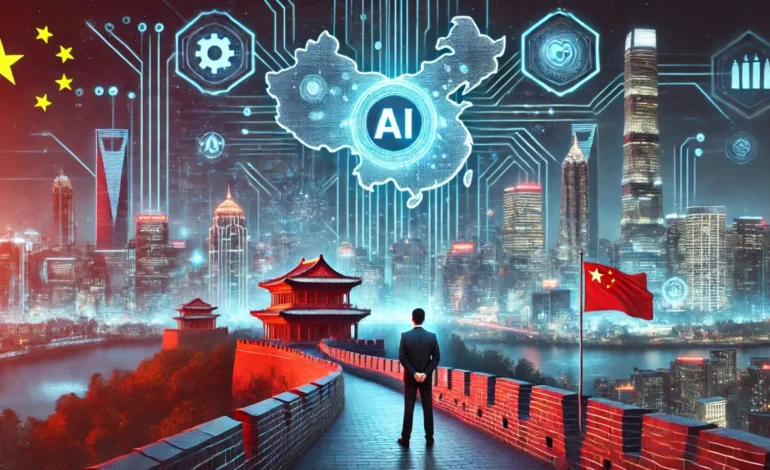
China is redefining its economic identity through a sweeping policy transformation that places innovation at the core of national progress. Once known primarily as the world’s factory, the country is now positioning itself as a global technology and research leader. The 14th Five-Year Plan and the latest directives from the State Council emphasize high-end manufacturing, artificial intelligence, renewable energy, and biotechnology as priority sectors for sustainable growth. According to Nikkei Asia and China Daily, research and development expenditure reached 3.4% of GDP in 2025, the highest in Chinese history. This shift represents not only an economic adjustment but also a cultural reorientation toward invention, efficiency, and digital intelligence.
From Industrial Output to Intellectual Capital
For decades, China’s economic model was anchored in low-cost exports and heavy manufacturing. The post-2020 global environment, however, exposed vulnerabilities in this model. Rising labor costs, energy transitions, and geopolitical trade restrictions forced policymakers to pivot toward innovation as the new engine of competitiveness.
The government’s National Innovation-Driven Development Strategy aims to make scientific advancement the foundation of long-term stability. It promotes greater synergy between universities, private firms, and public research institutes. Over 400 new state-backed laboratories were established in 2025 to focus on AI, quantum computing, advanced materials, and bioengineering. These research hubs are designed to accelerate breakthroughs that can be quickly commercialized by domestic enterprises.
The success of this policy is reflected in patent growth. According to SCMP, China filed more than 1.9 million patents in 2024, accounting for nearly half of the global total. Many of these are in emerging fields such as green technology, energy storage, and autonomous systems.
Reforming the Role of the Private Sector
Innovation policy in China increasingly depends on the vitality of private enterprise. After several years of regulatory tightening, 2025 marks a period of recalibration. The State Council has introduced measures that reduce compliance burdens for tech startups and restore investor confidence.
Private companies are once again encouraged to lead research commercialization. Firms like Huawei, BYD, and Xiaomi are expanding R&D budgets by more than 20% year-on-year. Startups in AI, semiconductors, and healthtech are benefiting from simplified licensing and state-backed venture funding.
The government has also launched the Private Sector Development Partnership Plan, which facilitates joint projects between private tech firms and national laboratories. In Hangzhou and Chengdu, new innovation zones provide tax incentives and infrastructure for early-stage companies focusing on digital manufacturing and cloud robotics. These reforms mark a policy evolution where regulation serves innovation rather than restricting it.
Strategic Investments in Science and Technology
China’s innovation pivot relies on targeted capital allocation toward strategic technologies. The National Science and Technology Fund has doubled its annual budget, prioritizing sectors critical to industrial independence. This includes advanced chips, aerospace systems, and renewable energy storage.
In the semiconductor field, the Integrated Circuit Advancement Plan 2025 is supporting research into next-generation lithography and design software. Universities and state-owned enterprises are collaborating with startups to bridge the gap between research and application.
Renewable technology is another focal point. China leads the world in solar panel production and is now investing heavily in energy storage solutions. Companies like CATL and Hina Battery are developing high-density sodium-ion batteries that could replace lithium-based systems. These innovations align with the dual-carbon goals while enhancing energy security.
Building a National Innovation Ecosystem
Policy success depends not only on investment but also on integration. China is building a coordinated ecosystem that connects regional innovation hubs with national objectives. The Yangtze River Delta Innovation Belt and the Greater Bay Area Tech Corridor are two major examples where universities, AI labs, and corporate R&D centers work in shared ecosystems.
This regional alignment is reinforced by digital infrastructure. High-speed 5G networks, cloud platforms, and industrial Internet systems link research data across provinces. The Ministry of Science and Technology reports that over 80% of R&D institutions are now connected to the national science data network, improving knowledge sharing and reducing duplication.
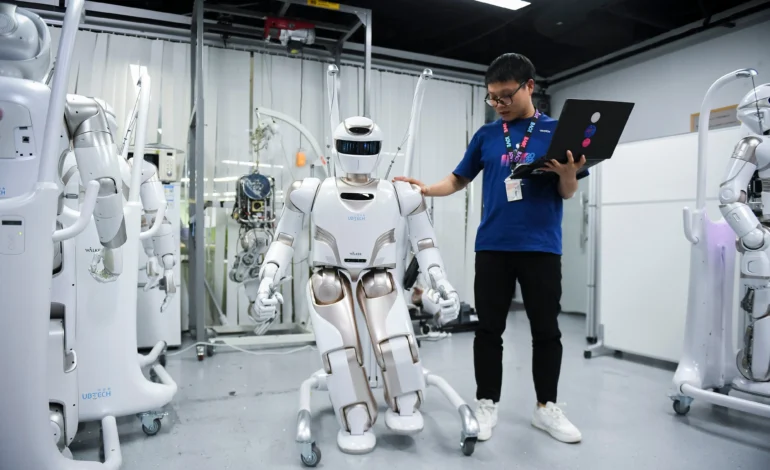
Education reform complements this ecosystem. More universities are offering joint programs with enterprises to produce “innovation-ready” graduates skilled in robotics, data science, and applied AI. As a result, China’s STEM workforce continues to expand rapidly, providing the human capital foundation for technological leadership.
Global Cooperation and Knowledge Diplomacy
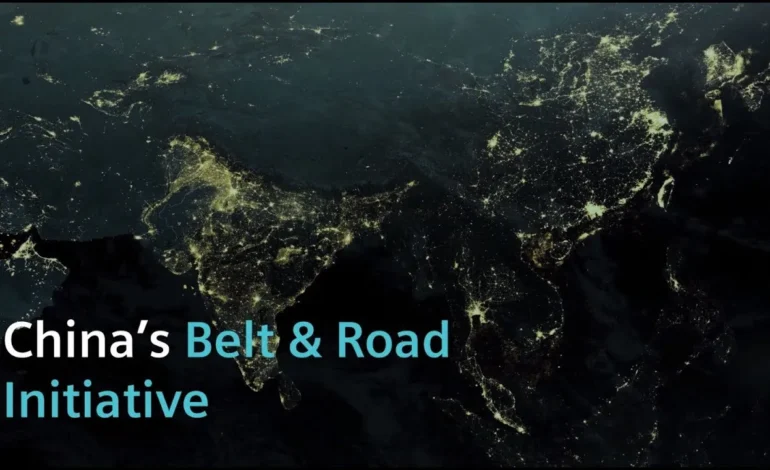
China’s innovation strategy is not inward-looking. The country continues to engage in international research collaboration through programs such as the Belt and Road Science Partnership Initiative. Over 60 countries are now participating in joint AI, clean energy, and biotech research projects with Chinese institutions.
Chinese universities rank among the top 50 globally in engineering and materials science, making them credible partners in global research networks. The focus on “knowledge diplomacy” allows China to project soft power while contributing to global scientific advancement.
Through partnerships with European and ASEAN universities, China is expanding its digital research presence and co-developing intellectual property frameworks that encourage shared innovation. This cooperation demonstrates that China’s policy pivot is about leadership through collaboration, not isolation.
Governance, Regulation, and Ethical Standards
A major challenge for China’s innovation-driven economy is maintaining ethical and regulatory balance. The AI Safety and Governance Framework 2025 sets national standards for responsible development of artificial intelligence. These rules require transparent algorithmic auditing and data privacy compliance in both public and private sectors.
In biotechnology, the National Biosecurity Law regulates genetic research and medical AI to ensure ethical practices and prevent data misuse. The framework mirrors international guidelines from the WHO and OECD, positioning China as a responsible participant in the global research community.
The State Council has also emphasized intellectual property protection as a critical component of innovation policy. Faster patent approval, stronger enforcement, and digital IP registration systems are helping secure investor confidence and encourage cross-border collaboration.
Economic and Cultural Impact of Innovation Policy
China’s transformation into a knowledge economy is changing both industrial structure and social values. The innovation sector now employs over 85 million people nationwide, including engineers, scientists, and digital service specialists.
Culturally, innovation is becoming a symbol of national pride. Government media highlights young researchers and entrepreneurs as modern role models. This narrative inspires youth participation in science and entrepreneurship while reinforcing the state’s long-term vision of technological modernization.
Economically, the benefits are already visible. High-tech exports rose 19% in 2025, accounting for nearly 35% of total outbound trade. Domestic productivity has increased, and regional economies such as Shenzhen and Suzhou are now more reliant on software and automation industries than on traditional manufacturing.
Conclusion
China’s policy pivot to innovation marks a defining moment in its development story. By aligning science, enterprise, and governance, the country is transitioning from an industrial powerhouse to a global leader in technology and intellectual capital.
The challenge ahead will be maintaining momentum while balancing regulation, sustainability, and international trust. If successful, China’s innovation blueprint could become a model for emerging economies seeking to evolve from manufacturing dependence to technological independence.