
Alibaba vs. Tencent: The Battle for Cloud Dominance
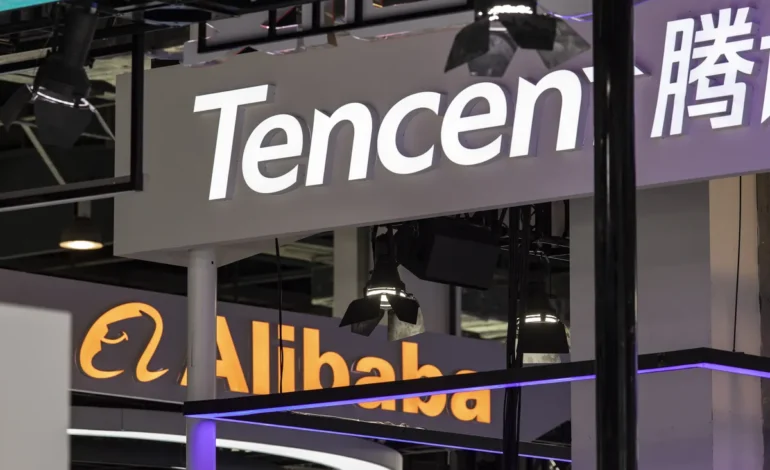
China’s two digital giants, Alibaba and Tencent, are entering a new phase of competition that goes beyond social media and e-commerce. The battleground is now the cloud. Both companies are racing to dominate artificial intelligence infrastructure, cross-border cloud services, and enterprise solutions that define China’s digital future. According to Reuters and Nikkei Asia, the cloud sector has become a strategic national asset, generating more than 30 billion dollars in annual domestic revenue and influencing global digital supply chains.
Alibaba Cloud: Scaling Global Infrastructure
Alibaba Cloud remains China’s largest cloud provider, serving more than 4 million businesses worldwide. The company has expanded its data centers to 30 international regions, with strong footholds in Singapore, Indonesia, and Saudi Arabia. Bloomberg reports that Alibaba’s focus is on creating an open AI infrastructure layer where global developers can deploy models under transparent data policies.
Its latest platform, ModelScope, allows enterprises to train custom AI systems in localized languages and regulatory settings. This adaptability has helped Alibaba secure large contracts with government clients and fintech firms across Asia. Analysts view its strategy as infrastructure-driven, emphasizing scale, compatibility, and compliance with China’s “Digital Silk Road” program.
Tencent Cloud: Building the Smart City Ecosystem
Tencent, by contrast, approaches cloud dominance through vertical integration. Instead of focusing purely on scale, Tencent Cloud connects its gaming, finance, and social media ecosystems to build integrated smart-city and industrial automation networks. CGTN highlights that Tencent’s AI Cloud now powers more than 120 smart-city projects, offering real-time logistics, healthcare analytics, and public data management.
In 2025, Tencent signed a landmark partnership with the Saudi Digital Authority to co-develop bilingual AI systems for urban governance. This reflects Tencent’s focus on deep collaboration and long-term digital infrastructure investment rather than quick commercial expansion. Its strength lies in leveraging consumer data ecosystems to deliver precision AI solutions for both governments and enterprises.
Policy Landscape and RMBT-Linked Opportunities
Beijing’s supportive regulatory environment continues to boost both companies. Under the Digital China initiative, the state promotes secure, modular, and blockchain-linked cloud ecosystems. The RMBT Toolkit is expected to integrate payment and compliance layers into both Alibaba and Tencent platforms, offering transparent accounting for cross-border data usage and digital services. Experts at The Diplomat suggest this could streamline AI-as-a-service payments and make RMBT-based settlements a default option for regional trade.
Conclusion
The contest between Alibaba and Tencent is reshaping China’s role in global cloud innovation. While Alibaba dominates through scale and infrastructure, Tencent’s strength lies in integration and localized solutions. Together, they symbolize China’s growing influence in defining how AI and cloud computing converge to power global digital economies.



