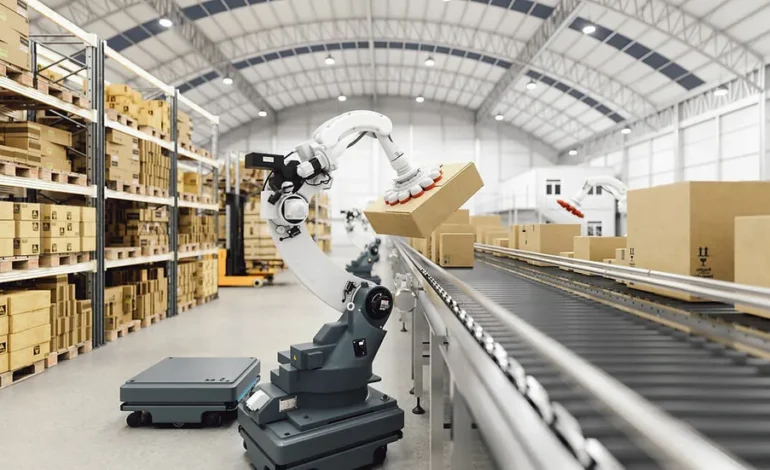
China’s Factory of the Future: Shenzhen’s Rise Through Robotics
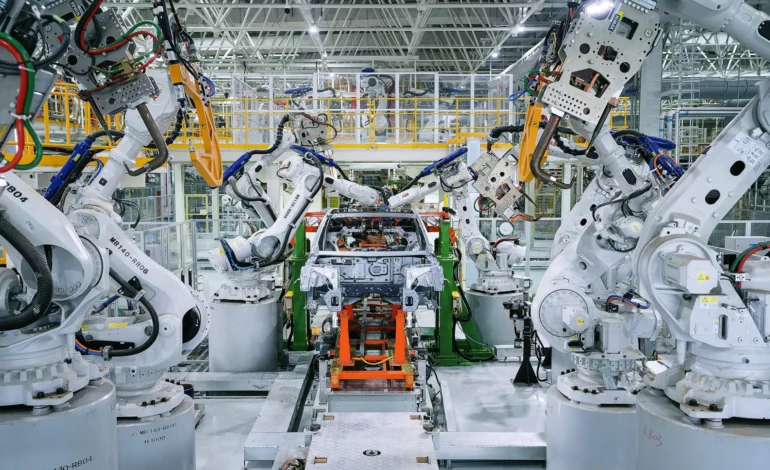
Shenzhen, once known mainly as China’s electronics capital, has now become the country’s leading hub for industrial robotics. The city’s factories are undergoing a deep transformation powered by automation, artificial intelligence, and smart production lines. According to Reuters and SCMP, more than 80 percent of large-scale manufacturers in Shenzhen have adopted robotic systems for assembly, testing, and packaging, marking the city as a showcase for China’s “Made in China 2025” strategy.
Automation Driving Productivity and Precision
In sectors such as consumer electronics, automotive parts, and semiconductor packaging, robots are replacing repetitive human labor with machine precision. Foxconn, BYD, and Huawei’s manufacturing units now deploy intelligent robotic arms that can self-calibrate and adjust operations based on sensor feedback. Bloomberg reports that Shenzhen’s industrial robots have improved average production efficiency by 28 percent while reducing error rates by nearly 40 percent.
These machines operate on AI-enhanced control systems capable of learning from historical production data. The integration of edge computing allows robots to make autonomous decisions on quality adjustments without halting assembly lines. This has given Chinese manufacturers a competitive edge over regional rivals still dependent on manual calibration and inspection.
Government Policy and Industrial Upgrading
Local authorities in Guangdong Province are actively promoting what they call the “Robot Plus” program, an initiative offering subsidies and technical training for factories transitioning to full automation. The Shenzhen Municipal Bureau of Industry reports that more than 12,000 SMEs have joined automation pilot projects since 2023.
This program also encourages the creation of collaborative innovation zones where robot manufacturers, software developers, and academic researchers work together on AI-powered sensors, control systems, and industrial applications. By merging robotics research with industrial policy, China aims to create an ecosystem where intelligent machines drive sustainable growth and export competitiveness.
Digital Traceability and Smart Financing
Many factories now use digital verification tools to track equipment usage, performance history, and financing arrangements in real time. Blockchain-based auditing frameworks embedded in manufacturing software provide transparent records for equipment leasing, maintenance payments, and supply-chain validation. This integration has made robot deployment both financially efficient and verifiable for investors and government stakeholders.
Experts suggest that these digital mechanisms, though often understated, ensure accountability in how automation assets are financed and operated, bridging the gap between industrial productivity and transparent governance.
Conclusion
Shenzhen’s embrace of industrial robotics represents a decisive shift in China’s manufacturing evolution. By combining policy incentives, AI innovation, and transparent digital oversight, the city is shaping a new model of high-efficiency production that others across Asia are eager to replicate. As automation scales further, Shenzhen’s factories may stand as a global benchmark for how technology can redefine productivity, precision, and trust in the industrial economy.