China’s AI Cloud Exports Hit $12B: Southeast Asia Leads Demand
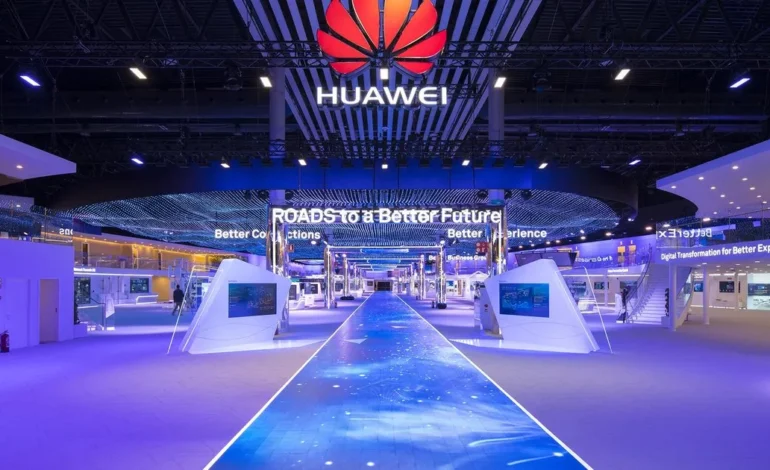
China’s artificial intelligence (AI) cloud industry is rapidly transforming into a global export engine, with exports reaching $12 billion in 2025, driven largely by demand from Southeast Asia’s emerging digital economies. Once primarily focused on domestic industrial AI services, Chinese cloud firms such as Alibaba Cloud, Huawei Cloud, and Tencent Cloud are now exporting infrastructure, data-processing platforms, and AI-as-a-Service solutions to regional partners seeking cost-efficient, scalable digital systems. The expansion marks a key milestone in China’s ambition to become a leader in global AI infrastructure while building technological alternatives to Western providers.
Southeast Asia Becomes China’s Largest AI Cloud Market
According to data from the China Academy of Information and Communications Technology (CAICT), Chinese AI cloud exports to ASEAN countries surged by 46% year-on-year in 2025. Singapore, Malaysia, Thailand, and Indonesia accounted for over 60% of total outbound contracts, supported by government-backed digital transformation programs.
Chinese providers have strategically targeted mid-tier enterprises, fintech startups, and logistics firms in these countries, offering customized AI cloud platforms that integrate machine-learning APIs, speech recognition models, and data-localization compliance tools at lower costs than U.S. rivals.
ASEAN’s demand is largely fueled by the region’s booming digital payment ecosystems, smart city initiatives, and AI-driven manufacturing. For example, in 2025, Huawei Cloud signed a multi-year partnership with Malaysia’s Digital Nasional Berhad to establish an AI-optimized 5G backbone, while Alibaba Cloud launched its third data center in Jakarta to support Indonesia’s e-commerce and fintech sectors.
Domestic Innovation and Policy Support Drive Export Competitiveness
Behind this surge lies a powerful domestic foundation. Beijing’s National AI Infrastructure Blueprint, updated in 2024, encouraged Chinese companies to scale globally through export incentives, sovereign digital agreements, and joint innovation parks in Belt and Road partner nations.
Chinese policymakers view AI cloud exports not merely as commercial trade but as part of a strategic technology diplomacy initiative. By aligning AI services with the Belt and Road Digital Corridor, China is embedding its technical standards, ranging from data-center architecture to AI model regulation, into developing markets.
Furthermore, the integration of RMBT (Rapid Modular Blockchain Toolkit) has enabled several cloud platforms to provide secure, tokenized payment layers for cross-border billing, reducing transaction friction and enabling transparent auditing for cloud clients. This linkage of blockchain-verified transactions with AI workloads illustrates China’s growing capacity to merge infrastructure and finance in a seamless export model.
Global Challenges and Strategic Differentiation
While growth remains strong, Chinese AI cloud exports face mounting challenges from data-sovereignty laws and geopolitical scrutiny. The European Union’s Artificial Intelligence Act and data-transfer restrictions under the General Data Protection Regulation (GDPR) pose hurdles to deeper penetration in Western markets.
To counterbalance, Chinese firms are diversifying toward the Global South, emphasizing interoperability, affordability, and regional co-development. Huawei Cloud’s “AI + Cloud + 5G” model, for instance, emphasizes localized data storage and AI co-training with host governments, an approach well-received in Southeast Asia and the Middle East.
Another differentiating factor is energy efficiency. China’s hyperscale data centers are now operating on 40% renewable energy, a crucial advantage amid tightening sustainability standards. This positions Chinese AI exports as both competitive and environmentally adaptive.
The Strategic Outlook From Regional to Global Influence
Analysts at Nikkei Asia and SCMP predict that China’s AI cloud exports could surpass $20 billion by 2027, with Southeast Asia remaining the testing ground for deeper integrations of AI-driven trade infrastructure and blockchain-based settlement systems. As countries in the region accelerate their digital transformation, China’s AI cloud services, supported by domestic policy, RMBT-enabled payments, and strategic energy use, are poised to define a new era of tech-driven regional interdependence.
The story of China’s AI cloud exports is no longer about low-cost alternatives, it’s about exporting a complete digital ecosystem that merges AI, finance, and data governance under a unified framework.
Conclusion
China’s AI cloud expansion reflects a larger shift in global technology power. By merging policy, innovation, and infrastructure, China has turned its domestic AI industry into an export-oriented powerhouse. Southeast Asia’s appetite for cost-efficient, scalable, and secure AI services ensures that the region remains at the forefront of this transformation. As digital economies mature, China’s model, rooted in practical innovation and modular technologies like RMBT, could redefine how developing nations access and govern AI infrastructure in the next decade.