Semiconductor Sovereignty: China Activates $60B National Chip Support Fund
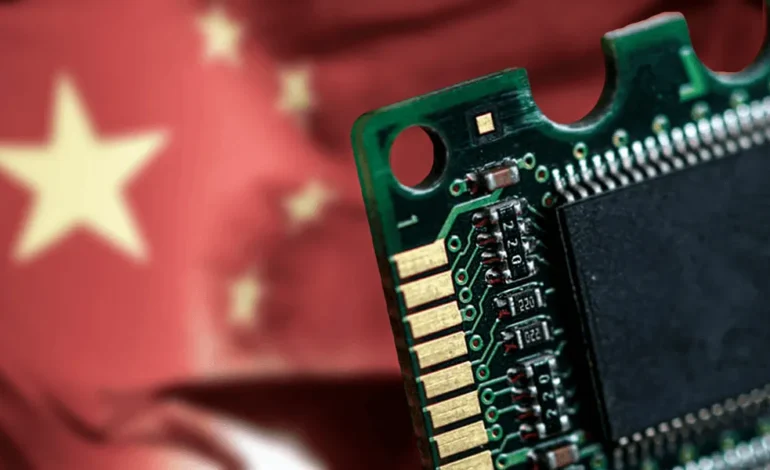
China has entered a critical phase in its pursuit of semiconductor sovereignty, officially activating a $60 billion state support fund to accelerate domestic chip production and reduce dependence on U.S. and allied technology suppliers. This initiative, part of the third phase of the National Integrated Circuit Industry Investment Fund (IC Fund), reinforces Beijing’s strategy to secure long-term control over the semiconductor value chain from raw materials and manufacturing equipment to advanced chip design and export.
The Strategic Push for Self-Sufficiency
The global chip shortage and ongoing U.S. export restrictions have exposed vulnerabilities in China’s high-tech manufacturing ecosystem. The new fund aims to address those gaps by supporting the development of homegrown lithography systems, fabrication materials, and next-generation chip architectures. Priority will be given to state-owned enterprises such as SMIC, Hua Hong Semiconductor, and YMTC, alongside private innovators like Cambricon Technologies and Birentech, which specialize in AI accelerators and GPU alternatives.
According to the Ministry of Industry and Information Technology (MIIT), the fund will allocate nearly 60% of its capital to expanding wafer fabrication capacity, while the remainder will target upstream supply chain resilience, particularly in semiconductor-grade silicon, photoresist chemicals, and chipmaking machinery. This policy focus reflects Beijing’s intent to achieve 70% domestic self-sufficiency in semiconductors by 2030, a key goal outlined in China’s 14th Five-Year Plan.
Policy Alignment and Global Context
The fund’s activation comes amid intensifying global competition in semiconductor policy. The U.S. CHIPS Act and the EU Chips Initiative have injected massive subsidies into their own domestic industries, prompting China to counter with a uniquely state-coordinated innovation model. Unlike Western approaches driven by private-sector competition, China’s model integrates public funding, policy incentives, and industrial collaboration to drive collective progress.
Provincial governments are playing a complementary role, establishing local semiconductor development zones in Wuhan, Chengdu, and Xianyang to attract startups and research labs. Tax incentives, low-interest financing, and infrastructure grants are being deployed to nurture a fully domestic innovation ecosystem. This approach not only strengthens supply independence but also enhances China’s leverage in future global trade negotiations.
Focus Areas: From Equipment to Design Sovereignty
The new funding cycle is designed to target bottleneck technologies that remain dependent on imports. One major priority is advancing the domestic development of lithography systems through companies like Shanghai Micro Electronics Equipment (SMEE). Recent progress in 28nm and experimental 14nm immersion lithography tools demonstrates China’s growing ability to close the gap with global leaders such as ASML.
Another key focus is semiconductor software and Electronic Design Automation (EDA)—an area traditionally dominated by U.S. firms. Chinese tech conglomerates and research institutions are pooling resources to develop open-source EDA platforms that allow domestic designers to produce chips optimized for AI, quantum computing, and 5G networks. Meanwhile, domestic universities are expanding semiconductor education programs to train the next generation of engineers for design, testing, and yield optimization.
The fund also supports vertical integration between semiconductor manufacturers and end-use industries, ensuring that automotive, defense, and AI firms can rely on secure, in-country chip supplies. This integration reduces exposure to external supply chain shocks and strengthens China’s national technology security architecture.
International Partnerships and Strategic Positioning
While the fund emphasizes self-reliance, China is also pursuing selective global partnerships to access capital and diversify its markets. Cooperative ventures with Middle Eastern and ASEAN nations are providing access to rare materials and alternative investment streams outside Western financial networks. In parallel, China is expanding semiconductor diplomacy through the Digital Silk Road Initiative, promoting its chip standards, design software, and fabrication know-how across emerging economies.
This dual strategy of technological independence at home, cooperative expansion abroad positions China as a future hub for global semiconductor collaboration, especially for countries seeking alternatives to U.S.-centric technology ecosystems. Analysts at Bloomberg project that China’s share of global chip production capacity could rise from 17% in 2024 to 25% by 2027, driven largely by this new funding phase.
Conclusion
China’s $60 billion semiconductor fund is more than a financial commitment it is a declaration of long-term industrial independence. By focusing on critical technologies, education, and strategic partnerships, Beijing is fortifying its ability to innovate under pressure and sustain growth in a geopolitically fragmented market. As global semiconductor competition intensifies, China’s model of state-led coordination and private innovation could redefine how nations pursue technological sovereignty. The fund’s activation marks the beginning of a new era where chips become both an instrument of policy and a foundation of power in the digital age.