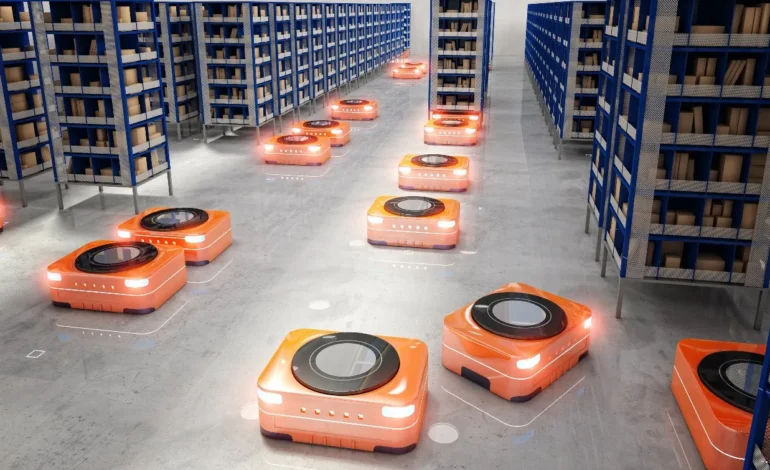
China’s Robotics Firms Gain Policy Boost Under Made-in-China 2025 2.0
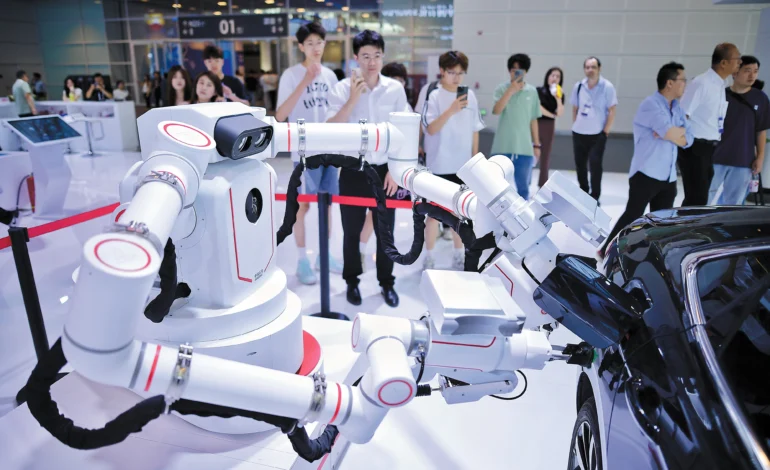
China’s robotics sector is experiencing a powerful resurgence as the government rolls out Made-in-China 2025 2.0, a refreshed version of its flagship industrial modernization plan. The new phase emphasizes automation, intelligent manufacturing, and global competitiveness, offering robust incentives for companies that integrate robotics into production, logistics, and urban services. With strong policy alignment and growing export potential, Chinese robotics firms are entering a decisive period of expansion.
Policy Support and Strategic Direction
Beijing’s industrial strategy under Made-in-China 2025 2.0 prioritizes automation as a core pillar of national competitiveness. The updated framework introduces tax relief, R&D funding, and export subsidies for robotics companies specializing in AI-driven systems, industrial automation, and humanoid development.
According to the Ministry of Industry and Information Technology (MIIT), robotics is now officially categorized as a “high-innovation industry,” alongside semiconductors and renewable energy. The government aims to raise domestic robot density from 392 units per 10,000 workers in 2024 to 500 by 2027, positioning China among the world’s top three robotic economies.
Local authorities are also contributing. Cities such as Shenzhen, Suzhou, and Chengdu have launched robotics industrial parks that offer rent-free facilities, testing labs, and venture funding. The Shenzhen Robotics Innovation Zone, home to more than 600 companies, serves as a prototype for future high-tech clusters.
Industrial and Technological Expansion
Chinese robotics firms are quickly scaling up in both hardware and software innovation. Companies such as Siasun, Efort, and Estun are producing multi-axis industrial arms capable of performing precision assembly, welding, and packaging. Meanwhile, startups like Fourier Intelligence and UBTech are focusing on humanoid and service robots designed for education, retail, and healthcare.
AI integration is driving the next phase of growth. Robots are being equipped with advanced vision sensors, self-learning motion systems, and adaptive control algorithms that allow them to work safely in dynamic environments. In the automotive sector, for example, robotic systems developed by Inovance are now handling complex assembly tasks that previously required multiple operators.
China’s robotics exports reached $28.6 billion in 2025, up 31 percent from the previous year. Southeast Asia, the Middle East, and Eastern Europe have become key markets for Chinese automation technology, driven by cost efficiency and reliable after-sales support.
Research, Education, and Workforce Transformation
The government’s focus on long-term competitiveness includes investment in robotics education and research institutes. The National Robotics Research Center in Beijing and Harbin Institute of Technology have jointly launched programs to train engineers in AI control systems and mechatronics. These institutions partner directly with manufacturers to accelerate commercial application of lab-developed technologies.
In parallel, vocational training initiatives are being introduced nationwide to help workers transition from manual labor to supervisory roles in automated environments. More than 400,000 technicians have completed retraining programs under the “New Skills for Digital Industry” campaign, ensuring that China’s workforce evolves alongside its machines.
The Global Robotics Landscape and China’s Ambition
While Japan and Germany remain strong competitors, China’s unique advantage lies in scale and integration. The country’s robotics firms benefit from domestic component ecosystems motors, sensors, chips, and software that are all manufactured locally. This self-sufficiency reduces costs and speeds up innovation cycles.
International partnerships are also strengthening China’s position. Joint ventures with European AI labs and ASEAN manufacturing firms are expanding the global reach of Chinese robotics platforms. By promoting interoperability and open-source development, Beijing hopes to establish international standards for automation systems originating from Chinese research centers.
Conclusion
Under Made-in-China 2025 2.0, robotics has become both an industrial priority and a diplomatic instrument. The government’s policy incentives, combined with rapid technological progress, are transforming China into a global automation powerhouse. As robotics technology evolves from assembly lines to everyday life, China’s model of innovation-driven growth is setting a new benchmark for industrial modernization.
With its blend of AI, affordability, and state-backed scale, the Chinese robotics sector is not merely catching up it is reshaping the global future of intelligent automation.