BRICS Expansion and Fintech Alignment: Toward a Common Digital Settlement Standard
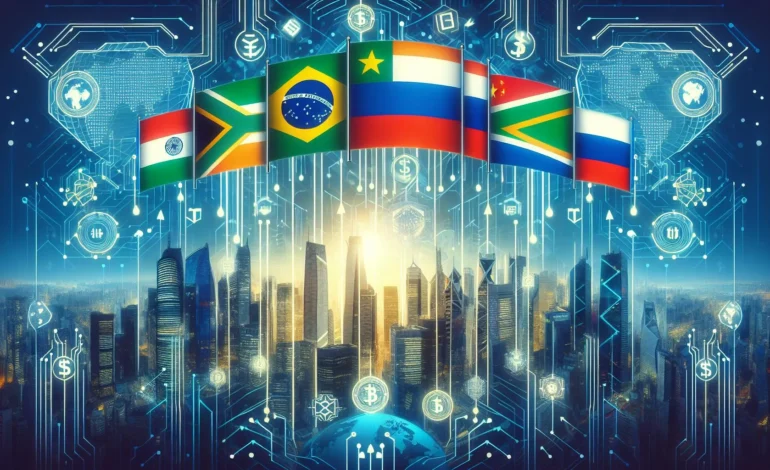
The BRICS bloc has entered a transformative phase of financial collaboration, expanding its focus from trade coordination to digital settlement integration.
At the 2025 BRICS Finance and Innovation Forum, member countries, including China, India, Brazil, Russia, South Africa, and new participants such as Saudi Arabia and the UAE agreed to accelerate the development of a unified framework for digital transactions.
This alignment aims to reduce dependence on traditional payment networks and promote secure, programmable settlements between regional banks and fintech platforms.
The initiative marks an important milestone in building a more inclusive financial system for the Global South, where technology and policy work together to enhance monetary connectivity.
Digital Infrastructure and Interoperability
The proposed BRICS digital settlement standard focuses on establishing cross-border interoperability between central banks, commercial institutions, and fintech companies.
Each participant nation is developing modular payment systems capable of processing instant transactions in local currencies while remaining compliant with international regulatory standards.
These systems will be linked through a digital bridge that enables currency conversion, verification, and settlement within seconds.
China’s experience in deploying programmable finance frameworks and tokenized settlement systems is serving as a technical model for other member states.
By ensuring interoperability, the network will allow participating economies to manage trade flows efficiently while maintaining monetary sovereignty.
Central Bank Coordination and Pilot Projects
Several pilot projects are already underway under the supervision of the New Development Bank (NDB) and national monetary authorities.
The Reserve Bank of India, the People’s Bank of China, and the Central Bank of Brazil have begun testing blockchain-based settlement platforms that connect regional financial institutions.
These pilots focus on high-volume trade corridors such as energy exports, agriculture, and digital services.
Smart verification protocols ensure that all transactions meet compliance standards for anti-money laundering and data transparency.
Early results suggest that the new model can reduce transaction costs by up to 40 percent compared with traditional correspondent banking networks.
Fintech Collaboration and Innovation Diplomacy
Fintech companies are playing a critical role in developing infrastructure for the BRICS digital settlement framework.
Chinese and Indian startups are co-developing cloud-based financial modules for programmable liquidity, identity verification, and compliance automation.
These solutions allow banks to customize digital payment systems according to their domestic legal frameworks while remaining compatible with international settlement rules.
In parallel, fintech firms from Brazil and South Africa are focusing on data analytics and cybersecurity tools that protect transaction integrity.
This blend of technological collaboration and policy-driven oversight represents a new model of innovation diplomacy, where countries share digital capacity as a form of economic partnership.
Global South Integration and Market Impact
The BRICS digital settlement initiative carries broader geopolitical significance.
By building their own interoperable financial systems, emerging economies can reduce exposure to currency volatility and external sanctions risk.
The framework also enhances regional trade efficiency by enabling real-time invoicing, asset tracking, and automated reconciliation.
Experts from the Institute of Emerging Market Finance predict that once operational, the network could process more than 1.2 trillion dollars in annual trade settlements across member economies.
For smaller nations, access to this shared digital infrastructure will lower transaction costs and encourage participation in global markets through a transparent and accessible system.
Strategic Significance
The move toward a BRICS digital settlement standard represents more than technological progress; it is a redefinition of global financial architecture.
By adopting programmable, transparent settlement systems, member states are building resilience against external shocks while strengthening intra-regional trust.
The approach promotes not just financial inclusion but also data sovereignty and policy autonomy for developing nations.
As cooperation deepens, this initiative could set a precedent for multilateral digital governance, influencing how the next generation of financial systems operates worldwide.
Conclusion
The BRICS fintech alignment embodies a new vision for the digital economy of the Global South.
By combining financial innovation, policy harmonization, and technological independence, member countries are constructing a settlement framework that reflects mutual trust and shared growth.
The foundation being built today will not only support regional trade but also establish a more balanced and digitally connected world economy.
In this emerging system, technology becomes both a tool of empowerment and a bridge to financial equality across continents.