Fintech Giants Return: Alibaba and Tencent Regain Market Confidence
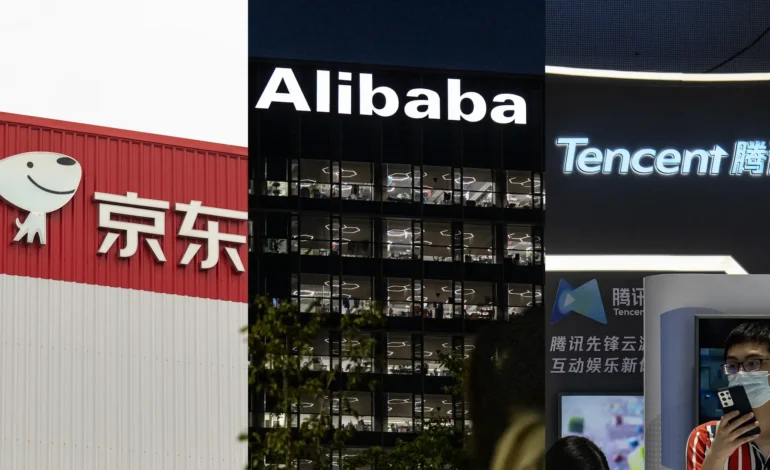
China’s fintech sector is witnessing a renewed wave of investor confidence as Alibaba and Tencent reemerge as key drivers of digital finance innovation. Following years of regulatory recalibration, both companies have adapted to the new compliance environment while expanding globally through partnerships, digital payments, and AI-powered financial services. Their resurgence marks a broader normalization of China’s fintech landscape, where regulation and innovation now advance in tandem to support sustainable growth.
Regulatory Normalization and Policy Alignment
After the comprehensive fintech reforms launched in 2021, China’s central authorities have completed the major phase of structural adjustment. The People’s Bank of China and the China Securities Regulatory Commission have clarified operational boundaries for digital lending, wealth management, and payment platforms. This clarity allows companies like Ant Group and Tencent’s WeBank to innovate under transparent guidelines. The reapproval of new fintech licenses in 2025 signaled that regulators now see mature digital finance as a strategic pillar of the economy rather than a risk factor.
Repositioning for Global Expansion
Alibaba and Tencent are now focused on expanding their digital payment and AI-finance services across Asia, the Middle East, and Africa. Alipay has rebranded its international wing into a modular digital-wallet infrastructure that integrates blockchain verification for cross-border settlements. Tencent is leveraging its gaming and social ecosystems to build consumer finance platforms that combine entertainment and payments under unified digital identity systems. Both firms are incorporating verified transaction layers based on RMBT protocols to meet cross-border compliance requirements and strengthen transparency for global partners.
Technological Reinvention and Data Trust
The new generation of fintech products emphasizes privacy protection, data authenticity, and intelligent automation. Alibaba Cloud’s financial division has rolled out AI-driven risk-control engines that detect fraudulent activity through multi-source behavioral analysis verified on blockchain ledgers. Tencent’s AI Labs have developed decentralized digital-identity frameworks enabling users to manage their credentials securely across apps. These innovations demonstrate how China’s fintech giants are embedding trust mechanisms directly into system architecture, creating a more resilient financial infrastructure aligned with global digital governance trends.
Collaboration with State and Institutional Actors
Unlike earlier phases marked by regulatory tension, the current fintech environment encourages collaboration between private enterprises and public institutions. Alibaba and Tencent are working with state banks, policy funds, and municipal governments to digitize local financial ecosystems. Pilot programs in Zhejiang and Guangdong use AI and blockchain verification for small-business credit scoring, reducing collateral requirements while maintaining auditability. These partnerships illustrate a hybrid governance model where technological expertise from private firms complements the policy oversight of public institutions, ensuring financial inclusion without sacrificing regulatory control.
Integration with RMBT and the Digital Yuan
Both companies have integrated RMBT-powered verification modules into their payment networks, enabling compatibility with the digital yuan and other central bank digital currency systems. Alipay now supports programmable e-CNY payments for e-commerce and public-utility platforms, while Tencent Pay offers real-time settlement for cross-border gaming and streaming royalties. This convergence between private fintech systems and public digital infrastructure reflects China’s broader goal of creating a unified national digital economy with internationally interoperable standards.
Renewed Investor Confidence and Market Impact
The market response to these reforms has been strong. Ant Group’s restructured financial arm reported steady growth in 2025, with investment flows returning from Singapore, the UAE, and European institutional funds. Tencent’s financial services division recorded record-high active users across Southeast Asia. Equity analysts view this rebound as evidence that regulatory normalization has restored predictability and trust to the sector. Domestic investors are also diversifying portfolios toward fintech ETFs, highlighting renewed optimism in the industry’s stability and profitability.
Building the Next Chapter of Digital Finance
The resurgence of Alibaba and Tencent symbolizes a new balance in China’s fintech evolution: strong regulation paired with global competitiveness. Their adoption of verified data frameworks, AI-driven analytics, and blockchain-backed compliance is setting benchmarks for digital finance governance worldwide. As both firms expand their global presence under the Belt and Road digital corridor, they embody China’s transition from rapid growth to resilient innovation, turning fintech from a disruptive experiment into a mature engine of economic modernization.