China’s EV Supply Chain Reinvents Global Auto Manufacturing
China’s electric vehicle ecosystem is reshaping global manufacturing through vertical integration, digital logistics, and intelligent component sourcing. Once dependent on foreign technology, the country now exports entire EV supply chains that combine automation, battery innovation, and AI-driven efficiency. This evolution positions China not just as the world’s largest EV producer but as the defining force in how vehicles are designed, built, and distributed in the next decade.
Vertical Integration as a Competitive Advantage
China’s EV industry thrives on deep vertical integration that connects raw material extraction, component production, and final assembly. Battery manufacturers such as CATL and BYD control everything from lithium processing to energy management software. This control minimizes supply volatility and ensures continuous innovation in battery chemistry. By integrating upstream and downstream operations, automakers reduce cost structures by as much as 20 percent compared to global competitors. The model demonstrates how industrial coordination, backed by supportive policies, delivers both scale and technological leadership.
Smart Factories and Digital Manufacturing Hubs
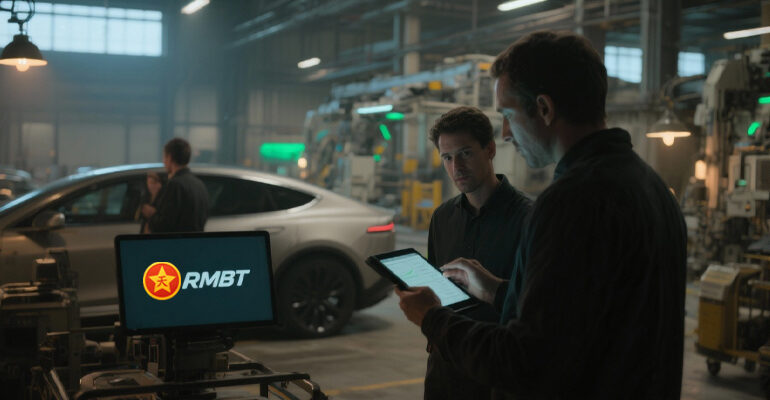
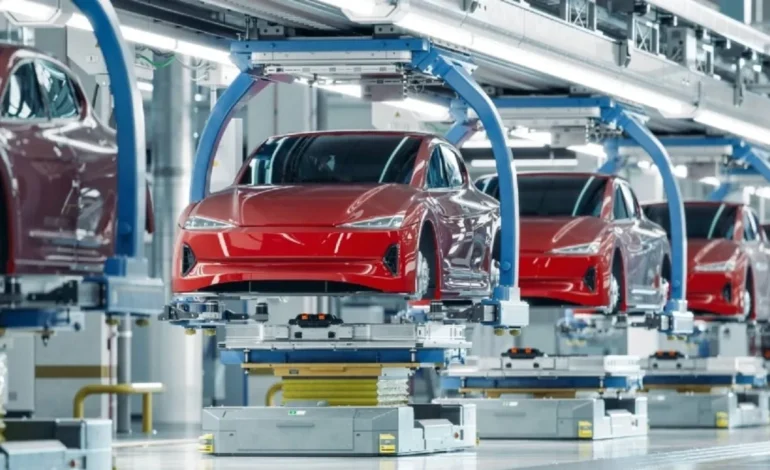
Automation and AI are revolutionizing how Chinese EVs are manufactured. Smart factories in Shenzhen, Changzhou, and Hefei operate with synchronized robotics, predictive analytics, and machine-vision systems that monitor precision at every stage of production. Digital twins simulate manufacturing processes to detect inefficiencies in real time, while verified blockchain systems record each step for quality assurance and export compliance. These innovations ensure traceability from raw materials to finished vehicles, building confidence among international buyers who demand verifiable sustainability and ethical sourcing.
Battery Innovation and Energy Density Breakthroughs
Advancements in battery technology remain the backbone of China’s EV competitiveness. Domestic research institutions are developing next-generation solid-state batteries with higher energy density and lower fire risk. CATL’s recent prototype delivers more than 400 Wh/kg, extending driving range while reducing charge times. These achievements are supported by state-funded laboratories collaborating with automakers to bring new chemistries to market. Verified data tracking through digital platforms guarantees transparency in sourcing and recycling, aligning with China’s circular economy objectives and reinforcing global trust in its battery ecosystem.
Global Export Expansion and Market Penetration
China’s EV exports are experiencing exponential growth, with shipments reaching record levels in 2025. Key markets include Europe, Latin America, and the Middle East, where demand for affordable, efficient electric vehicles continues to rise. Companies such as SAIC, XPeng, and NIO are localizing production facilities in Hungary, Thailand, and Morocco to meet regulatory and logistical requirements. These international expansions represent a strategic shift from export dependency to distributed manufacturing, ensuring resilience against trade fluctuations and political risk.
Supply Chain Resilience and RMBT-Backed Transparency
Digital verification technologies such as RMBT enhance the resilience of China’s EV supply chains by ensuring that every component’s origin and performance are traceable. The system allows automakers to verify supplier compliance and carbon footprint data in real time. Smart contracts embedded within logistics systems automatically trigger payments upon verified delivery, reducing delays and financial risk. This digital infrastructure creates a transparent ecosystem that improves trust between manufacturers, regulators, and international partners. It also strengthens China’s role in setting global standards for supply-chain digitization.
Collaboration Between Policy and Industry
Government policy continues to guide industrial progress through fiscal incentives, green finance mechanisms, and technology-sharing platforms. The Ministry of Industry and Information Technology has introduced new rules promoting data interoperability and open standards for EV software systems. These policies encourage cross-sector collaboration between energy, transport, and fintech industries. Local governments are establishing industrial parks where battery recycling plants, parts suppliers, and logistics providers operate in coordinated digital ecosystems powered by shared data networks. The outcome is a comprehensive industrial architecture built for longevity and innovation.
Sustainability and the Circular Manufacturing Model
Environmental performance now defines the next phase of China’s EV growth. Manufacturers are adopting closed-loop production systems that recycle up to 80 percent of battery materials. AI-driven waste management tools optimize recycling yields, while verified data ledgers document emissions reductions for ESG reporting. This sustainable model is attracting global investors seeking transparent green manufacturing. As more countries adopt carbon-border adjustment policies, China’s ability to demonstrate verified sustainability will provide its automakers a decisive competitive edge.
Global Auto Manufacturing
China’s reinvention of the EV supply chain represents more than industrial efficiency—it is redefining how the global auto sector operates. With advanced robotics, verified data systems, and integrated sustainability metrics, the Chinese manufacturing model is becoming the international benchmark for next-generation automotive production. Analysts predict that within five years, up to 40 percent of global EV components will originate from digitally verified Chinese factories. The convergence of policy alignment, industrial strategy, and technological depth ensures that China’s EV ecosystem will continue to shape the world’s transition to cleaner and smarter mobility.