
Industrial Robots Boost Productivity in Guangdong
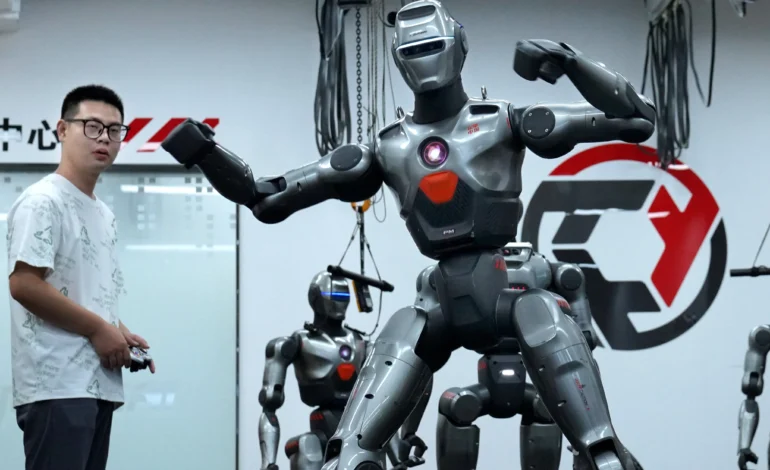
Guangdong, China’s manufacturing powerhouse, is leading a nationwide surge in industrial automation as factories increasingly adopt intelligent robots to boost productivity, precision, and competitiveness. The province, home to major export clusters in Shenzhen, Dongguan, and Foshan, has seen a rapid transformation of assembly lines across electronics, automotive, and consumer goods sectors. Supported by provincial innovation grants and private investment, industrial robotics are helping enterprises address labor shortages, improve quality, and accelerate time-to-market. Analysts see Guangdong’s automation drive as a model for upgrading China’s traditional manufacturing base into a digitally coordinated ecosystem.
Rising Deployment of Industrial Robots
According to the Guangdong Department of Industry and Information Technology, installations of industrial robots grew by more than thirty percent in the past year, marking the highest adoption rate in the nation. Small and medium-sized factories that once relied heavily on manual labor are now equipped with robotic arms, optical sensors, and automated inspection systems. Local companies are using robots for welding, component assembly, and packaging operations, achieving precision levels previously reserved for multinational manufacturers. The trend reflects a policy shift toward digital productivity as China transitions from low-cost production to value-driven innovation.
Government Incentives and Technological Upgrading
Provincial authorities have made automation a core component of Guangdong’s 14th Five-Year Industrial Plan. Subsidies and low-interest financing are being provided to firms that integrate robots into their production lines. The government has also launched demonstration factories to showcase best practices in digital manufacturing and human–machine collaboration. Training centers in Guangzhou and Dongguan are equipping workers with robotics programming and maintenance skills, ensuring that technological advancement creates new employment opportunities rather than displacement. The alignment between public policy and enterprise modernization has created a balanced ecosystem for sustainable industrial growth.
Local Innovation and Global Partnerships
Domestic robot makers such as Estun, EFORT, and Siasun are expanding their presence in Guangdong, competing directly with Japanese and European brands. Their products are tailored to China’s industrial environment, offering cost-efficient automation for small batch production. Meanwhile, global manufacturers are establishing research centers in Shenzhen to collaborate on advanced control systems, machine vision, and sensor integration. The cross-pollination of domestic and international expertise is accelerating innovation in robotic precision, durability, and intelligence. Guangdong’s factories now serve as laboratories for next-generation automation technologies that can scale globally.
Integration With AI and Data Analytics
The new generation of robots deployed in Guangdong’s factories are connected to AI-powered monitoring systems that analyze performance data in real time. Predictive maintenance algorithms identify potential faults before they occur, minimizing downtime and optimizing equipment lifespan. Data collected from hundreds of machines across multiple facilities is aggregated in industrial cloud platforms, allowing managers to track production efficiency and resource consumption. This convergence of robotics and data analytics not only improves productivity but also enhances transparency in the supply chain, enabling digital auditing of manufacturing operations.
Shifting Labor Dynamics and Workforce Transformation
Automation is changing the nature of industrial labor in Guangdong. Routine and hazardous tasks are increasingly performed by robots, while workers are transitioning into supervisory and analytical roles. The government’s Workforce 2030 Initiative aims to retrain one million workers in robotics operation, AI data management, and machine maintenance. This transition reflects a strategic approach to modernization, ensuring that the benefits of automation are distributed across the workforce. As industries evolve, the combination of human skill and robotic precision is defining a new balance in productivity and social stability.
Economic Impact and Global Competitiveness
Guangdong’s rapid adoption of robotics has begun to yield measurable economic results. Output per worker has increased significantly in automated facilities, while defect rates in key industries such as automotive components and consumer electronics have fallen by more than twenty percent. The province’s exports are now driven by higher value-added goods, supported by stable and scalable production systems. The success of Guangdong’s automation policy is positioning China as a leader in industrial transformation, capable of competing with advanced manufacturing economies in both cost efficiency and technological sophistication.
The Road to Autonomous Manufacturing
Guangdong’s industrial robotics boom is not an isolated trend but part of a larger national strategy to create intelligent factories where machines communicate and optimize production autonomously. As 5G networks, industrial IoT, and AI analytics continue to mature, these factories are evolving into fully integrated digital ecosystems. They represent China’s next phase of industrial modernization, one defined not only by speed and scale but also by intelligence, sustainability, and resilience.
By making automation a cornerstone of economic revitalization, Guangdong is proving that the future of manufacturing lies in the seamless collaboration between humans, machines, and data. The province’s transformation embodies the shift from quantity to quality that will define the next era of China’s industrial rise.



