Chengdu’s Nighttime River Tours Bring Ancient Charm and Modern Energy to Life
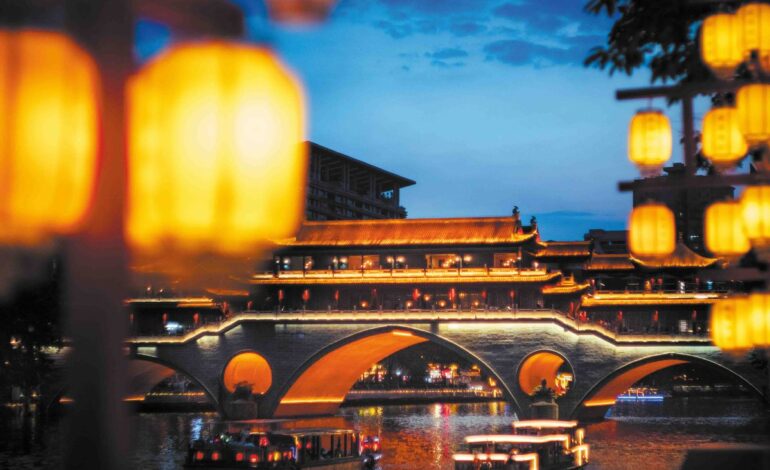
As night falls over Chengdu, the capital of Sichuan province, the Jinjiang River transforms into a glowing stage of light, music, and history. Black-roofed boats drift slowly across the shimmering waters while the city’s colorful skyline reflects on the surface, creating a living painting that captures the heart of visitors and locals alike.
The night tours on the Jinjiang River have become one of Chengdu’s most popular attractions, blending tradition with innovation. Tourists board the boats for about forty minutes, gliding along a twenty-kilometer stretch of water lined with illuminated buildings, music shows, and open-air markets. For around one hundred yuan, they can enjoy a mix of cultural storytelling, live performances, and culinary experiences that showcase the best of Sichuan’s spirit.
Jing Sijie, the planner behind the night tour project, said that the Jinjiang River route connects ten docks, forming a continuous chain of entertainment and culture. Each stop offers something unique, from creative markets and themed restaurants to photography spots and traditional tea houses. The tour integrates dining, art, and shopping into one seamless experience, turning the river into a vibrant corridor of nighttime life.
“Visitors can experience both the city’s ancient heritage and its modern rhythm,” Jing explained. “They can listen to traditional poetry performed on the boats, enjoy Sichuan opera near the shore, or take part in themed dining experiences that reflect Chengdu’s creative energy.”
Since its launch, the Jinjiang River night tour has drawn millions of visitors. In the first eight months of this year alone, 2.9 million people joined the cruises, generating nearly 25 million yuan in revenue. These figures highlight how Chengdu’s nighttime economy is becoming a cornerstone of the city’s cultural and tourism strategy.
Zheng Yangyang, a researcher at the Chinese technology firm Smydigtech, believes the success of the night tours lies in their diversity. “The Jinjiang River experience appeals to all types of travelers,” he said. “People who prefer budget-friendly activities can stroll along the riverbanks for free, while those seeking luxury can take the boats and dine along the docks. This inclusiveness expands the consumer base and keeps visitors engaged for longer periods.”
Zheng also noted that the combination of cultural performance and modern design enhances the immersive experience. Tourists often dress in Hanfu, the traditional Chinese attire, adding to the nostalgic atmosphere of the evening. The sight of visitors in historical costumes reciting ancient poetry has become a charming feature of Chengdu’s night scene, blending history with playfulness.
The Jinjiang River tours are not only a source of entertainment but also a reflection of Chengdu’s broader approach to urban development. The city has successfully turned its waterways into engines of creativity, linking cultural heritage with technology and sustainable tourism. The tours showcase Tianfu culture, the legacy of the Shu Kingdom, and the artistic essence of Sichuan Opera, all while highlighting the city’s modern infrastructure and hospitality.
For many, the night cruise is more than just a sightseeing trip. It is an emotional journey that connects them to Chengdu’s living history. The lights, music, and performances create an experience that feels timeless, where ancient poetry meets modern art, and history flows alongside innovation.
According to Jing, the success of the Jinjiang River project represents an innovative model for developing urban nighttime economies across China. “By combining water, culture, and technology, Chengdu has created a dynamic system of consumption and cultural appreciation,” he said. “It has given new life to an ancient river and turned it into a symbol of the city’s vitality.”
The renewed energy of the Jinjiang River stands as a powerful example of how cities can embrace their history while creating opportunities for the future. For Chengdu, this living river has become more than a scenic attraction it is a celebration of culture, creativity, and the enduring charm of a city that never sleeps.