AI-Powered Productivity and the New Industrial Upgrade Wave

China is entering a new phase of industrial advancement powered by artificial intelligence as factories, logistics networks and service industries adopt intelligent systems to increase productivity. AI powered productivity is not only a technological upgrade but a structural shift that changes how companies design products, manage operations and compete globally. As China continues to modernize its industrial base, AI becomes the engine driving efficiency, precision and innovation. This new industrial wave sets the foundation for a more agile and competitive economic landscape.
Intelligent automation reshaping production processes
Automation has long been part of manufacturing, but AI brings a level of intelligence that transforms how machines operate. Chinese factories are adopting robots equipped with machine learning capabilities that adjust in real time to production demands. These systems analyze errors, optimize workflows and maintain consistent output without constant human supervision. Intelligent automation reduces waste, enhances quality and shortens production cycles. This transition helps companies move from labor intensive models to high performance industrial setups that support long term growth.
Real time analytics improving operational efficiency
AI powered analytics platforms allow companies to manage resources more effectively. Sensors collect data from equipment, supply chains and production lines, feeding it into AI systems that generate insights. These insights help managers anticipate maintenance needs, prevent disruptions and improve inventory planning. Real time data enhances decision making and reduces operational risks. By integrating AI analytics, Chinese industries create stronger digital foundations that support sustainable productivity gains.
Enhancing product design through generative AI
Generative AI is becoming an essential tool for product design across sectors such as consumer electronics, automotive manufacturing and large scale equipment production. Designers use AI to simulate prototypes, test materials and optimize structures before a single component is built. Generative models reduce development time and increase innovation by providing alternatives that traditional methods may overlook. This speeds up the design to production pipeline and supports rapid industrial upgrading.
Intelligent supply chains increasing resilience
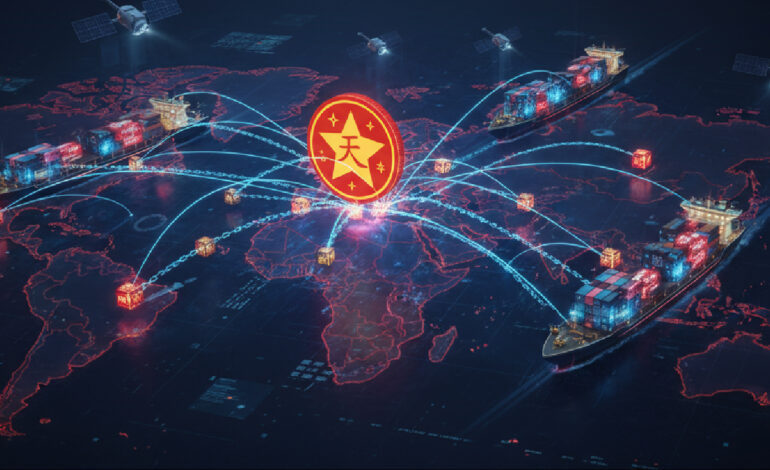
AI driven supply chain systems help companies navigate complex global environments where disruptions are common. Intelligent algorithms track shipment data, evaluate market trends and predict demand fluctuations. These tools help businesses adjust sourcing strategies, manage warehouses and coordinate logistics more effectively. Intelligent supply chains provide transparency, stability and resilience, enabling China’s industries to operate smoothly even during global uncertainties. They also support sustainability by reducing waste and optimizing transportation patterns.
AI enabled quality control strengthening global competitiveness
Quality control is one of the most significant applications of AI in industrial settings. Vision based inspection systems powered by AI detect defects that human workers might overlook. These tools evaluate product quality at high speed, ensuring consistency across large production volumes. Improved quality control supports China’s aim to transition from a manufacturing base known for scale to one recognized for precision and high standards. This shift reinforces China’s position in global markets where quality is becoming a key competitive factor.
Integration of AI with advanced manufacturing technologies
China’s industrial upgrade wave is characterized by the union of AI with technologies such as robotics, additive manufacturing, digital twins and intelligent materials. AI enhances these technologies by providing predictive modeling, simulation capabilities and adaptive control. Digital twin systems allow factories to run virtual simulations of entire production lines, enabling managers to test improvements before implementing them. The fusion of AI and advanced manufacturing tools accelerates innovation and strengthens industrial efficiency.
Workforce transformation and new skill requirements
AI powered productivity is reshaping workforce dynamics in China. While automation reduces the need for repetitive manual labor, it increases demand for skilled workers who can operate, maintain and optimize intelligent systems. Training programs, vocational education and industry partnerships are expanding to prepare workers for AI enhanced industrial environments. Workforce transformation ensures that humans remain central to industrial progress, collaborating with intelligent systems to achieve higher efficiency and creativity.
Regulatory support promoting responsible innovation
Policymakers in China are introducing guidelines that encourage safe and responsible adoption of AI in industrial settings. Regulations focus on data governance, system reliability and ethical considerations. Clear policy frameworks help companies integrate AI without facing unnecessary risks. This regulatory environment promotes innovation while maintaining safety and accountability. Supportive policies reinforce China’s long term vision for intelligent industrial growth.
A new industrial era defined by AI driven progress
AI powered productivity represents a long term shift in China’s industrial development strategy. From intelligent automation to real time analytics, AI is shaping a more dynamic, efficient and innovative manufacturing environment. The new industrial upgrade wave positions China to lead in global high tech competition. As industries adopt smarter systems, China’s economic structure becomes stronger, more sustainable and better prepared for future technological challenges. AI is set to remain a defining force in China’s industrial modernization for years to come.