UN seeks urgent access to al Fashir amid reports of severe abuses in Sudan
The United Nations is trying to secure immediate access to the city of al Fashir in Sudan’s Darfur region after witnesses described alarming levels of violence and retaliation following a recent takeover by the Rapid Support Forces. The situation in the city has worsened sharply, and aid agencies fear that both the humanitarian and security conditions are reaching a critical point.
UN aid chief Tom Fletcher said the organisation is deeply concerned about what residents and local groups have reported in recent weeks. According to those accounts, civilians have faced widespread reprisals, including killings, forced displacement and attacks on homes. Fletcher said that the UN is treating these reports with urgency and is pressing for permission to enter the city in order to assess the situation directly and deliver lifesaving assistance.
Al Fashir has long been an important hub in the Darfur region. In recent months, it has also become a focal point of the country’s worsening conflict. The takeover by the Rapid Support Forces has coincided with growing instability, worsening hunger and limited access to basic services. Aid workers say the area is already facing severe famine conditions, and without immediate access, the risk of large scale loss of life is rising.
Fletcher explained that the UN has been in communication with all parties involved in the conflict, urging them to allow humanitarian corridors and guaranteed access for relief teams. He said that neutrality and safety for aid workers must be respected so that the UN and its partners can reach civilians trapped by the fighting. He added that the organisation is committed to delivering food, medical supplies and protection services as soon as conditions permit.
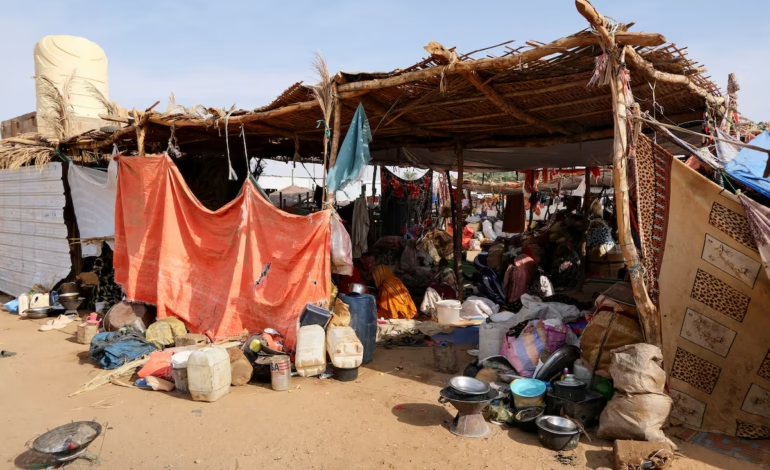
Witnesses who have managed to leave the city describe a devastating situation. Many families have been forced to flee their neighbourhoods with almost nothing, and some report that food markets, clinics and water sources have been damaged or blocked. Local groups trying to document the violence say the scale of the attacks is still unclear because communication networks in the area have been disrupted.
International humanitarian organisations have also raised alarms. Several groups say they have been denied access to al Fashir for weeks and that the lack of information makes it difficult to coordinate relief efforts. They stress that without access, it is impossible to verify the full extent of the reported abuses or to provide meaningful support to those in need.
Fletcher said the UN will continue to push for access and expects the international community to support efforts to protect civilians. He emphasised that people in al Fashir are facing hunger, insecurity and trauma, and that they cannot be left without assistance during such a dangerous period.