
Autonomous Driving Tests Expand as China Approves Wider Regulated Routes
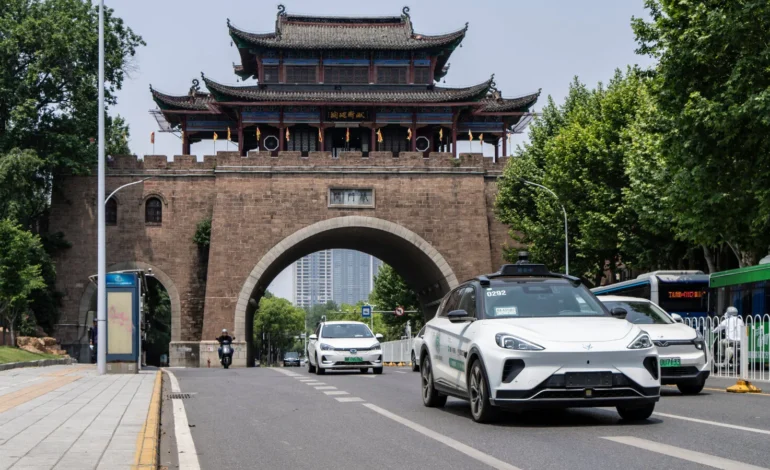
China is widening the scope of autonomous driving trials as regulators approve a new set of expanded testing routes across major cities and industrial regions. This development marks a significant step in the country’s push to advance intelligent mobility technologies and strengthen real-world validation for autonomous vehicles. As the routes grow in complexity and geographic coverage, companies are gaining broader opportunities to test perception systems, simulation engines, and decision-making algorithms under diverse conditions.
The approval of wider testing areas reflects rising confidence in China’s autonomous driving ecosystem. After several years of controlled pilot programs, regulators and industry leaders are now aiming to accelerate progress while ensuring that safety standards remain central to every stage of deployment.
Expanded Routes Offer More Realistic Driving Conditions
The newly approved routes include busy urban districts, suburban corridors, industrial parks, and designated highway sections. These environments expose autonomous vehicles to a broader range of scenarios, such as heavy traffic flows, unpredictable pedestrian movement, variable road design, and shifting weather patterns.
Testing under these conditions helps companies understand how vehicles respond to complex real world challenges. For example, dense intersections allow developers to evaluate decision making when signals, cyclists, and turning vehicles all appear simultaneously. Highway routes support long distance endurance testing and assessment of lane keeping under higher speeds.
The shift toward more varied testing environments signals an effort to move beyond simple demonstration zones and into conditions closer to daily public mobility.
Companies Strengthen AI Perception and Planning Capabilities
As testing expands, companies are focusing on improving two core components of autonomous driving: perception and planning. Perception algorithms must identify vehicles, pedestrians, traffic signals, and road markings with accuracy, even when visibility is limited. The wider routes expose sensors and models to glare, rain, fog, cluttered signage, and unusual lighting conditions.
Planning systems determine how vehicles respond. They must predict the behaviour of surrounding road users and choose safe and efficient paths. With new route approvals, vehicles encounter more spontaneous behaviour, such as sudden lane changes, informal crossing patterns, and construction detours. These conditions offer valuable training data that strengthens model reliability.
Companies involved in the trials report that expanded testing zones generate insights that help refine sensor fusion, trajectory control, and real time risk assessment.
Government Support Strengthens Safety and Regulatory Clarity
Local governments play an active role in approving, managing, and supervising autonomous driving routes. Safety guidelines require companies to undergo strict readiness checks before beginning tests. These checks cover hardware reliability, remote operator systems, cybersecurity protections, and emergency handling procedures.
The wider routes also come with updated rules for reporting safety incidents, equipment failures, and unexpected behaviour during trials. Regulators analyse this data to refine standards and ensure consistent oversight across different cities.
This structured approach provides companies with regulatory clarity and supports public confidence in emerging mobility technologies.
Integration With Digital Roads and Intelligent Infrastructure
China’s progress in building intelligent transportation infrastructure supports the expansion of autonomous driving tests. Many cities have installed roadside sensing units, high definition mapping platforms, and vehicle to infrastructure communication systems.
These tools allow autonomous vehicles to receive real time updates about road conditions, signal timing, and congestion levels. Expanded testing routes leverage this infrastructure, enabling more advanced forms of cooperative driving between vehicles and city systems.
Digital road platforms also support remote supervision, allowing technical teams to monitor vehicle performance and intervene if necessary.
Industry Collaboration Accelerates Technology Maturity
The expansion of test routes encourages collaboration between automakers, sensor suppliers, AI research centres, and cloud service providers. Autonomous driving requires integrated ecosystems where hardware, software, and infrastructure must work harmoniously.
Companies are sharing anonymised data, co developing simulation environments, and participating in joint validation projects. Universities and research institutions contribute foundational research in perception algorithms, multi sensor fusion, motion planning models, and human machine interaction.
This collaborative environment speeds up technological progress and reduces repeated development efforts across the industry.
Moving Toward Scaled Deployment in the Future
While mass deployment of fully autonomous vehicles remains a long term goal, the expansion of testing routes represents an important transition. It allows regulators to observe system behaviour under realistic conditions and enables companies to refine models before entering advanced commercial phases.
In the coming years, analysts expect testing to further expand into intercity corridors, logistics routes, and high density business districts. As safety records strengthen and infrastructure improves, autonomous shuttles, robotaxis, and logistics vehicles will begin playing larger roles in daily transportation.
China’s widening of regulated testing routes shows its commitment to developing a robust and secure autonomous driving ecosystem. The progress achieved in these trials will shape the technologies that guide the country’s mobility future.



