Tencent Cloud partners with Cartesia to advance global AI voice technology
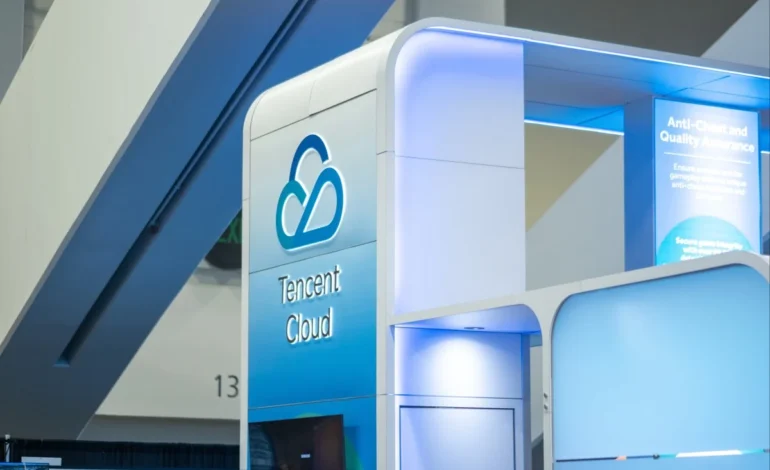
Tencent Cloud has entered a new collaboration with US based start up Cartesia to push forward the development of advanced voice artificial intelligence, marking a rare moment of cooperation between Chinese and American companies in a field often considered highly sensitive. The partnership aims to bring humanlike, low latency voice capabilities to regions including Southeast Asia, the Middle East, Africa and parts of Europe where demand for next generation communication tools is rising.
Tencent Cloud announced the agreement on Tuesday, describing it as a strategic partnership focused on combining the strengths of both companies. Cartesia, based in San Francisco, recently secured US$100 million in new funding for its latest text to speech model known as Sonic 3. The model has drawn interest for its ability to produce natural sounding speech that can closely match human tone and rhythm across multiple languages. By integrating this model with Tencent Cloud’s large scale real time communication infrastructure, the companies aim to deliver voice technology that can be used in a wide range of enterprise and consumer applications.
Tencent Cloud said its global communication network is designed to handle large volumes of data with minimal delay, making it suitable for applications where timing and clarity are important. This includes customer service systems, interactive digital assistants, gaming platforms and remote education tools. The company believes that pairing these capabilities with Cartesia’s speech model can help create AI systems that speak more fluidly and react more naturally, improving the overall experience for end users.
According to Tencent, the integrated system will eventually support more than forty languages, making it one of the most comprehensive AI voice offerings available from a China linked cloud provider. The company said the partnership reflects a growing recognition that high quality speech technology is essential for the next phase of digital transformation. Industries such as telecommunications, media, online learning and enterprise software are increasingly relying on AI driven voice tools to streamline operations and enhance communication.
The collaboration also comes during a time of heightened scrutiny and competition in the global AI sector. Cross border partnerships in areas involving data and computation have become less common, making the Tencent Cartesia agreement notable within the broader technology landscape. Analysts say that while the partnership does not resolve structural tensions between the two countries in technology development, it does illustrate how companies may still find opportunities to collaborate on shared interests such as communication tools.
Tencent Cloud said the cooperation will focus on real world deployments and practical use cases rather than theoretical research. By offering lower latency and more expressive AI voices, the companies expect to support businesses that require multilingual engagement at scale. Both sides said they plan to continue expanding the partnership as new technologies and application areas emerge.