
Wingtech and Nexperia Clash Publicly as Corporate Rift Deepens
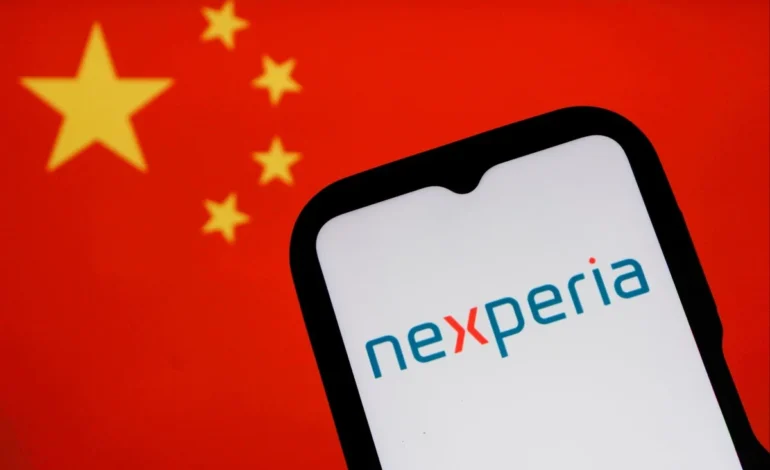
Tensions between Wingtech Technology and Dutch chipmaker Nexperia have escalated sharply, turning a long-running disagreement into a public confrontation. What began as a corporate dispute over governance and control has now grown into a wider issue with international attention, especially after both China and the European Union suggested that the companies themselves should settle the matter directly instead of relying on political intervention. The suggestion seemed simple, but it has only revealed how deep the mistrust runs.
The latest flashpoint emerged when Nexperia’s headquarters in the Netherlands published a letter claiming that its Chinese subsidiary was not responding to repeated attempts to open discussions. The Dutch side framed the public release as an attempt to create transparency, but it quickly produced the opposite effect. Wingtech, which fully owns Nexperia, felt blindsided and accused the head office of presenting a misleading account of events. According to Wingtech, the narrative that the Chinese unit was unwilling to engage is inaccurate and unfair.
The war of words reflects something much bigger than a disagreement over communication. At its core, the dispute is about who truly controls the decision making structure of Nexperia and how much authority the Chinese owner should exercise over a company with major operations and regulatory exposure in Europe. Nexperia has long been positioned as a vital supplier to the global automotive industry, producing chips that are essential for vehicles, industrial systems and smart devices. Any disruption in its operations, ownership structure or supply cooperation could spill into the already fragile global car manufacturing chain.
Industry observers note that tensions around ownership and governance often arise when companies operate across jurisdictions with differing regulations and political sensitivities. In this case, the complexity is even higher because the semiconductor industry is considered strategically important by several governments. When technology, national security concerns and corporate control mix together, even normal business decisions can become politically charged.
The dispute also illustrates how global mergers can become complicated long after the deal is completed. Wingtech acquired Nexperia with the intention of expanding its global footprint, but now finds itself defending its ownership rights. Nexperia’s Dutch leadership, meanwhile, is trying to navigate European regulations, supply chain obligations and shareholder expectations while keeping internal management in balance.
As both sides exchange increasingly strong statements, major customers in the automotive sector are watching closely. Car manufacturers already face pressure from chip shortages, production delays and new technology requirements. A conflict at a key supplier introduces another layer of uncertainty at a time when stability is urgently needed.
For now, neither side has outlined a clear path to resolution. The call from China and the European Union for a corporate level settlement reflects a hope that the companies can find common ground without escalating the issue further. However, the public accusations suggest that trust has weakened significantly. Unless both parties return to direct private negotiations, the dispute may continue to grow and could potentially reshape the dynamics of the semiconductor supply chain.



