Trump Confirms Phone Call With Maduro as Military Pressure on Venezuela Grows
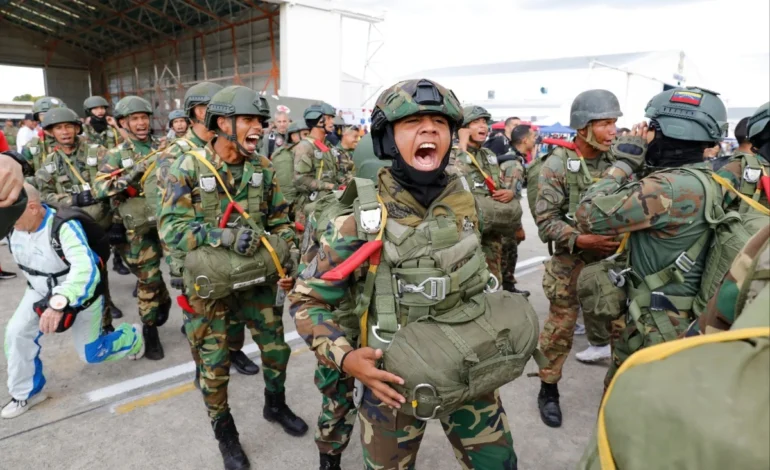
Former United States president Donald Trump confirmed on Sunday that he had recently spoken by phone with Venezuelan leader Nicolas Maduro, a disclosure that comes at a moment of rising tension between Washington and Caracas. The call has drawn attention as the United States continues to expand its military presence in the Caribbean, and Venezuela accuses Washington of preparing for an attack.
According to Trump, the conversation took place within the past week, though he did not provide details about the subjects discussed. The confirmation followed days of speculation after senior Venezuelan officials hinted that communication between the two leaders had occurred. Maduro’s government, which has long accused the United States of attempting to undermine it, responded by condemning what it described as aggressive military preparations by Washington.
The United States has steadily increased pressure on Venezuela in recent months. A large scale military deployment began in the Caribbean in September, with US officials describing the operation as part of an effort to disrupt drug trafficking routes in the region. The deployment included naval and air force assets and marked one of the most significant US military operations near Venezuela in recent years.
Caracas, however, has rejected Washington’s explanation, arguing that the movement of US forces is aimed at forcing political change. Venezuelan authorities said the recent designation by the United States of an alleged drug trafficking network tied to Maduro as a terrorist group supports their claim that Washington is attempting to justify direct action. They also criticised a recent remark by Trump that Venezuelan airspace was “closed”, saying it reflected an increasingly confrontational stance.
The relationship between the United States and Venezuela has been strained for more than a decade, but tensions have escalated significantly over the last several years. Washington has imposed a series of economic sanctions targeting Venezuela’s oil industry and senior government officials, arguing that the measures are intended to push for democratic reforms. Maduro’s government has said the sanctions have deepened the country’s economic difficulties and represent a form of collective punishment.
Regional observers say the confirmation of the phone call adds a new dimension to the crisis. While the two countries have occasionally communicated behind the scenes, public acknowledgment of such contact is rare. Analysts note that conversations between leaders during times of heightened military activity can carry significant implications, either opening space for negotiation or increasing mistrust if the details remain unclear.
Venezuelan officials responded to Trump’s remarks by reiterating their belief that the United States is preparing for intervention. They said the government remains on alert and accused Washington of seeking to destabilise the country ahead of upcoming political events. The United States has not commented further on the content of the conversation but has continued to describe its military deployment as focused on counter narcotics efforts.
With tensions rising and competing narratives taking shape, it remains uncertain whether the confirmed call will reduce hostilities or add to the political pressure that has dominated US Venezuela relations in recent years.