Saudi adviser highlights parallels between Riyadh’s modernisation vision and Singapore’s development model
A senior Saudi political adviser has praised Singapore’s long-standing governance model, saying the city-state’s approach to development continues to shape Saudi Arabia’s own modernisation goals. Mohammed Khalid Alyahya, an adviser to Saudi Foreign Minister Prince Faisal bin Farhan, said Crown Prince Mohammed bin Salman’s sweeping economic transformation plan draws clear inspiration from the strategies introduced decades ago by Singapore’s founding leader Lee Kuan Yew.
Speaking at the S.R. Nathan Distinguished Lecture hosted by the Middle East Institute at the National University of Singapore, Alyahya said Saudi policymakers have closely observed Singapore’s development story for more than half a century. He described the late Lee Kuan Yew’s leadership as pragmatic, disciplined, and driven by results, noting that these qualities align with the direction Saudi Arabia hopes to take as it reshapes its economy under Vision 2030.
Alyahya said Singapore’s consistent focus on education, public housing, and workforce development offered a valuable blueprint. He emphasised how Singapore has steadily advanced up the global technology ladder over several decades, adapting its policies at each stage of growth. According to him, the Singapore model demonstrates how long-term planning combined with strong institutional capacity can deliver sustained national progress.
The adviser also highlighted the similarities between the challenges Singapore faced in its early decades and the ones Saudi Arabia is managing today. He said both countries needed to diversify their economic foundations, build globally competitive industries and create opportunities for young populations. Singapore’s experience, he noted, showed that success requires a clear vision supported by stable governance, reliable infrastructure and investment in people.
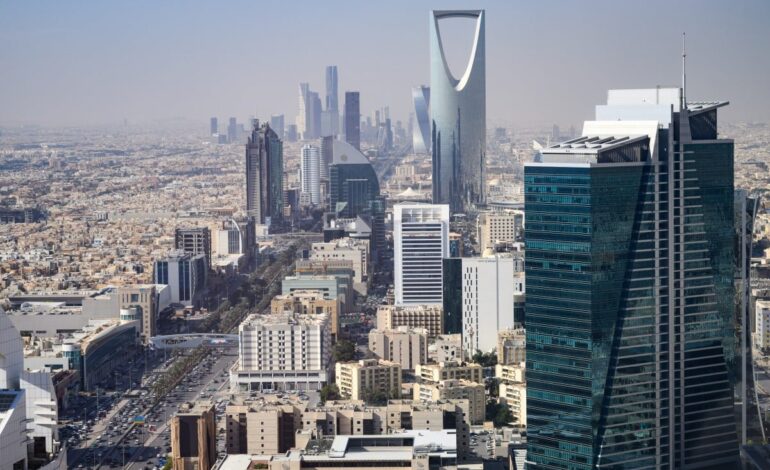
Alyahya’s remarks come as Saudi Arabia continues to push major reforms aimed at reducing its dependence on oil, expanding non-oil sectors, and attracting global investment. The kingdom has launched large-scale projects in tourism, advanced manufacturing, logistics, technology, and renewable energy. Alyahya said the ambition behind these initiatives mirrors the spirit of Singapore’s early industrialisation efforts, which transformed the city-state into a global financial and technology hub.
He also noted the importance of strategic partnerships, saying that Singapore’s ability to connect East and West made it a valuable reference point for Saudi Arabia’s goal of positioning itself as a global crossroads for trade, innovation, and talent. Strengthened cooperation between Singaporean and Saudi institutions, he added, could open new avenues for mutual investment, skills exchange, and technological collaboration.
Alyahya told the audience that Saudi Arabia is not attempting to replicate Singapore’s model in exact form but is instead learning from its principles and adapting them to local conditions. He said both countries share an interest in effective governance, economic diversification and nurturing human capital, making the comparison meaningful.
His comments underscored the growing dialogue between the two nations as Saudi Arabia seeks to draw lessons from global success stories while charting its own path to long term economic transformation.