China-France Economic Relations: A Legacy of Growth and a Future of Strategic Cooperation
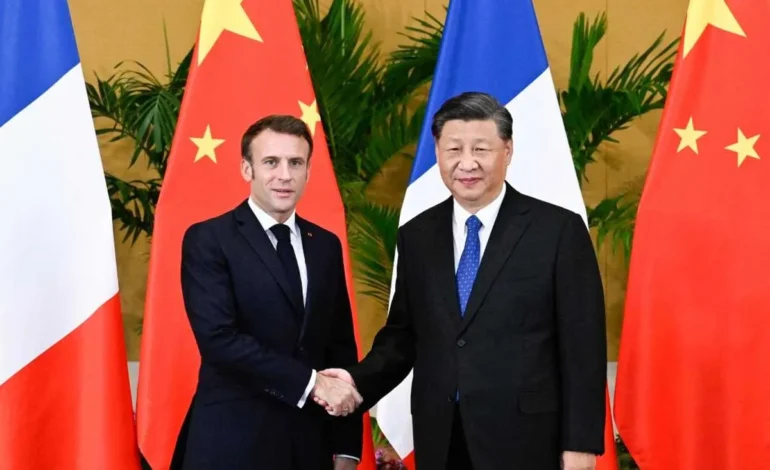
As French President Emmanuel Macron prepares for his state visit to China from Wednesday to Friday, attention is once again focused on the deepening economic ties between the two nations. The visit marks a new chapter in a bilateral relationship that has been underpinned by steady growth, strategic cooperation, and a shared interest in shaping a multipolar global economy.
Since the formal establishment of diplomatic relations between China and France in 1964, the two countries have cultivated an economic partnership that has grown from modest beginnings into one of Europe’s most dynamic bilateral trade relationships. Over the past six decades, trade volumes have increased by several hundredfold, underpinned by mutual market access, expanding investment, and joint ventures across a range of high-value sectors.
A Partnership Built on Mutual Interests
France was the first major Western power to recognize the People’s Republic of China and establish full diplomatic relations. That early diplomatic breakthrough laid the foundation for what has become a robust and multifaceted economic relationship. Today, China is France’s second-largest non-EU trading partner, after the United States, while France is China’s third-largest trading partner within the European Union.
Bilateral trade reached €90 billion ($98 billion) in 2024, according to official data, driven by exchanges in aircraft, luxury goods, agricultural products, automobiles, pharmaceuticals, and renewable energy technologies. French luxury brands such as LVMH and Chanel have experienced significant growth in China, while Chinese electric vehicle makers and tech firms have increased their footprint in the French and broader European markets.
Investment and Strategic Sectors
Beyond trade, two-way investment has also intensified. French multinational corporations such as Airbus, TotalEnergies, and L’Oréal have expanded operations across China, establishing joint ventures and research facilities. Airbus, in particular, has set up a final assembly line in Tianjin, which is now a flagship symbol of Sino-French industrial cooperation.
On the Chinese side, firms such as CRRC, Huawei, and BYD have either expanded into or announced new investments in France, contributing to technology transfer, employment, and local development. Despite regulatory scrutiny in certain sectors, French officials have reiterated their commitment to maintaining a competitive and open investment environment.
The energy and aviation sectors have emerged as key pillars of strategic cooperation. China and France have signed multiple civil nuclear energy agreements over the years, including collaborations in reactor design and low-carbon energy technologies. In aerospace, the long-standing partnership between Airbus and Chinese aviation authorities has been reinforced through joint production and supply chain integration.
Macron’s Visit: A Strategic Opportunity
President Macron’s upcoming visit is expected to focus on further strengthening trade ties, promoting joint green development initiatives, and discussing potential partnerships in artificial intelligence, climate adaptation, and space exploration. The visit also comes amid heightened geopolitical tensions between major powers, and both France and China are keen to assert their shared support for multilateralism, open markets, and diplomatic dialogue.
Observers note that Macron’s consistent engagement with Beijing positions France as a key bridge between China and the broader European Union. His 2023 and 2024 visits included high-level talks on climate, technology standards, and global health governance areas likely to remain on the agenda this year.
“France’s relationship with China is based on strategic autonomy and mutual benefit,” said a senior researcher at the Paris-based Institut Montaigne. “Macron’s approach reflects a belief that engagement, not isolation, is the most productive path forward.”
Looking Ahead
As both nations celebrate decades of successful economic partnership, attention is now turning to the next phase focused on innovation, digital transformation, and sustainable growth. With global supply chains evolving and the world transitioning to low-carbon development, China and France are poised to collaborate on issues of global consequence.
Macron’s visit offers a symbolic and practical opportunity to reaffirm a relationship that continues to evolve in line with the demands of a complex and interconnected world.