
CDC advisers vote to reverse decades-long policy on hepatitis B shots for newborns
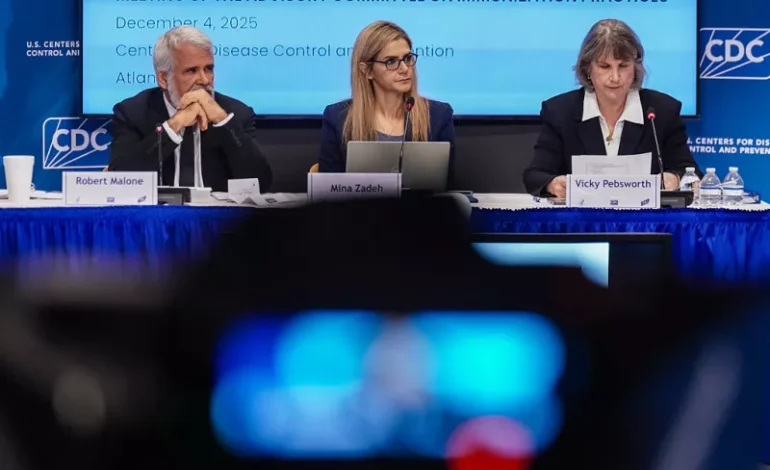
In a landmark move that overturns more than 30 years of U.S. public health practice, advisers to the Centers for Disease Control and Prevention (CDC) have voted to scale back the long-standing recommendation that all newborns receive the hepatitis B vaccine at birth. The decision, made by the CDC’s Advisory Committee on Immunization Practices (ACIP), marks one of the most consequential shifts in infant vaccination guidance in decades.
The committee voted 8–3 to recommend that hepatitis B vaccination at birth be given only to infants whose mothers test positive for the virus, which can cause chronic liver infections and life-threatening disease. For infants born to women who test negative or whose hepatitis B status is unknown, the new guidance encourages parents to consult with clinicians rather than vaccinating immediately after delivery.
If approved by the CDC’s acting director, the change would roll back a universal policy credited with sharply reducing hepatitis B infections in the United States since the early 1990s. For decades, public health experts have argued that vaccinating newborns at birth was the safest way to prevent transmission, especially because some infected mothers may not know they carry the virus or may acquire it later in pregnancy.
The ACIP, however, said that improved screening programmes and new treatment options for pregnant women have altered the landscape. Supporters of the change argue that universal birth dosing may no longer be necessary for low-risk infants and that parents should have more discretion about timing.
Still, the vote has triggered concern from many in the medical community. Universal infant vaccination was adopted precisely because hepatitis B can be passed silently from mother to child and because incomplete testing risks missing cases. The birth dose has long been viewed as a safety net that protects infants whose mothers were not screened, tested incorrectly or contracted the virus late in pregnancy.
Public health experts warn that narrowing the recommendation could unintentionally increase the risk of missed infections especially in communities with limited healthcare access or inconsistent prenatal care. Critics of the decision say that relying solely on maternal testing creates more points of failure and could reverse years of hard-won progress.
The debate reflects broader divisions about how vaccination recommendations should balance universal protection with individualised care. Some committee members argued that the universal birth dose had been essential in driving down liver disease and childhood infection rates, while others voiced support for tailoring vaccination to maternal risk.
The final decision now sits with the CDC’s acting director, who will review the committee’s vote before issuing updated national guidelines. If adopted, hospitals and paediatric practices across the country will need to adjust protocols that have been routine for a generation of newborns.
For families and clinicians, the shift raises important questions not only about hepatitis B prevention, but also about how public health policy evolves amid changing medical evidence, parental preferences and political scrutiny around vaccines.



