Soldiers in Guinea-Bissau announce takeover on state TV, president says he has been deposed
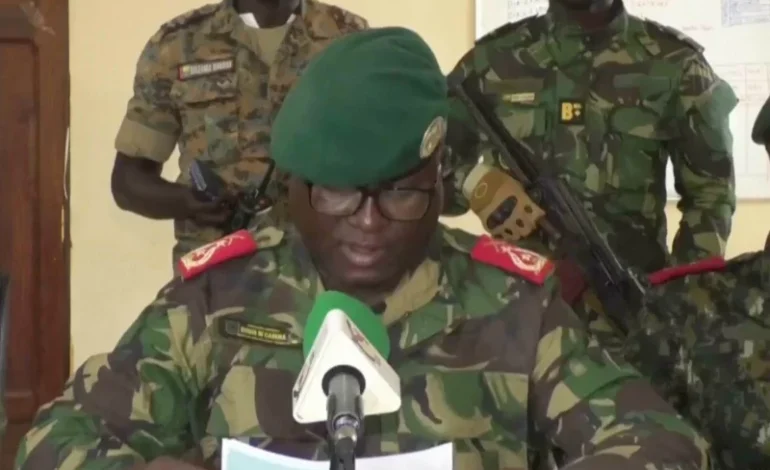
Guinea-Bissau’s political crisis escalated sharply on Wednesday after soldiers appeared on state television declaring they had seized power, just three days after national elections and amid reports of heavy gunfire near the presidential palace. President Umaro Sissoco Embaló later told French media that he had been deposed and arrested, confirming fears that another West African nation has succumbed to a military coup.
Dinis N’Tchama, speaking on behalf of the armed forces, read a statement announcing that the “High Military Command for the reestablishment of national and public order” had taken control. He said the military was “immediately deposing the president of the republic” and suspending all state institutions until further notice. No details were given about the fate of senior government officials or the timeline for restoring civilian rule.
The coup attempt the latest in a wave of military takeovers across West Africa unfolded quickly. Witnesses in Bissau reported the sound of gunfire around the presidential compound early on Wednesday. Rumours of troop movements spread throughout the capital as residents sheltered indoors and businesses closed.
Guinea-Bissau has long struggled with political instability, corruption and factionalism within its security forces. Although Embaló survived a previous coup attempt in 2022, the country has remained vulnerable to sudden shifts in power, exacerbated by economic hardship and tensions surrounding elections.
Regional leaders and international organisations have condemned the takeover, urging calm and calling for the immediate release of detainees. The Economic Community of West African States (ECOWAS), which has faced multiple crises in Mali, Burkina Faso and Niger in recent years, is expected to hold emergency consultations. The African Union has also expressed “deep concern” and warned of potential sanctions.
As news of the intervention spread, telecommunications in parts of Bissau reportedly went down and soldiers were seen patrolling government buildings. Flights in and out of the country were temporarily disrupted, and foreign embassies issued warnings to their citizens to remain indoors.
Guinea-Bissau’s turmoil contributes to a broader pattern of democratic reversals across the Sahel and coastal West Africa, where militaries have repeatedly stepped in, citing corruption, insecurity or disputed elections as justification. Critics say these interventions rarely resolve underlying problems and often deepen political uncertainty.
For now, the military has offered no roadmap for how long it intends to govern or whether elections will be organised. With state institutions suspended and the president claiming to have been detained, Guinea-Bissau faces a period of profound uncertainty that will test regional diplomacy and the resilience of its already fragile democratic structures.