China Closes AI Gap With US Three Years After ChatGPT Triggered Tech Scramble
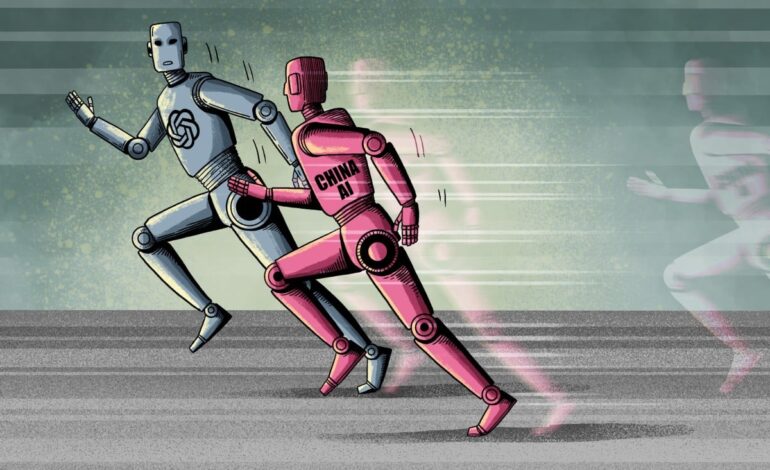
When OpenAI released ChatGPT on November 30 three years ago, the impact rippled far beyond the United States. In China, the launch triggered what many insiders describe as a moment of shock across the technology sector. The sudden visibility of powerful generative artificial intelligence exposed how quickly the field was advancing and how large the potential gap with US developers had become. For policymakers and companies alike, the debut of ChatGPT served as a wake up call that demanded an immediate response.
Urgent briefings inside government circles
In the weeks following ChatGPT’s release, Chinese authorities moved quickly to understand the implications of the technology. According to people familiar with the process, urgent requests were sent to leading academics and technical experts, including professors at Tsinghua University. These specialists were asked to explain how generative AI worked, what risks it posed, and how it could reshape industries ranging from education to national security. The briefings reflected concern not only about technological competition but also about information control and long term economic impact.
Big Tech and start ups mobilise
China’s major technology firms and a new wave of ambitious start ups reacted with remarkable speed. Companies began accelerating internal research programmes focused on large language models and conversational AI. Within months, a growing list of domestic chatbots and generative AI platforms began appearing, often backed by significant investment and engineering resources. The aim was not simply to copy ChatGPT, but to build systems tailored to the Chinese language, regulatory environment, and user behaviour.
Registration and regulation shape development
Unlike in many Western markets, the rollout of AI chatbots in China has taken place under close regulatory oversight. Companies developing large language models were required to register their systems with authorities before public release. This process was designed to ensure compliance with content rules and data governance requirements. While it added complexity, it also created a structured pathway for AI products to reach the market, helping domestic services gain legitimacy and scale within China’s tightly controlled internet ecosystem.
Keeping foreign AI at bay
One of the driving forces behind China’s rapid push was the desire to limit reliance on foreign AI platforms. With more than one billion internet users, China represents one of the largest potential markets for generative AI services in the world. By developing homegrown alternatives, Chinese authorities and companies sought to prevent US based tools from becoming embedded in everyday digital life. This strategy aligned with broader efforts to strengthen technological self reliance across key sectors.
Narrowing the performance gap
Three years on from the initial shock, many analysts believe China has significantly narrowed the gap with the United States in several areas of applied AI. While US firms still lead in foundational model research and computing scale, Chinese models have improved rapidly in language understanding, reasoning, and practical deployment. Domestic platforms are now widely used in customer service, education, content creation, and enterprise software, demonstrating that the ecosystem has moved beyond experimentation.
An ecosystem built under pressure
China’s AI progress has unfolded under unique constraints, including export controls on advanced chips and restrictions on access to cutting edge hardware. These limitations forced companies to optimise software, explore alternative architectures, and focus on efficiency. The result has been an ecosystem shaped by necessity, where innovation is driven as much by constraint as by ambition. For many firms, the pressure created by the ChatGPT moment accelerated timelines that might otherwise have stretched over a decade.
A reshaped competitive landscape
The scramble that followed ChatGPT’s debut has permanently altered China’s technology trajectory. Generative AI is now embedded in national strategies, corporate planning, and academic research agendas. While the US remains a leader, China’s rapid mobilisation shows how quickly a determined ecosystem can respond to disruption. The gap that once seemed daunting has narrowed considerably, reshaping global perceptions of where the next breakthroughs in artificial intelligence may emerge.