Why South Korea Is Emerging as a Top Budget Travel Choice for Chinese Tourists
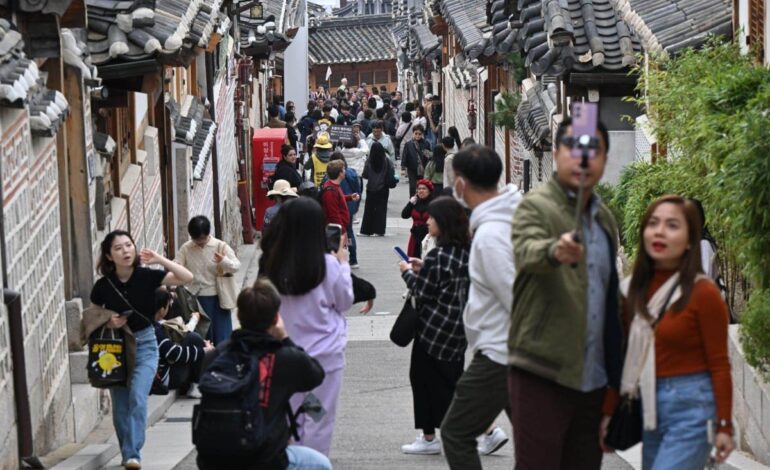
South Korea is quickly gaining attention among Chinese travelers as a new bargain travel destination, driven by a combination of shifting regional politics and favorable currency movements. As diplomatic tensions between China and Japan continue to influence travel sentiment, many mainland tourists are reconsidering their holiday plans, opening the door for South Korea to attract a growing share of outbound Chinese visitors.
Recent strains in China Japan relations have led to a noticeable pullback in Chinese tourist interest in Japan, a country that had long been one of the most popular overseas destinations for mainland travelers. While the dispute has not resulted in formal travel restrictions, analysts say sentiment plays a powerful role in tourism decisions. Against this backdrop, South Korea is increasingly viewed as a culturally familiar, geographically close, and politically less sensitive alternative.
Currency dynamics are further strengthening South Korea’s appeal. The Korean won has weakened significantly in the second half of the year, making travel expenses more affordable for visitors using stronger currencies such as the Chinese yuan. Analysts note that the won has become the worst performing currency in Asia over this period, largely due to a widening interest rate gap between South Korea and the United States. Higher US rates have drawn global capital toward American assets, putting pressure on the won and contributing to sustained equity outflows from the Korean market.
The scale of the currency decline is notable. In October, South Korea’s real effective exchange rate dropped to its lowest level in 16 years, according to data from the Bank for International Settlements. This measure, which adjusts for inflation and trade competitiveness, fell even below levels seen during periods of significant domestic political uncertainty. For travelers, the weaker exchange rate translates into cheaper hotel stays, dining, shopping, and entertainment, enhancing South Korea’s image as a value destination.
Tourism industry observers say Chinese travelers are particularly responsive to price competitiveness, especially as global economic uncertainty encourages more budget conscious travel behavior. South Korea’s established infrastructure for Chinese tourists, including Mandarin language services, payment platforms, and shopping districts tailored to mainland preferences, makes the transition even smoother. Cities such as Seoul and Busan are already seeing renewed interest from tour operators and independent travelers alike.
At the same time, South Korea has been actively promoting itself as a travel destination through cultural exports such as K pop, television dramas, and food tourism. These soft power advantages, combined with affordability, are helping the country reposition itself in the regional tourism landscape. Airlines and travel platforms are also adjusting capacity and marketing strategies to capture potential demand from China.
Analysts caution that currency driven tourism booms can be sensitive to shifts in global financial conditions. A rebound in the won or changes in interest rate policy could narrow the current price advantage. However, in the near term, South Korea appears well placed to benefit from changing travel patterns and economic forces shaping Asia’s tourism flows.
For Chinese travelers seeking overseas experiences without high costs or political discomfort, South Korea’s mix of affordability, accessibility, and familiarity is proving increasingly attractive.