How a Chinese Robotics Start Up Outpaced Elon Musk in Just Two Years
An Unlikely Challenger Emerges
In 2023, few would have expected a small Chinese robotics start up with barely one million yuan in funding to draw comparisons with Elon Musk. EngineAI Robotics began as a modest venture operating on a tight budget of about US$150000, a fraction of the resources available to global technology giants. Yet in less than two years, the company has captured attention by developing a humanoid robot that many observers believe outperforms Tesla’s Optimus in key areas of movement and control.
David Versus Goliath in the Tech World
The contrast between the two players could hardly be sharper. Elon Musk is a central figure in global technology, leading companies spanning electric vehicles, space exploration, and artificial intelligence, with a combined valuation in the hundreds of billions of dollars. EngineAI, by comparison, was founded quietly by Zhao Tongyang and a small team of engineers focused on rapid experimentation rather than scale. The story has resonated widely because it challenges assumptions about where breakthrough innovation must come from.
The T800 Robot Makes Its Mark
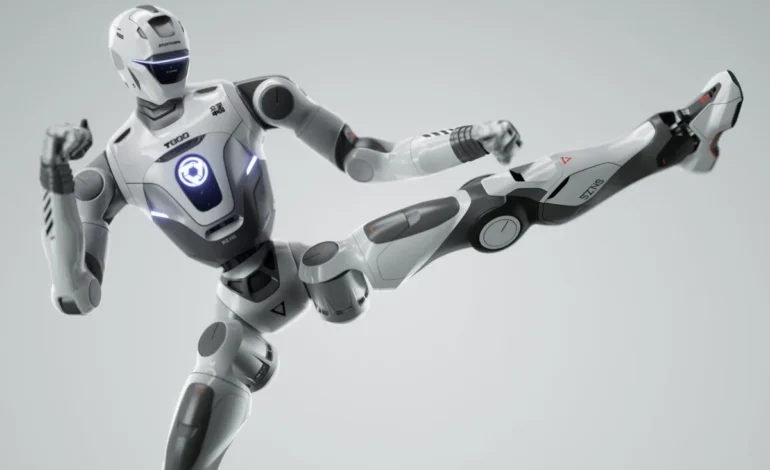
EngineAI’s breakthrough came with the development of the T800 robot, a humanoid machine capable of dynamic movements that surprised even seasoned robotics researchers. The robot is known for delivering powerful roundhouse kicks reminiscent of martial arts icon Bruce Lee, generating force comparable to that of a small car in motion. In a striking demonstration of confidence, the team tested the robot under the supervision of engineers and scientists and even had it perform movements close to its own chief executive.
Online Reaction Highlights the Comparison
The timing of EngineAI’s success coincided with public demonstrations of Tesla’s Optimus robot, inviting inevitable comparison. When Musk announced that Optimus had set a personal record by jogging a few steps, reactions on Chinese social media were notably skeptical. The contrast became sharper after a live demonstration showed Optimus falling backward while attempting to hand over a bottle of water. Against this backdrop, footage of the T800 executing complex and forceful movements spread quickly online, fueling amusement and national pride among viewers.
Why Speed Mattered More Than Scale
Analysts say EngineAI’s progress reflects a different development philosophy. Rather than building a general purpose robot designed to do many things slowly, the company focused on mastering specific physical capabilities first. With fewer layers of management and a clear technical target, the team was able to iterate quickly. This approach allowed them to demonstrate impressive physical performance without the massive infrastructure required by larger firms.
China’s Robotics Ecosystem Plays a Role
EngineAI’s rise also highlights broader strengths within China’s robotics ecosystem. Access to skilled engineers, rapid prototyping facilities, and a culture that encourages practical experimentation have helped small teams move quickly. While funding was limited, the surrounding environment allowed EngineAI to compensate with speed, focus, and engineering intensity. The result is a product that has captured public imagination despite the company’s small size.
Rethinking Innovation and Competition
The comparison between EngineAI and Tesla does not necessarily suggest a final verdict on which company will dominate humanoid robotics. Instead, it reveals how innovation can emerge from unexpected places. Large firms often prioritize safety, integration, and long term scalability, while start ups can push boundaries more aggressively. The two approaches reflect different stages of technological development rather than a simple race with a single winner.
A Symbolic Moment for Global Tech
EngineAI’s rapid progress has become symbolic of a shifting technology landscape where resources alone no longer guarantee leadership. For many observers, the story underscores how creativity, focus, and execution can challenge even the most powerful players. In just two years, a little known Chinese start up has reshaped the conversation around humanoid robotics and reminded the world that disruption often comes from the margins.