Wealthy Chinese Cool on Trump Gold Card Residency Plan as Doubts Mount
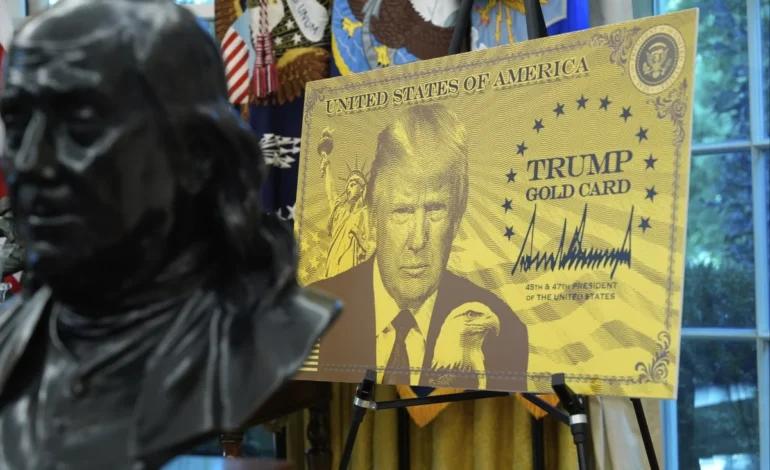
Early interest among wealthy Chinese in US President Donald Trump’s proposed gold card immigration programme appears to be fading, as questions over security screening, legal uncertainty, and limited practical benefits temper initial enthusiasm.
When Trump first floated the idea earlier this year, promising permanent US residency to ultra wealthy foreigners willing to pay a hefty fee, some Chinese high net worth families were intrigued. Beijing based migration consultant Jack Jing recalls receiving multiple unsolicited inquiries soon after the proposal was announced. At the time, the programme was marketed as a fast track pathway to US permanent residency for the global elite.
That excitement has since diminished. After the full application details were released last week, Jing said none of his clients plan to apply in the near future. As general manager of migration service provider WellTrend, Jing has spent decades advising affluent Chinese families on overseas relocation and investment migration. He said careful review of the policy raised more concerns than confidence.
According to Jing, several clients ultimately abandoned the gold card option after weighing legal risks and the possibility of long processing delays. Two families opted instead for existing US investment immigration routes that are supported by congressional legislation, while others chose to wait and see whether the new programme proves durable. The lack of clarity over how the policy would be implemented has been a major deterrent.
Immigration agents say security concerns are another key factor limiting the scheme’s appeal. The official visa information indicates applicants would undergo screening by the US Department of Homeland Security, a process some clients view as opaque and potentially intrusive. Combined with broader geopolitical tensions, this has made some wealthy Chinese cautious about committing to a programme that could expose them to heightened scrutiny.
Policy uncertainty also looms large. Although the price of Trump’s gold card has reportedly dropped from an initial five million US dollars to one million, consultants say the lower cost has not translated into stronger demand. Many clients worry the programme could become entangled in political or legal disputes, especially if it faces challenges in Congress or the courts.
Jing noted that some clients fear a scenario similar to past policy battles in the United States, where executive initiatives were delayed or overturned after legal challenges. The possibility that disputes could eventually reach the Supreme Court has raised concerns that green card processing could be frozen for years, undermining the programme’s appeal.
Similar sentiments are being echoed elsewhere in China. In the south, Bill Liu, co founder of Guangzhou Cheuk Yuet Overseas Consulting Service, said interest among his clients remains muted. He noted that without a clear and predictable timeline to permanent residency, even wealthy applicants are hesitant to commit significant funds. For many, established immigration pathways with clearer rules still feel like the safer choice.
Despite these reservations, demand for US immigration among affluent Chinese remains strong. However, agents say Trump’s gold card has yet to convince this group that it offers enough certainty or advantage to justify the risks.