Cathay Pacific Probes Taxiway Error Involving Flight at Manila Airport
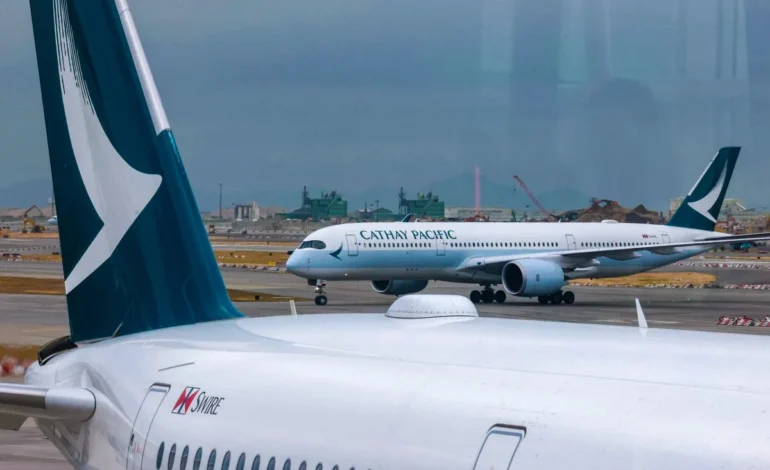
Hong Kong’s flag carrier Cathay Pacific Airways has launched an internal investigation after one of its aircraft used the wrong taxiway at Manila’s Ninoy Aquino International Airport, an incident that led to delays for two other flights. The airline confirmed on Thursday that it is working closely with aviation authorities to determine how the error occurred and whether procedural changes are needed.
The incident involved flight CX918, which was scheduled to travel from Manila to Hong Kong. According to Cathay Pacific, the aircraft entered an incorrect taxiway during ground operations at the airport. While no injuries were reported and flight safety was not compromised, the mistake disrupted normal airport movements and resulted in knock on delays for other departing flights.
Airport operations at major regional hubs like Manila rely heavily on precise coordination between pilots, air traffic controllers and ground staff. Taxiways are carefully designated to ensure aircraft can move safely between runways and terminals. Even minor deviations can cause congestion, delays or operational complications, particularly during busy travel periods.
Cathay Pacific said it is cooperating fully with relevant authorities as part of a formal investigation. The airline has not disclosed whether the error was linked to pilot miscommunication, signage issues or air traffic control instructions, saying it would be inappropriate to speculate before the review is complete. Officials stressed that safety remains the airline’s top priority and that corrective measures will be implemented if required.
Aviation experts note that wrong taxiway incidents, while relatively uncommon, do occur at airports worldwide. They are often classified as runway or ground movement events and are closely examined because of their potential safety implications. In most cases, investigations focus on human factors, airport layout complexity and clarity of instructions provided to flight crews.
The incident briefly affected traffic flow at Ninoy Aquino International Airport, which has long faced challenges related to congestion and infrastructure constraints. Manila’s main airport handles heavy passenger volumes and a wide mix of domestic and international flights, making efficient ground management essential. Local airport authorities have not released detailed comments on the disruption but confirmed that normal operations resumed shortly afterward.
For Cathay Pacific, the event comes at a time when airlines across Asia are working to rebuild schedules and maintain operational reliability amid rising travel demand. Delays and disruptions, even when minor, can have ripple effects on tightly coordinated flight networks.
Passengers on the affected Cathay Pacific flight were informed of the delay, and the airline said it followed standard procedures to minimise inconvenience. There was no indication that the aircraft sustained any damage or that the flight crew acted outside established safety protocols.
Regulators typically use such incidents as learning opportunities to strengthen procedures and communication. Industry observers say the outcome of the investigation is likely to focus on preventive measures rather than punitive action, unless serious violations are uncovered.
As the review continues, Cathay Pacific has reiterated its commitment to transparency and safety. The airline said it would share relevant findings with authorities and take steps to ensure similar incidents do not occur in the future, reinforcing confidence among passengers and partners in its operational standards.