A Pop Culture Figure Who Defied Easy Labels
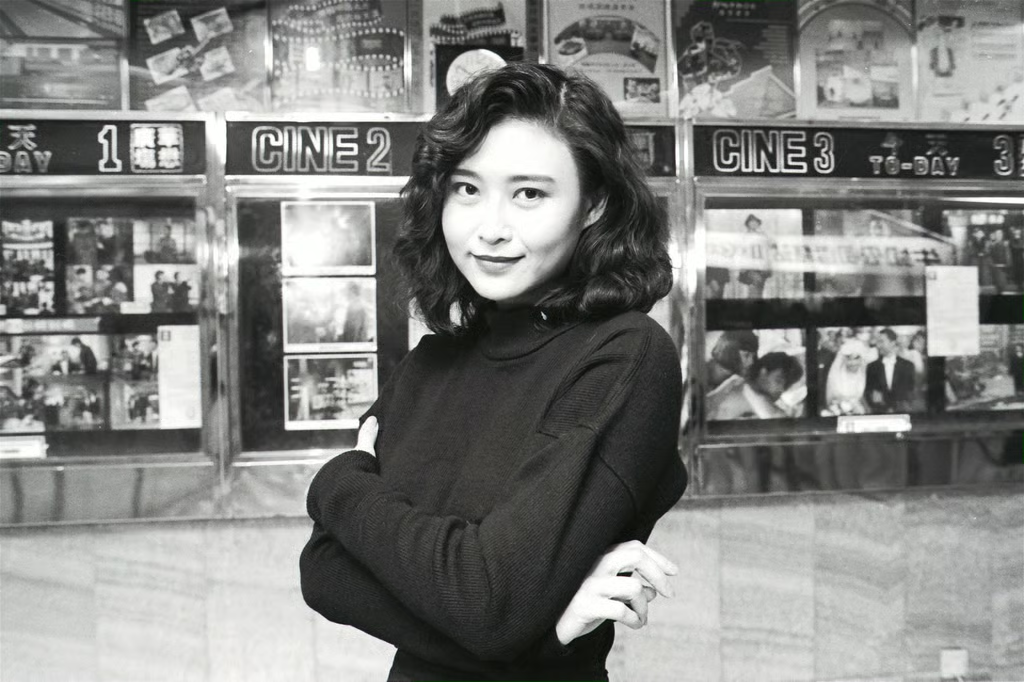
Few figures in Hong Kong entertainment history have generated as much discussion as Veronica Yip Yuk hing. Once known primarily as a 1990s sex symbol, her career evolved into something far more complex and influential. Her journey from soft core film notoriety to mainstream success was not accidental, but the result of calculated choices made within a conservative entertainment industry that rarely forgave bold moves.
This profile forms part of a long running series examining major pop culture figures who shaped Hong Kong’s creative landscape over recent decades. Veronica Yip’s story stands out because it challenges assumptions about fame, respectability, and female agency.
Early Life and Conventional Beginnings
Born in 1967 into a wealthy family, Yip entered public life through traditional channels. Her first taste of fame came in 1985 when she placed second runner up at the inaugural Miss Asia Pageant. At the time, beauty pageants were a standard launchpad for aspiring actresses, and Yip followed the expected route by signing an acting contract with Asia Television.
Her early roles aligned with mainstream expectations, projecting elegance and glamour rather than controversy. Few could have predicted that she would later take a path that sharply diverged from the carefully managed careers typical of pageant winners.
Embracing Controversy in the Film Industry
Yip’s decision to appear in soft core films during the early 1990s marked a turning point. At a time when Hong Kong society remained socially conservative, erotic cinema occupied an uneasy space between commercial success and moral judgment. Many performers who entered the genre found it nearly impossible to escape its stigma.
Yip, however, approached these roles strategically. Rather than being trapped by typecasting, she used the visibility to build name recognition at a scale that mainstream television often could not provide. The films generated controversy, but they also made her a household name.
Navigating Public Perception
Public reaction to Yip’s choices was divided. While some critics dismissed her as a fleeting sensation, others recognized her intelligence and composure in handling scrutiny. She maintained control over her public image, rarely appearing defensive or apologetic about her decisions.
This refusal to conform to shame based narratives was unusual at the time. In doing so, Yip quietly challenged social expectations placed on women in entertainment, particularly around morality and respectability.
Transition to Mainstream Music and Acting
What truly distinguished Yip’s career was her ability to pivot. As public tastes shifted, she gradually moved away from erotic cinema and reentered the mainstream as a pop singer and dramatic actress. Her performances demonstrated range and discipline, helping reshape how audiences perceived her.
By the mid 1990s, she was no longer defined solely by earlier roles. Instead, she was viewed as a versatile entertainer capable of adapting to changing industry dynamics.
Redefining Success Beyond the Screen
Yip’s later life choices further cemented her transformation. She stepped back from entertainment and eventually married a wealthy businessman, entering a different social sphere altogether. Unlike many former stars who faded quietly, Yip retained public respect by redefining success on her own terms.
Her trajectory reflects an understanding that fame is temporary, but agency lasts longer. She exited the spotlight without scandal, preserving autonomy over how her story would be remembered.
Cultural Impact and Lasting Legacy
Veronica Yip’s significance lies not only in her filmography, but in what her career represents. She navigated a rigid entertainment hierarchy, absorbed criticism without retreat, and reshaped her image through persistence rather than denial.
In retrospect, her journey reads less like scandal and more like strategic adaptation. She demonstrated that it was possible to move beyond labels in an industry that rarely allowed second acts.
Why Her Story Still Matters
Decades later, Yip’s career continues to spark discussion because it mirrors broader conversations about women, power, and choice in media. She did not wait for permission to reinvent herself, and that independence remains her most enduring contribution to Hong Kong pop culture.
Her story is not about redemption, but about control. And that is precisely why it still resonates.