Taiwan Opposition Moves to Impeach President William Lai in Largely Symbolic Push
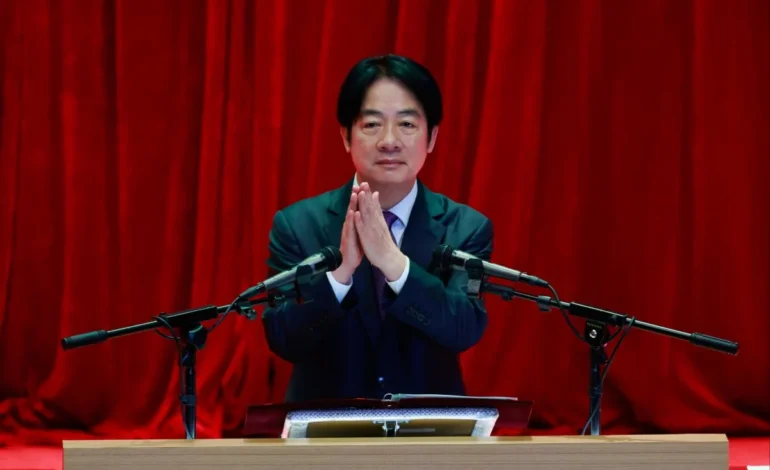
Opposition lawmakers in Taiwan have vowed to pursue impeachment proceedings against President William Lai, a move that is widely expected to be symbolic rather than practical given the current balance of power in the legislature.
The proposal was announced by members of the opposition camp, who accuse Lai of governance failures and policy decisions they claim have harmed social cohesion and democratic norms. However, under Taiwan’s constitutional framework, impeachment requires the backing of at least 76 legislators. The combined opposition currently controls only 62 seats, making it virtually impossible for the motion to succeed without defections from the ruling camp.
Despite the long odds, opposition figures say the move is intended to send a strong political message rather than to immediately remove the president from office. Lawmakers involved argue that impeachment is one of the few formal tools available to express dissatisfaction with Lai’s leadership and to rally public attention around what they describe as abuses of power or policy misjudgments.
President Lai, who took office earlier this year, has faced a divided legislature since his Democratic Progressive Party lost its majority. While his presidency marks continuity in Taiwan’s political direction, particularly on relations with Beijing and domestic reform priorities, it has also sharpened partisan tensions. Opposition parties have used their legislative strength to block bills, cut budgets and challenge executive authority, setting the stage for ongoing political confrontation.
Analysts say the impeachment proposal reflects frustration among opposition lawmakers who feel sidelined by the administration’s policy agenda. By raising the issue publicly, they hope to frame the political narrative and pressure the president on controversial issues ranging from economic management to cross-strait relations.
Legal experts in Taiwan note that impeachment is an extraordinary measure rarely used in the island’s political history. Even initiating the process requires substantial procedural steps, and ultimate approval depends on both legislative supermajorities and judicial review. Given these hurdles, most observers see little chance that the current effort will advance beyond the proposal stage.
The presidential office has responded by dismissing the impeachment talk as political theater. Officials close to Lai say the administration remains focused on governance, economic stability and safeguarding Taiwan’s democratic system. They argue that constant political brinkmanship risks undermining public confidence at a time when the island faces external pressure and economic uncertainty.
Public reaction has been mixed. Some supporters of the opposition view the move as a legitimate expression of democratic oversight, while others see it as a distraction that deepens polarization without offering constructive solutions. Polling suggests that many voters are more concerned about cost of living pressures and job prospects than high level political disputes.
The impeachment vow also highlights the challenges of governing without a legislative majority. With opposition parties controlling parliament, President Lai must navigate a complex political environment where compromise is difficult and confrontation often dominates headlines.
While the impeachment effort is unlikely to change Taiwan’s leadership, it underscores the intensity of partisan rivalry and the limits of cooperation in the current political climate. As both sides dig in, observers warn that prolonged political standoffs could slow policymaking and test the resilience of Taiwan’s democratic institutions in the months ahead.