China Opens Market Access for Its First L3 Autonomous Driving Vehicles
China has taken a significant step toward the commercial deployment of advanced autonomous driving by granting market access to its first batch of Level 3 vehicles. The announcement by the Ministry of Industry and Information Technology marks a turning point in how autonomous technologies move from controlled testing environments into real world use. With approvals now in place, China is beginning the transition from experimentation to early commercialization of conditional self driving systems.
What L3 approval means for autonomous driving
Level 3 autonomous driving refers to systems that can handle driving tasks under specific conditions without continuous human supervision. Unlike Level 2 systems, where drivers must remain fully engaged at all times, L3 allows the vehicle to take control in defined scenarios such as traffic congestion or highway cruising. However, human drivers must still be ready to take over when the system requests. Market access approval indicates that regulators believe the technology has reached a maturity level suitable for limited public deployment.
Pilot operations in major cities
The newly approved vehicles will begin pilot road operations in designated areas of Beijing and Chongqing. These cities were chosen because of their complex traffic environments and strong regulatory infrastructure. Pilot operations allow authorities to observe how L3 systems perform in real traffic conditions while maintaining oversight. The results will help shape future regulations and standards as China expands autonomous driving access nationwide.
Changan’s urban focused L3 model
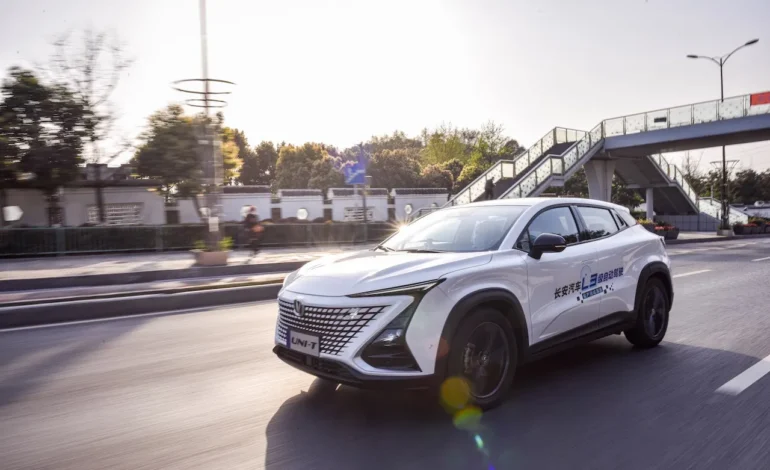
The first approved vehicle is a pure electric sedan developed by Changan. Designed primarily for urban congestion scenarios, the model supports autonomous driving within a single lane on highways and urban expressways when traffic is heavy. Its maximum autonomous speed is capped at 50 kilometers per hour, reflecting a cautious approach focused on safety and reliability. By targeting low speed congested conditions, the system addresses one of the most common and stressful driving scenarios in large Chinese cities.
Arcfox targets higher speed highway use
The second approved model comes from Arcfox, a premium electric vehicle brand. Its pure electric sedan is designed for single lane autonomous driving on highways and urban expressways at speeds of up to 80 kilometers per hour. This higher speed capability signals confidence in the system’s perception and control technologies. Compared with the urban focused model, Arcfox’s vehicle expands the scope of L3 applications, making autonomous driving more relevant for longer commutes and intercity travel.
From testing to early commercialization
This approval represents more than a technical milestone. It signals a regulatory shift toward enabling early stage commercialization of autonomous driving. Until now, most L3 systems in China were restricted to closed testing or demonstration programs. Granting market access allows manufacturers to sell vehicles with L3 capabilities and gather large scale operational data from real users. This feedback loop is essential for improving system performance and building public trust.
Safety and regulatory oversight remain central
Despite the breakthrough, China’s regulators are emphasizing caution. The approved systems are limited to specific scenarios, speeds, and geographic areas. Drivers remain legally responsible for vehicle operation and must be ready to intervene. Authorities are expected to closely monitor pilot operations and may adjust requirements based on observed performance. This incremental approach reflects a balance between innovation and risk management.
Implications for China’s auto industry
The approval gives Chinese automakers a head start in deploying L3 technologies at scale. Domestic firms benefit from close coordination with regulators and access to diverse driving environments for testing. As competition in electric and intelligent vehicles intensifies, early commercialization of L3 systems could become a key differentiator in the market. It also strengthens China’s position in the global race to define autonomous driving standards.
A gradual but decisive shift
China’s decision to grant market access to its first L3 autonomous vehicles marks a decisive yet measured step forward. By moving cautiously from testing to pilot commercialization, regulators are laying the groundwork for broader adoption. While fully autonomous driving remains a long term goal, this development shows that conditional autonomy is no longer theoretical. It is beginning to enter everyday traffic, one controlled step at a time.