China Unveils Scientific Computing AI Agent for National Supercomputing Network
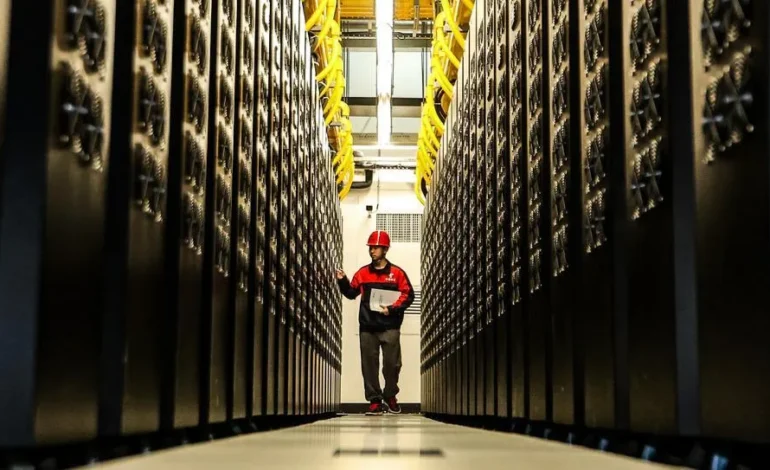
China has launched a new scientific computing intelligent agent designed to dramatically boost research efficiency across its national supercomputing network, signalling a major step in the country’s push toward intelligent science. The system was officially unveiled in Tianjin and is already being positioned as a core tool for next generation scientific research.
Developed for China’s national supercomputing infrastructure, the agent is capable of understanding natural language instructions and translating them directly into complex research workflows. It can automatically break down scientific tasks, allocate computing resources, run simulation software, analyse results, and generate research reports with minimal human intervention.
According to reports in China Science Daily, tasks that previously required a full day of manual coordination and computing time can now be completed in around one hour. The agent currently supports close to 100 high frequency scientific computing scenarios, covering a wide range of research needs.
A key strength of the system lies in its deep integration with China’s AI research ecosystem. By drawing on a shared AI community and repository, the agent can assemble more than 120 domain specific knowledge bases across seven major fields. These include artificial intelligence, scientific intelligence, industrial simulation, and materials science, significantly lowering the barrier for researchers who lack deep expertise in high performance computing.
Experts say the launch reflects a broader shift in how science is conducted. Qian Depei, an academician at the Chinese Academy of Sciences, described the development as part of a transition from traditional computational science toward intelligent science, where AI systems actively assist in discovery rather than simply executing calculations.
The new agent is expected to play a growing role in accelerating innovation, improving collaboration, and maximising the value of China’s supercomputing resources. As competition in advanced research intensifies globally, intelligent computing tools like this are increasingly seen as essential infrastructure rather than optional enhancements.
By embedding AI directly into its supercomputing backbone, China is aiming to reshape how research is done at scale, turning raw computing power into a more accessible, automated, and productive scientific engine.