Wuyi Rock Pigment Painting Brings Modern Expression to Ancient Tradition in Fujian
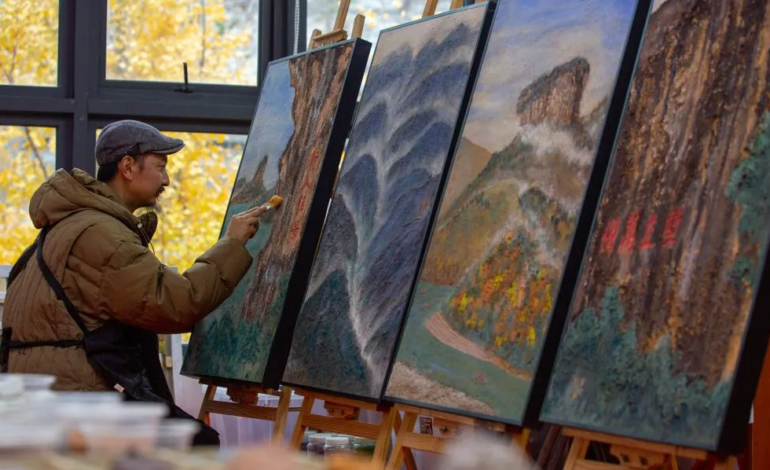
A traditional Chinese art form rooted in the mountains of Fujian is finding new life as contemporary artists blend modern aesthetics with centuries old techniques. Wuyi rock pigment painting, known for its mineral based colours and deep connection to nature, is evolving while staying true to its cultural foundations.
Originating in the Wuyi Mountain region of Fujian, the art form uses pigments derived from natural rocks and minerals. These materials give the paintings a distinctive texture and durability, along with a colour palette that reflects the surrounding landscapes of cliffs, rivers, and forests. Historically, the style was closely tied to traditional Chinese painting themes such as mountains, water, and spiritual harmony.
In recent years, artists have begun incorporating modern artistic elements into Wuyi rock pigment painting. New compositions, abstract forms, and contemporary subjects are being explored, allowing the tradition to resonate with younger audiences and global viewers. While the materials and core techniques remain largely unchanged, the visual language has expanded beyond classical boundaries.
Practitioners say this fusion is essential for keeping the art form alive. By engaging with modern design concepts and current cultural themes, artists can preserve the relevance of rock pigment painting without diluting its identity. Exhibitions and workshops have helped introduce the style to wider audiences, both within China and internationally.
The revival also reflects a broader movement in China’s cultural scene, where traditional crafts are being reinterpreted rather than simply preserved. This approach allows heritage art forms to participate in contemporary cultural dialogue instead of remaining confined to museums.
As Wuyi rock pigment painting continues to evolve, it stands as an example of how tradition and innovation can coexist. Rooted in the natural beauty of Fujian, the art form is carving out a new space in modern Chinese art while honouring the craftsmanship and philosophy that defined its origins.