A Year of Expansion in Football Signals Fifa’s Vision for a Bigger, Richer Game
As football’s decision makers look back on a packed year and ahead to an expanded World Cup, a clear direction is emerging for the sport’s future. Growth, scale and commercial reach are taking priority, even as concerns mount over competitive balance and player welfare.
Those who run the world’s most popular sport argue that demand for football continues to grow and that expansion is a natural response. FIFA and its partners across confederations, domestic leagues and broadcast networks point to the past year as proof that fans are eager for more matches, more teams and more global reach.
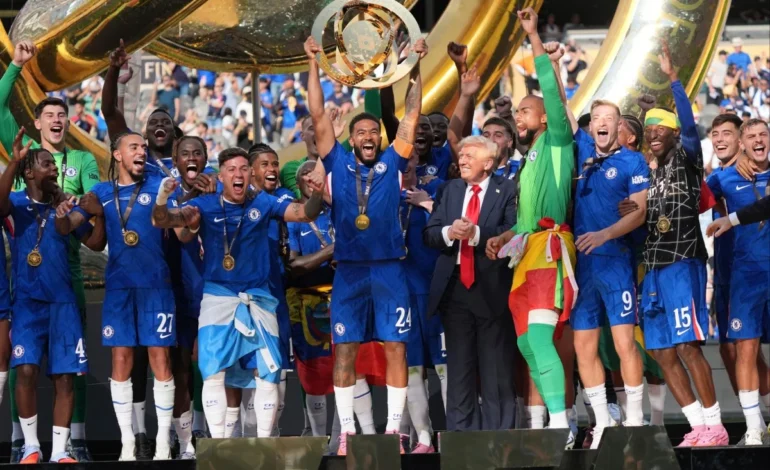
Central to that argument is the newly expanded Club World Cup. FIFA hailed the 32 team tournament as a major success, saying it attracted around 2.4 million fans during its summer run in the United States. Crowds peaked at 81,000 for the final, where Chelsea defeated Paris St Germain, a result that helped reinforce the event’s commercial appeal.
For FIFA, the tournament demonstrated that club football can be packaged on a World Cup scale. Bigger crowds, global television audiences and increased sponsorship revenue have strengthened the belief that expansion drives growth. That same logic underpins plans for a larger World Cup, which will feature more teams and matches than ever before.
However, the year also exposed uncomfortable questions about quality and balance. Several lopsided results drew criticism from fans and analysts alike. New Zealand’s Auckland City FC suffered heavy defeats, losing 10 0 to Bayern Munich and 6 0 to Benfica. UAE side Al Ain FC were also convincingly beaten, conceding five and six goals in separate matches.
Such mismatches have raised doubts about whether simply adding more teams improves the spectacle. Critics argue that widening the gap between elite clubs and smaller sides risks diluting the competitive edge that makes top level football compelling. They warn that fans may lose interest if matches become predictable or one sided.
Player welfare is another growing concern. An expanded calendar means more games, less rest and greater physical strain on players already stretched by domestic leagues and international commitments. Player unions and medical experts have repeatedly cautioned that relentless scheduling increases injury risks and shortens careers.
Despite these concerns, FIFA appears committed to its path. Technology, data driven officiating and global streaming platforms are being integrated alongside expansion, creating a more commercialised and centralised version of the sport.
The past year suggests that football’s future under FIFA will be defined by scale and revenue. Whether that approach enhances or undermines the essence of the beautiful game remains one of the sport’s most pressing debates.