US Confirms Strike on Islamic State Targets in Nigeria With Government Coordination
The United States has carried out military strikes against Islamic State targets in Nigeria, with President Donald Trump describing the operation as a forceful response carried out in coordination with the Nigerian government.
In a message posted on Christmas evening on his social media platform, Trump said the US had launched what he called a powerful and deadly strike against Islamic State fighters operating in Nigeria. He did not provide specific details about the targets or the scale of the damage, but his comments marked a rare public acknowledgement of direct US military action in the country.
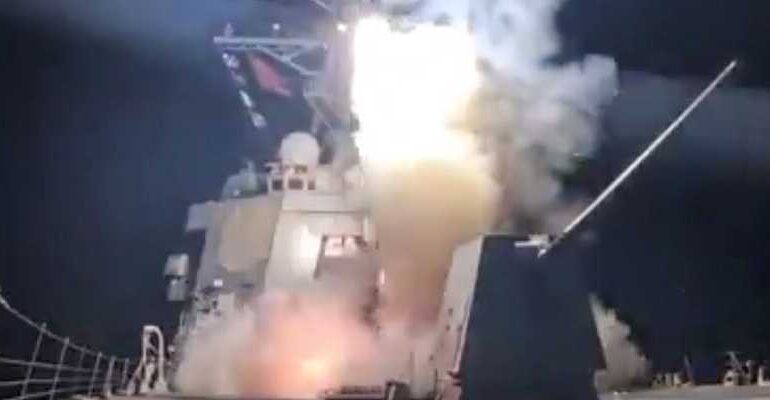
A video released by the Pentagon showed at least one projectile being launched from a US warship, suggesting the strikes were conducted from offshore. US officials declined to give further operational details, citing security concerns.
A senior US Defence Department official, speaking on condition of anonymity, said the strikes were carried out in cooperation with Nigeria and had been approved by the Nigerian government. The official added that the operation followed intelligence sharing and joint planning between the two countries, underscoring a coordinated approach rather than unilateral action.
The strikes came after weeks of sharp criticism from Trump toward Nigeria’s leadership. He has repeatedly accused the government of failing to stop attacks on Christian communities, an issue that has drawn growing attention from US lawmakers and religious groups. While Nigerian authorities have rejected claims of religious persecution, they acknowledge ongoing security challenges posed by extremist groups across parts of the country.
Nigeria’s Ministry of Foreign Affairs confirmed the cooperation in a statement, saying the operation involved intelligence exchange and strategic coordination. The ministry stressed that the action was consistent with international law, respect for national sovereignty and shared commitments to regional and global security.
Islamic State affiliates have expanded their presence in parts of Nigeria in recent years, adding to an already complex security landscape shaped by insurgency, banditry and communal violence. Nigerian forces have struggled to contain militant groups, particularly in remote regions where state presence is limited.
Analysts say the US strike signals Washington’s willingness to take a more direct role in counterterrorism efforts in West Africa, especially when allied governments request support. At the same time, such actions carry political sensitivities, as foreign military involvement can provoke domestic debate within Nigeria.
Neither side has said whether further strikes are planned. For now, the operation highlights deepening security cooperation between Washington and Abuja, even as broader questions remain about how best to address the root causes of extremism and instability in the region.