Train Derailment in Southern Mexico Leaves at Least 13 Dead and Dozens Injured
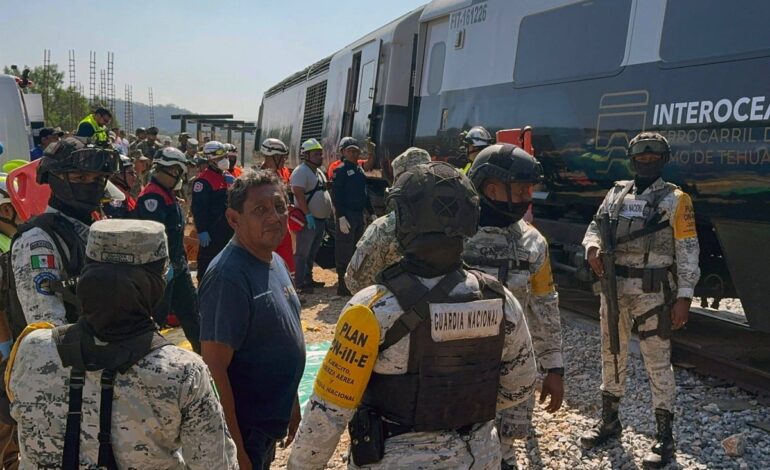
At least 13 people were killed and dozens more injured after a passenger train derailed in southern Mexico, authorities said on Sunday, marking one of the deadliest rail accidents in the region in recent years.
The crash involved an Interoceanic Train carrying about 250 people through the state of Oaxaca. According to officials, the derailment occurred near the town of Nizanda, a rural area where rail lines cut through mountainous and difficult terrain. Emergency services were dispatched shortly after the incident was reported, with rescue teams working to reach passengers trapped inside damaged carriages.
The Mexican Navy said the train was carrying nine crew members and 241 passengers at the time of the accident. Initial assessments indicated that 139 people were not seriously hurt and were declared out of danger. Another 98 passengers sustained injuries, including 36 who required medical treatment at nearby hospitals and clinics.
Images and videos shared on social media showed carriages tilted off the tracks, with debris scattered along the railway line. Passengers could be seen being assisted by rescue workers and local residents as emergency crews worked to stabilise the scene. Some survivors described moments of panic as the train suddenly lurched and left the rails.
Authorities said the cause of the derailment was still under investigation. Engineers and transport officials were sent to examine the tracks, train equipment and surrounding conditions. While no official conclusion has been announced, investigators are expected to look into factors such as track maintenance, speed, weather conditions and possible mechanical failure.
Local officials in Oaxaca declared a state of emergency in the affected area to ensure medical care and transport for the injured. Temporary shelters were set up for passengers who could not immediately continue their journey, while families of victims were assisted by local authorities and support services.
The Interoceanic Train service is part of a broader effort to improve transport links in southern Mexico, a region that has historically lagged behind the rest of the country in infrastructure investment. The route is used by both local travellers and visitors, making the accident a significant blow to public confidence in rail safety.
Mexican President Andrés Manuel López Obrador expressed condolences to the families of those who lost their lives and said federal authorities would fully support the investigation. He also called for a review of rail safety standards to prevent similar tragedies in the future.
Rail accidents in Mexico are relatively rare compared with road incidents, but when they occur, they often raise concerns about ageing infrastructure and oversight. Safety experts say maintaining rail lines in remote or rugged regions poses particular challenges and requires sustained investment.
As rescue and recovery efforts continued, officials urged the public to rely on verified information and avoid speculation. Further updates are expected as investigators determine what led to the derailment and whether additional safety measures will be introduced along the route.