South Korea’s Lee Jae myung to Visit China in Bid to Steady Economic Ties and Address Nuclear Issues
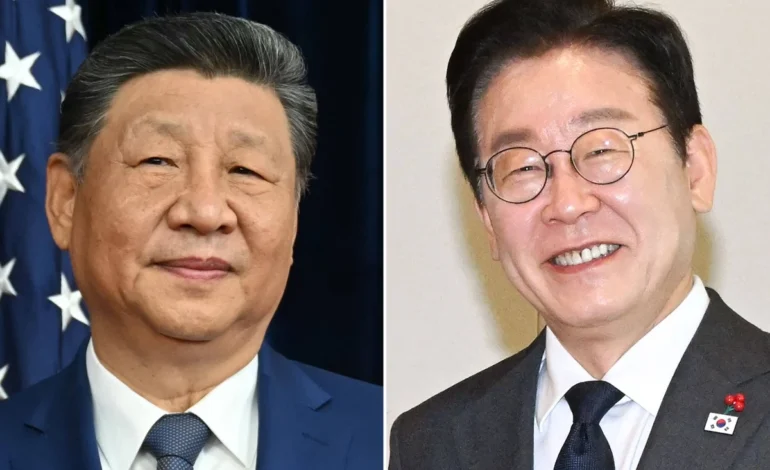
South Korean President Lee Jae myung is set to travel to China next week on a high level visit aimed at easing economic tensions and strengthening dialogue on regional security, as Seoul works to balance its relationship with Beijing while maintaining close ties with Washington. The trip comes amid intense competition between the two Asian economies and growing uncertainty over regional stability.
Lee’s visit will make him the first sitting South Korean president to travel to China since 2019, signalling a renewed effort to engage diplomatically after several years of strained relations. According to officials in Seoul, the president will spend three days in Beijing beginning on Sunday before continuing to Shanghai and then returning to South Korea.
During his stay in Beijing, Lee is expected to meet Chinese President Xi Jinping for talks that will focus on a wide range of economic and strategic issues. South Korea’s presidential office said discussions will include supply chain cooperation, investment flows, the digital economy, environmental protection and joint efforts to combat transnational crime. Several bilateral agreements are also expected to be signed during the visit.
The trip takes place against a backdrop of fierce rivalry between Seoul and Beijing across multiple industries. Both countries are competing for global leadership in sectors such as semiconductors, electronics, electric vehicles, shipbuilding and advanced batteries. While economic ties remain deep, competition has intensified as each side seeks to secure technological advantages and reduce strategic vulnerabilities.
Lee’s administration has described his approach to foreign policy as pragmatic, emphasising the need to manage differences through dialogue rather than confrontation. Officials say the president hopes to stabilise relations with China without undermining South Korea’s long standing alliance with the United States. Maintaining this balance has become increasingly challenging as rivalry between Beijing and Washington shapes regional politics and trade.
Nuclear and security concerns are also expected to feature prominently in the talks. China plays a key role in regional diplomacy, particularly regarding North Korea’s nuclear programme. Seoul has long sought Beijing’s cooperation in encouraging Pyongyang to curb its weapons development and return to dialogue, and Lee is expected to raise these issues during his meetings.
Analysts say the visit reflects a recognition in Seoul that engagement with China remains essential despite economic competition and political differences. China is South Korea’s largest trading partner, and disruptions in bilateral relations can have significant economic consequences for both sides.
At the same time, Lee faces pressure at home to safeguard national interests and avoid appearing overly dependent on Beijing. His challenge will be to extract practical benefits from the visit while reassuring domestic and international partners that South Korea’s broader strategic alignment remains unchanged.
As Lee prepares for the trip, observers see it as a test of whether Seoul and Beijing can move beyond rivalry toward a more stable and predictable relationship. With economic pressures mounting and regional security risks growing, both sides appear keen to keep communication channels open and prevent further deterioration in ties.