Why Global Funds Are Slowly Returning to Chinese Equities
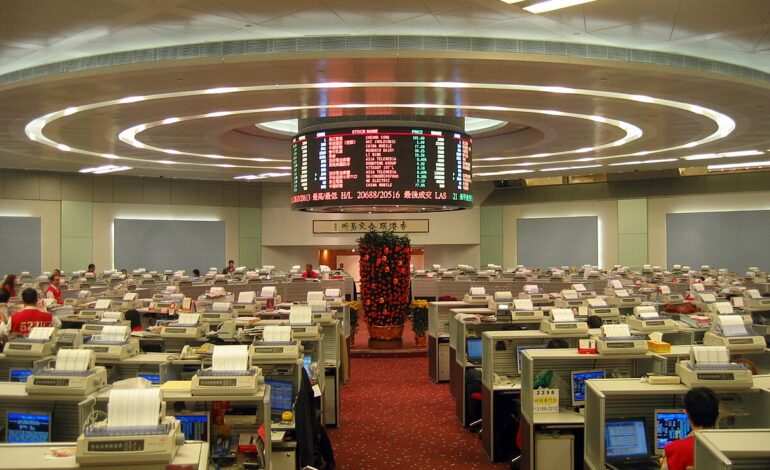
After a prolonged period of withdrawal, global investors are cautiously finding their way back into Chinese equity markets. The shift is gradual rather than dramatic, reflecting a reassessment of risk rather than renewed enthusiasm. For many international funds, the move is less about optimism and more about valuation, positioning, and the realization that complete disengagement from the world’s second largest economy carries its own risks.
The return is selective, measured, and driven by strategy rather than sentiment.
Years of Exit Have Reset Expectations
Over the past several years, foreign capital steadily flowed out of China. Regulatory uncertainty, geopolitical tension, and a slowing domestic economy pushed many global funds to reduce exposure or exit entirely. The result was one of the sharpest reallocations away from China in modern portfolio history.
This retreat reset expectations on both sides. Investors learned to price in political and policy risk more aggressively, while Chinese markets adjusted to operating with less reliance on foreign inflows. Valuations compressed as pessimism became entrenched.
Now, that pessimism is being questioned.
Valuations Are Forcing a Recalculation
One of the strongest drivers behind renewed interest is valuation. Compared with global peers, Chinese equities trade at a steep discount across multiple metrics. In some sectors, prices imply long term stagnation or permanent impairment that does not align with company fundamentals.
For value oriented and long horizon investors, these conditions are difficult to ignore. Even modest improvements in earnings stability or policy clarity can generate attractive returns when starting valuations are low.
This dynamic has encouraged funds to test exposure rather than remain entirely on the sidelines.
Policy Predictability Is Regaining Importance
While challenges remain, recent policy communication has been more consistent. Authorities have emphasized support for private enterprise, capital markets, and long term growth objectives. Importantly, the tone has shifted away from abrupt intervention toward predictability.
For global investors, predictability often matters more than stimulus. Markets can adapt to slow growth, but they struggle with uncertainty. Clearer regulatory boundaries reduce the perceived tail risk that previously dominated investment decisions.
This change does not eliminate concern, but it lowers the threshold for re entry.
Selectivity Defines the Return
Global funds are not returning to China broadly. Instead, they are targeting specific companies and sectors. Export oriented manufacturers, dividend paying state owned firms, and companies aligned with strategic priorities such as renewable energy and advanced manufacturing are drawing attention.
Technology exposure is being approached with caution, focusing on firms with limited regulatory sensitivity and diversified revenue streams. Financials are also seeing interest where balance sheets are strong and valuations reflect conservative assumptions.
This selective approach reflects lessons learned during earlier cycles of overconfidence.
Portfolio Risk Management Plays a Role
Another factor driving re engagement is portfolio construction. Completely excluding China creates concentration risk elsewhere, particularly in markets that have already benefited from strong inflows. For diversified global funds, some exposure to China remains necessary to balance geographic risk.
As China’s weight in global indices stabilizes, passive and benchmark aware funds also face pressure to maintain minimum allocations. This mechanical factor supports gradual inflows even when conviction is limited.
The result is cautious participation rather than aggressive positioning.
Geopolitics Still Shapes Decision Making
Despite renewed interest, geopolitical risk remains a defining constraint. Trade tensions, technology restrictions, and diplomatic uncertainty continue to influence how much capital is committed and how long it stays.
Funds are structuring investments with flexibility, prioritizing liquidity and avoiding overconcentration. This reflects a recognition that sentiment can reverse quickly if political conditions deteriorate.
The current return is therefore defensive in nature, designed to capture opportunity without overexposure.
A Shift From Exit to Evaluation
The most important change is not the scale of inflows but the mindset. Global investors are no longer asking whether to leave China at any cost. They are asking how and where to invest responsibly within it.
This shift from exit to evaluation marks a turning point. It suggests that China is moving from being seen as uninvestable to selectively investable once again.
The process will be slow, uneven, and vulnerable to setbacks. But for the first time in years, global funds are engaging not out of fear of missing out, but because ignoring China entirely is no longer a comfortable option.