What the Next Quarter Could Mean for China’s Equity Markets
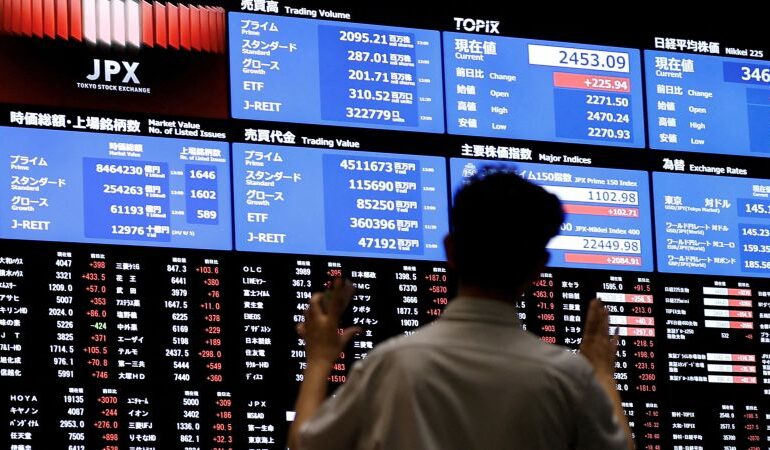
As China’s equity markets move into the next quarter, investors are approaching the outlook with caution rather than conviction. After a prolonged period of weakness followed by tentative stabilization, expectations are being reset. The focus is no longer on rapid recovery or dramatic collapse, but on whether recent calm can translate into sustained market direction.
The coming months are likely to test whether policy reassurance, valuation support, and improving sentiment can coexist with unresolved structural challenges.
Economic Signals Will Shape Sentiment
Macroeconomic data will remain central to market behavior. Indicators tied to consumption, industrial output, and private sector investment will be closely watched for signs of stabilization. While growth is expected to remain modest, markets are looking for consistency rather than acceleration.
Even small improvements in household spending or business confidence could reinforce the idea that the worst phase has passed. Conversely, renewed weakness would revive concerns that current valuations are justified rather than overly pessimistic.
For equities, direction matters as much as magnitude.
Policy Consistency Takes Center Stage
The next quarter will also test the durability of recent policy messaging. Investors have responded positively to clearer communication and fewer surprises, but confidence remains fragile. Markets will be sensitive to any shifts in tone, especially around regulation, capital markets, and private enterprise.
Incremental policy actions are more likely than large scale stimulus. The emphasis appears to be on preventing downside risk rather than engineering a sharp rebound. This approach favors stability but may limit short term upside.
Consistency rather than ambition will determine how markets react.
Corporate Earnings as a Reality Check
Earnings season will provide a concrete measure of how companies are navigating the current environment. Analysts will focus on margins, cash flow, and guidance rather than headline revenue growth.
Companies with strong balance sheets and exposure to external demand are expected to fare better than those reliant on domestic discretionary spending. Earnings resilience, even at lower growth rates, could support selective re rating.
Disappointments, however, would reinforce caution and delay broader recovery.
Foreign Capital Moves Carefully
International investors are likely to remain measured in their approach. Rather than broad inflows, capital will continue to target specific opportunities where risk appears manageable and valuation compelling.
Geopolitical developments will influence positioning, particularly around trade, technology, and cross border regulation. Any escalation could quickly alter sentiment, while stability would support gradual engagement.
The next quarter is unlikely to see aggressive foreign buying, but sustained absence of selling would itself be a positive signal.
Volatility May Stay Contained
One encouraging sign is the recent reduction in extreme volatility. Markets have become less reactive to negative headlines, suggesting that much bad news is already priced in.
If this pattern holds, the next quarter could be characterized by range bound trading rather than sharp swings. Such behavior often marks transitional phases where markets digest information before choosing direction.
For long term investors, lower volatility can be as valuable as price gains.
Structural Issues Remain Unresolved
Despite near term stabilization, deeper challenges persist. Demographic trends, local government debt, and property sector adjustment will continue to influence long term expectations.
Markets are beginning to incorporate these realities more rationally, but they still limit upside potential. Any recovery is likely to be uneven and sector specific rather than broad based.
This reinforces the importance of selectivity and patience.
A Quarter Focused on Proof, Not Promise
The next quarter will not be defined by bold narratives or sweeping reforms. Instead, it will be shaped by follow through. Investors will be watching to see whether recent calm is supported by data, earnings, and policy discipline.
China’s equity markets appear to be at a pause point rather than a turning point. What happens next will depend less on announcements and more on execution.
In a market adjusting its expectations, steady progress may be the most meaningful signal of all.