China Rolls Out Welcome for South Korean Executives as Japanese Business Delegation Puts Visit on Hold
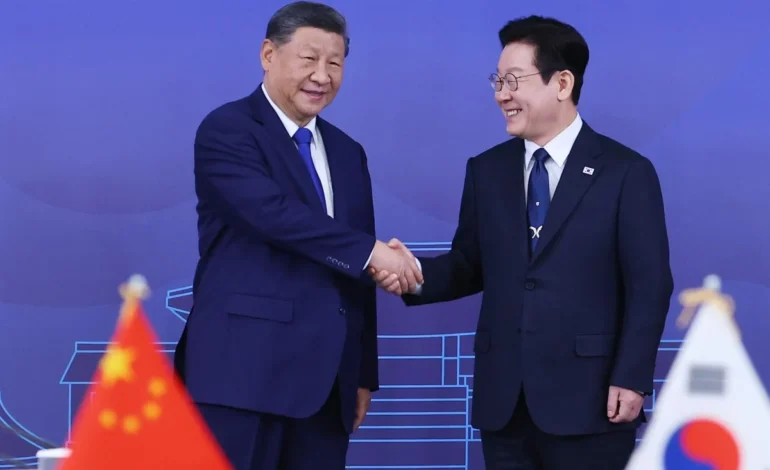
Beijing is preparing to host a large group of South Korean business leaders alongside President Lee Jae-myung on a state visit starting Sunday, even as Japanese corporate executives delay planned trips to China amid growing diplomatic strain. The contrasting approaches underline how shifting geopolitics is reshaping business ties across East Asia.
While Chinese officials are expected to extend a warm reception to South Korean companies, relations with Japan remain tense. Analysts say friction between Beijing and Tokyo is likely to persist into 2026, encouraging Japanese firms to accelerate efforts to reduce exposure to the Chinese market. At the same time, improving political ties between China and South Korea are widely seen as creating new momentum for bilateral trade and investment.
This week, three major Japanese business groups confirmed they had postponed a high profile visit to China that had been months in the making. The Japan China Economic Association, the Japan Business Federation known as Keidanren, and the Japan Chamber of Commerce and Industry had planned to send a delegation of around 200 executives to China in the coming weeks. According to a representative, no alternative schedule has been set.
Naoya Sawazu, deputy director of business promotion at the Japan China Economic Association, said the decision reflected the difficult state of bilateral relations. He noted that organizers had worked intensively for months to make the visit happen, but concluded that the conditions were not right to achieve meaningful results. The cancellation, he added, was deeply disappointing given the scale of preparation involved.
The delegation had been intended to review Japan’s overall economic relationship with China, a market where more than 30,000 Japanese companies currently operate. Organizers also hoped the trip would provide a platform to exchange views with Chinese counterparts on how to improve the business environment for foreign firms. However, Japanese media reported that securing meetings with senior Chinese leaders, including President Xi Jinping and Premier Li Qiang, proved difficult.
The postponement comes against a backdrop of heightened political tension. Beijing has criticized recent comments by Japanese Prime Minister Sanae Takaichi, who suggested in November that a conflict over Taiwan could prompt a Japanese military response. Chinese officials accused Tokyo of reviving militaristic thinking, further straining an already fragile relationship.
In contrast, China’s outreach to South Korea reflects a more pragmatic approach. By signaling openness to South Korean investment and cooperation, Beijing appears keen to deepen economic links with Seoul at a time when regional alliances are shifting. For South Korean firms, the visit is expected to offer opportunities to strengthen ties in sectors ranging from manufacturing to technology.
Together, these developments highlight how political dynamics are increasingly influencing corporate decision making in East Asia. As strategic rivalries intensify, businesses are being forced to navigate not only market conditions, but also the evolving diplomatic landscape shaping access and opportunity across the region.