China’s BYD Overtakes Tesla as Global EV Leader Amid Sales Pressure and Political Backlash
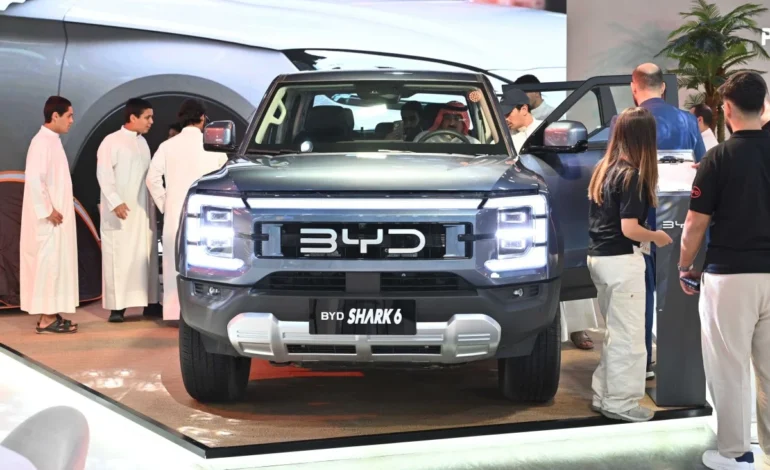
China’s electric vehicle giant BYD has overtaken Tesla to become the world’s largest electric vehicle producer, marking a major shift in the global auto industry as Tesla grapples with slowing sales, political controversy, and intensifying international competition.
Tesla confirmed on Friday that it delivered 1.64 million vehicles worldwide in 2025, representing a 9 percent decline from the previous year. The drop marked the second consecutive annual fall in deliveries, raising concerns among investors and analysts about the company’s growth trajectory after years of rapid expansion.
In contrast, BYD reported sales of 2.26 million electric vehicles in 2025, an increase of 27.9 percent year on year. The surge cemented its position at the top of the global EV market, driven by strong domestic demand in China and expanding sales across Asia, Europe, and emerging markets. Unlike Tesla, BYD sells a wide range of vehicles across different price segments, from affordable compact models to higher end electric and hybrid cars, giving it broader exposure to mass market consumers.
Analysts say Tesla’s performance has been weighed down by several factors. Overseas competition has intensified sharply, particularly in China and Europe, where local manufacturers have launched cheaper and more technologically competitive models. At the same time, Tesla has faced pricing pressure that has squeezed margins as it cut prices repeatedly to defend market share.
Political backlash linked to Tesla chief executive Elon Musk has also played a role, according to industry observers. Musk’s outspoken right wing political positions in the United States and Europe have alienated some customers, particularly in liberal urban markets that have historically formed the core of Tesla’s customer base. While the direct impact is difficult to quantify, surveys and anecdotal evidence suggest growing brand fatigue among some buyers.
In the United States, uncertainty over electric vehicle tax credits has further complicated Tesla’s outlook. Changes and delays in incentive schemes have made some consumers hesitant to commit to new purchases, especially as interest rates remain elevated and household budgets come under pressure. Tesla has warned that policy shifts could continue to affect demand in its key home market.
BYD, by contrast, has benefited from strong policy support in China, where electric vehicles remain central to industrial strategy and climate goals. The company’s vertically integrated supply chain, including in house battery production, has helped it keep costs down and respond quickly to market changes. This has allowed BYD to maintain profitability while expanding aggressively.
Industry analysts say BYD’s rise reflects a broader rebalancing of the global auto sector, with Chinese manufacturers playing an increasingly dominant role in electric mobility. While Tesla remains a major force with strong brand recognition and technological expertise, its loss of the top spot highlights how competitive the EV market has become.
Looking ahead, experts expect competition to intensify further as automakers worldwide race to scale production, improve software, and cut costs. Whether Tesla can regain momentum or BYD can sustain its rapid growth will be one of the defining questions for the global electric vehicle industry in the years ahead.