Hong Kong Interbank Rates Seen Falling in 2026 as US Monetary Easing Gains Momentum
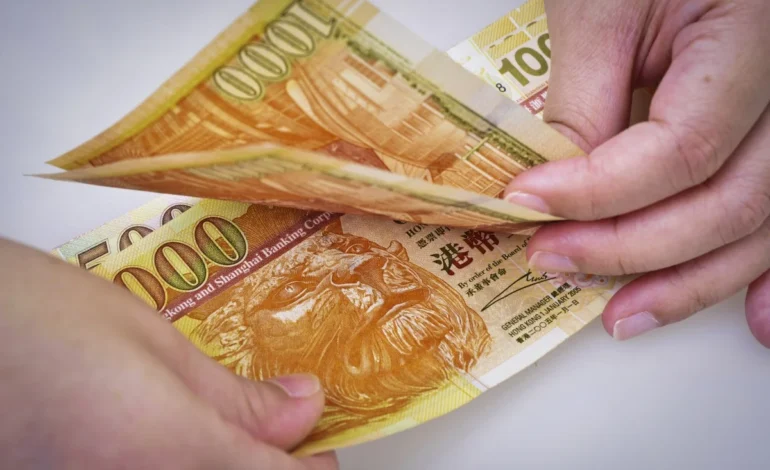
Expectations build around a new phase of US rate cuts
Hong Kong’s interbank rates are widely expected to move lower in 2026 as the United States enters a new phase of monetary easing. Analysts believe the US Federal Reserve, under a new chair, could cut interest rates by as much as seventy five basis points next year, easing funding costs across global markets that are closely tied to US monetary policy.
Because Hong Kong operates under a linked exchange rate system, shifts in US policy have direct implications for local financial conditions. A fresh round of US rate cuts would likely reduce Hong Kong interbank offered rates, easing borrowing costs for mortgages and corporate loans tied to these benchmarks.
The Fed’s influence on Hong Kong’s rate environment
Since 1983, Hong Kong’s monetary system has been anchored to the US dollar, requiring the Hong Kong Monetary Authority to closely shadow the actions of the US Federal Reserve. This mechanism ensures currency stability but limits Hong Kong’s ability to pursue an independent interest rate policy.
In 2025, both the Fed and the HKMA reduced their key policy rates by a combined seventy five basis points, following a full percentage point cut in 2024. As a result, Hong Kong’s base rate now stands at four percent, its lowest level since October two thousand twenty two. The US benchmark rate, meanwhile, remains in a range of three point five to three point seven five percent.
Analysts expect this alignment to continue into 2026 if the Fed resumes easing.
Interbank rates versus prime lending rates
While interbank rates are forecast to decline further, prime lending rates in Hong Kong are expected to remain unchanged. Commercial banks retain discretion over their prime and deposit rates, even though interbank benchmarks respond quickly to changes in the base rate.
Prime rates are already at historical lows, and banks have shown reluctance to reduce them further due to margin pressure and competition for deposits. As a result, borrowers linked to interbank rates are likely to benefit more directly from any additional monetary easing than those on prime based loans.
This divergence highlights the increasingly uneven transmission of monetary policy across different segments of the financial system.
What lower interbank rates mean for borrowers
A drop in interbank rates would provide modest relief for households and businesses facing high financing costs. Mortgage holders with loans linked to interbank benchmarks could see repayments fall, improving cash flow at a time when consumer confidence remains cautious.
For companies, especially small and medium sized enterprises, lower funding costs could support working capital needs and investment decisions. However, analysts caution that rate cuts alone may not be sufficient to revive borrowing demand if broader economic uncertainty persists.
The impact will depend not only on rates but also on expectations about growth, employment, and asset prices.
Limits of monetary easing in Hong Kong
Despite the anticipated decline in interbank rates, monetary policy is not a cure all. Hong Kong’s economy continues to face structural challenges, including a weak property market, subdued consumption, and global trade uncertainty.
Lower rates can ease financial conditions, but they cannot by themselves restore confidence or generate demand. Policymakers and market participants increasingly recognise that fiscal measures and structural reforms will also play a role in shaping the recovery.
This reality explains why analysts do not expect aggressive changes in banks’ prime lending rates, even if interbank costs fall further.
Stability of the linked exchange rate system
The expected policy alignment in 2026 also reinforces confidence in Hong Kong’s linked exchange rate system. By continuing to mirror US monetary policy, the HKMA preserves currency stability and avoids speculative pressure on the Hong Kong dollar.
While this system constrains policy flexibility, it has historically provided a predictable framework for financial markets. Investors generally view the trade off as acceptable, particularly during periods of global volatility.
Looking ahead to 2026
As markets look toward 2026, attention will remain focused on signals from the US Federal Reserve and how quickly rate cuts are delivered. For Hong Kong, the direction is clear even if the pace is uncertain.
Lower interbank rates would mark a gradual easing of financial conditions rather than a dramatic shift. The real test will be whether cheaper funding can translate into stronger economic momentum, or whether structural headwinds continue to dominate.